
Unbiased headlines. Facts, not spin.
Every story is an unbiased news briefing written from 110+ sources across the spectrum — sources linked so you can verify it yourself.
 economy
Notable (5/10)
August 13, 2026 at 05:58 AM
economy
Notable (5/10)
August 13, 2026 at 05:58 AM
New York Doesn't Know How Much It Actually Recycles, State Comptroller Finds
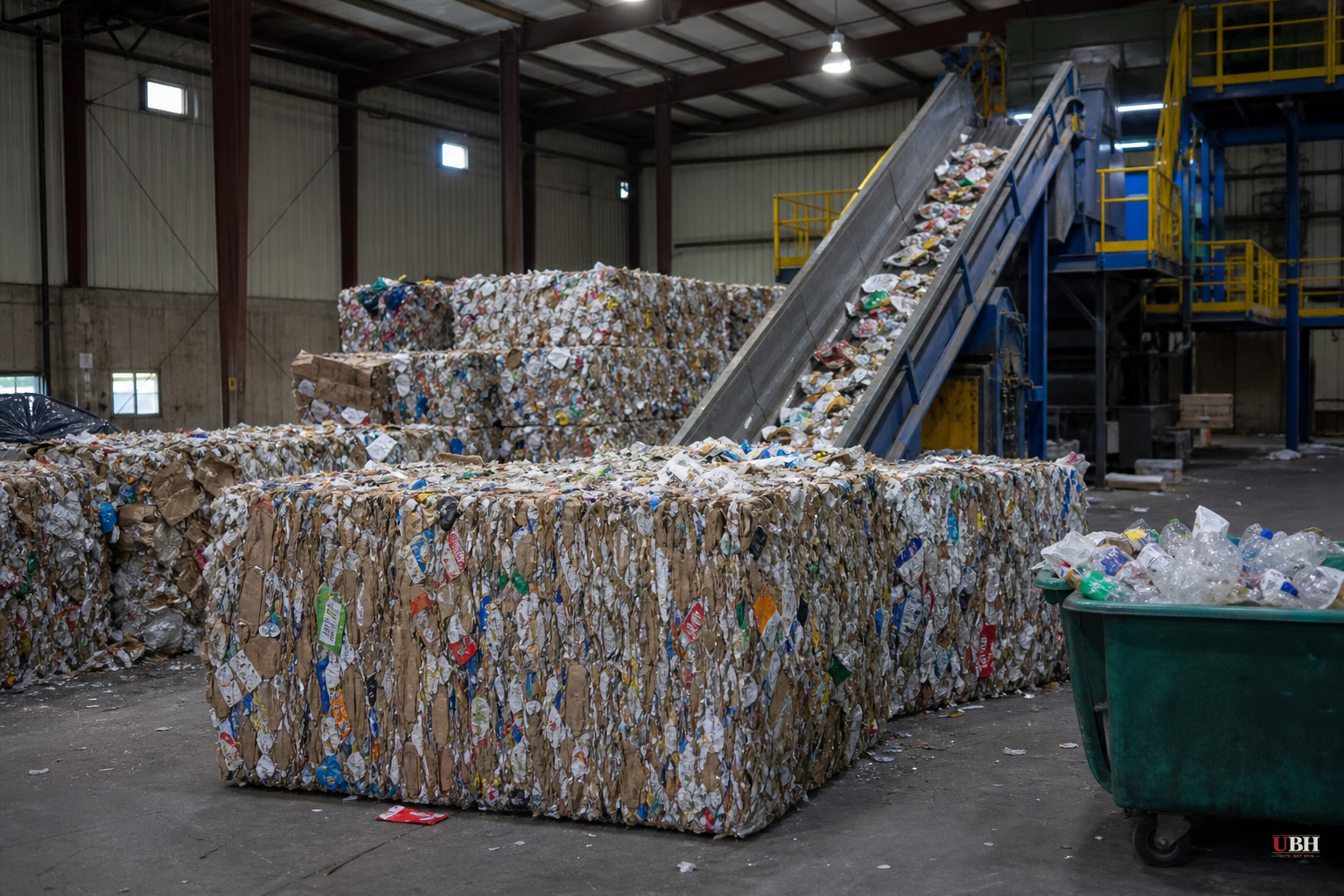
New York State spends roughly $788 million a year on recycling services, according to an estimate from the SUNY College of Environmental Science and Forestry. Nobody in state government can tell you with confidence how much of that material is actually getting recycled.
That's the finding of an audit released by State Comptroller Thomas DiNapoli, which examined how the state Department of Environmental Conservation (DEC) oversees roughly 400 Recyclables Handling and Recovery Facilities between January 2021 and December 2023.
The numbers are bad. Facilities were required to file 1,065 annual reports during that three-year window. The DEC never received 341 of them, about 32 percent, according to the comptroller's report. Of the reports that did come in, nearly two-thirds were missing information needed to figure out how much material was actually recycled versus dumped.
Facilities Can't Back Up Their Own Numbers
When you look at what facilities could actually prove, the picture darkens. Auditors reviewed a sample of facilities and found they could provide adequate supporting records for only about 21 percent of the recyclable material they claimed to receive, and just 6 percent of what was sent to landfills or other disposal, according to WRVO. In plain terms: most of the recycling data New York relies on is essentially unverified self-reporting.
DEC regulations don't require facilities to submit documentation with their annual reports, they just have to attest the numbers are accurate. That's a system built on the honor code, and the audit shows the honor code isn't holding up.
Many facilities didn't even report how much material they threw away instead of recycling it, according to Resource Recycling. Without that figure, the state has no real way to calculate how much waste is actually being diverted from landfills, which is the entire point of tracking this in the first place.
Inspections Are Spotty, Enforcement Is a Joke
The DEC's main tool for checking whether facilities are telling the truth is inspections. Auditors found 138 of 389 registered and permitted facilities, about 35 percent, were not inspected at all during the three-year audit period.
Enforcement is sparse. Of 33 facilities that failed to submit any annual report whatsoever during the audit window, the DEC issued violations to exactly three, according to the comptroller's report as cited by Yonkers Times. Thirty facilities blew off their legal reporting requirement entirely and faced no consequence.
Why This Matters for Climate Targets
New York uses this recycling data to help calculate statewide greenhouse gas emissions. The DEC currently estimates solid waste accounts for about 12 percent of the state's total emissions. But if the underlying data is this unreliable, that 12 percent figure is a guess dressed up as a statistic.
"Reliable recycling data is essential to understanding how much waste is being diverted from landfills and incinerators through recycling," DiNapoli said in the report. "If recycling data is incomplete or inaccurate, the state can't effectively evaluate whether recycling efforts are working or track their impact in reducing waste and its environmental impact."
Blair Horner, senior policy adviser at the New York Public Interest Research Group, put it more bluntly to WRVO: "The state is flying blind because it doesn't have good data to rely on in terms of how well the recycling efforts are working." Horner argued the enforcement gap is itself evidence the program isn't being taken seriously: "What better evidence is there of a lack of energy to enforce a program than the fact that the most basic elements of it are either ignored or poorly implemented?"
New York has already scaled back its climate ambitions once. Gov. Kathy Hochul rolled back parts of the state's emissions targets as part of a recent budget compromise, according to City & State. But the state is still formally committed to cutting greenhouse gas emissions 85 percent below 1990 levels by 2050, and to a similar 85 percent cut in waste sent to landfills or incineration, according to Resource Recycling. Meanwhile the actual statewide recycling rate sits around 15 percent, despite 97 percent of homes having access to recycling programs, per SUNY ESF figures cited by Resource Recycling.
DEC Pushes Back, Partially
The DEC's official response, included in the audit, generally accepted the comptroller's findings and pledged to build a web-based facility reporting system to improve data accuracy and transfer. But the agency also pushed back, arguing the comptroller "inflated its claims of reporting deficiencies," according to Gothamist and confirmed by WRVO's reporting on the DEC's formal response.
The comptroller's office did not accuse the DEC of hiding data or acting in bad faith, and no findings in the audit allege fraud. This is a recordkeeping and oversight failure, not a corruption case. The DEC has not disputed the core numbers, missing reports, incomplete filings, unverified data. Only the characterization of how bad the gap is remains contested.
The comptroller's office recommended DEC build verification procedures for annual reports, tighten inspection protocols, write formal guidance for enforcement staff, and make sure follow-up actions actually get documented. Whether any of that happens, and whether it happens before the state's next round of emissions reporting, is now the open question. There is no statutory deadline in the audit forcing DEC to implement the fixes on a specific timeline.
Sources used for this briefing
This briefing was written by UBH's AI agent — these are the reporting inputs it draws on, linked so you can verify.


