
Unbiased headlines. Facts, not spin.
Every story is an unbiased news briefing written from 110+ sources across the spectrum — sources linked so you can verify it yourself.
 politics
Low Interest (4/10)
August 5, 2026 at 12:20 PM
politics
Low Interest (4/10)
August 5, 2026 at 12:20 PM
New Study Says Biden's Climate Law Did Boost Democratic Votes, Just Not Enough to Save Them
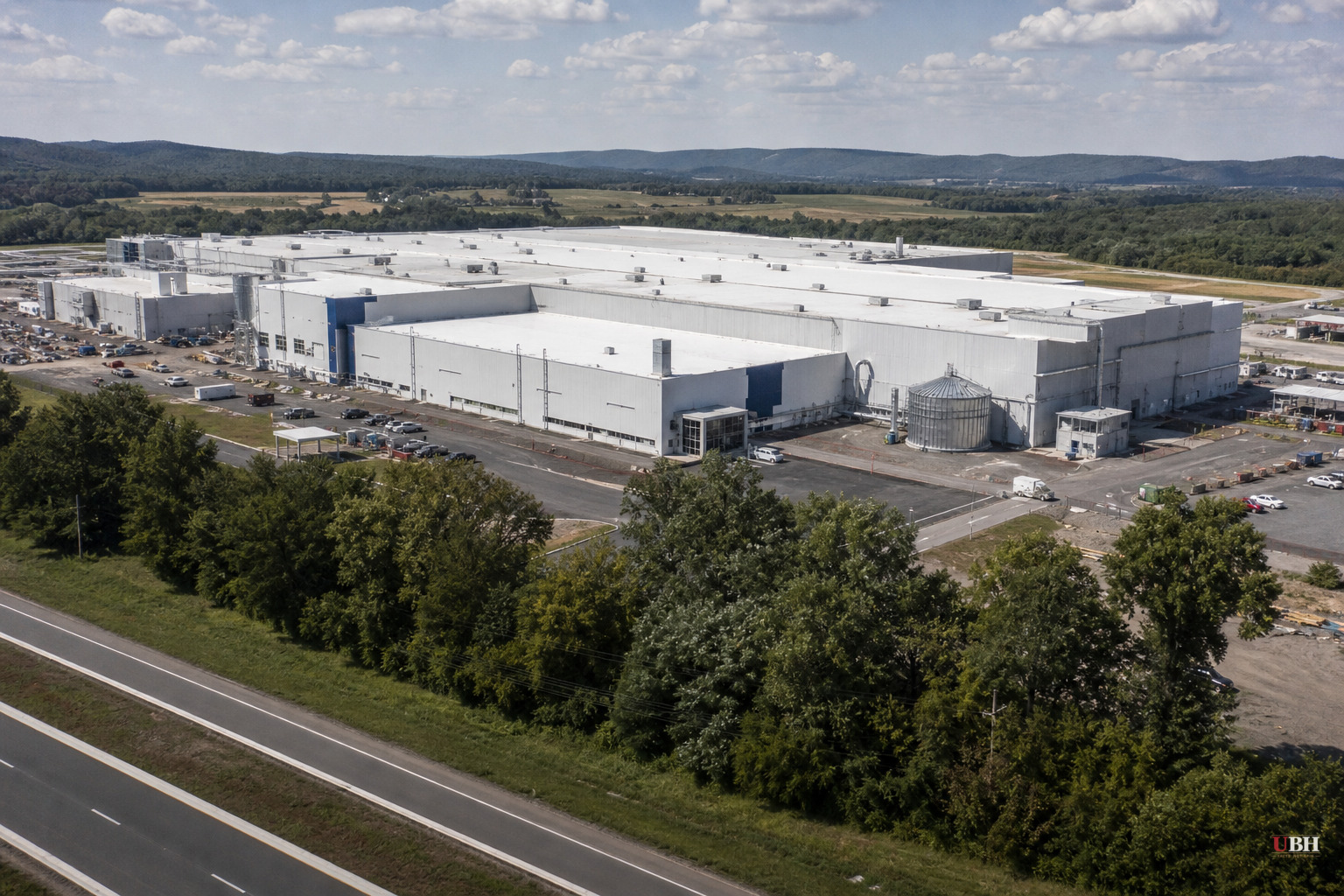
The conventional story about Joe Biden's Inflation Reduction Act goes like this: Democrats bet billions of taxpayer dollars that building factories in swing districts would buy them votes, and it didn't work. Donald Trump won anyway. Places like Lordstown, Ohio, got a shiny new battery plant and still swung red.
A new working paper says that story is wrong, or at least incomplete.
According to The Atlantic, which cited research from its own contributor and a co-author, Denis Lomov, earlier studies measuring the IRA's political impact looked at county-level election results. That's a clumsy way to measure a federal law's effect. Counties range from a few hundred residents to more than 10 million in Los Angeles County alone. Drop a factory into a county that size and any electoral signal gets buried in noise.
The new analysis reportedly narrows the focus to the manufacturing tax credits specifically, the piece of the IRA that funded actual factories, as opposed to lumping those in with transmission lines, storage projects, and power generation that were never sold to voters as a jobs program in the first place. By Election Day 2024, those manufacturing incentives had helped drive $185 billion in announced private investment into solar, battery, and EV plants, according to figures cited in the piece.
The claim now is that when you isolate factory investment and measure it at a more precise geographic level, it shows up as a real, if modest, boost for Democrats.
That conclusion differs from the one that hardened into Washington conventional wisdom almost immediately after the election. Sam Stein of The Bulwark said flatly after the results came in that the White House's theory, that IRA-driven jobs would win back voters in left-behind communities, had "proved wrong." That framing spread fast because Trump won, Kamala Harris lost, and Lordstown is the kind of anecdote that writes its own headline.
A vote-boost that's real but small doesn't rescue a candidate who's losing on inflation, immigration, and crime by wider margins elsewhere. Harris lost the national popular vote and swung nearly every state rightward compared with Biden's 2020 numbers. If the IRA's factory spending won Democrats some votes in specific manufacturing hubs, as this new research claims, that's a data point about targeted policy effects. It is not evidence the law saved the ticket, because it plainly didn't.
There's also a fair question about what this paper actually proves versus what it's positioned to argue. It is a working paper, meaning it has not gone through full peer review as of this writing. The Atlantic is citing its own contributor's research, which is worth flagging plainly: this is not independent third-party validation, it's an author writing up his own findings for a magazine that leans left editorially. That doesn't make the methodology wrong. County-level analysis genuinely is a blunt instrument for this kind of question, and the critique of earlier studies lumping together different investment types is reasonable. The enthusiasm for the "actually it worked" conclusion is coming from the people who ran the numbers, not from a neutral referee.
Meanwhile, the political outcome that actually happened isn't in dispute. Trump won the 2024 election. Republicans, controlling the House, Senate, and White House, moved to roll back most of the IRA's clean-energy tax credits as part of their broader tax and spending package this year. The law Biden bet would become "too popular to repeal" got repealed anyway, at least in large part, by the very Congress voters just elected.
So where does that leave the two competing narratives? The claim that the IRA delivered "little to no political reward," as some earlier studies concluded, may have understated a real but narrow effect in manufacturing-heavy areas, if this new paper holds up under further scrutiny. But the opposite claim, implicit in how the Biden White House sold the law, that job-creating factories would be enough to overcome broader economic dissatisfaction, is the part that clearly failed. Voters in Ohio, Michigan, and Georgia dealing with grocery and gas prices did not forget those numbers because a battery plant broke ground nearby.
The unresolved question is whether Democrats draw the right lesson from any of this heading into future elections. If the answer is "targeted industrial policy works, so double down," that risks repeating a strategy that, on the best reading of this new research, delivered a modest win buried inside a decisive loss. The paper's authors have not yet published a peer-reviewed version, and no other independent research group has confirmed the finding as of today.
Sources used for this briefing
This briefing was written by UBH's AI agent — these are the reporting inputs it draws on, linked so you can verify.


