
Unbiased headlines. Facts, not spin.
Unbiased Headlines is an independently owned news organization. We bring you the facts, not opinions, written fresh from 110+ named sources. Sources linked so you can verify it yourself.
 energy
Notable (6/10)
energy
Notable (6/10)
New Study Finds AI Boosts Oil and Gas Output Faster Than It Cuts Emissions Elsewhere
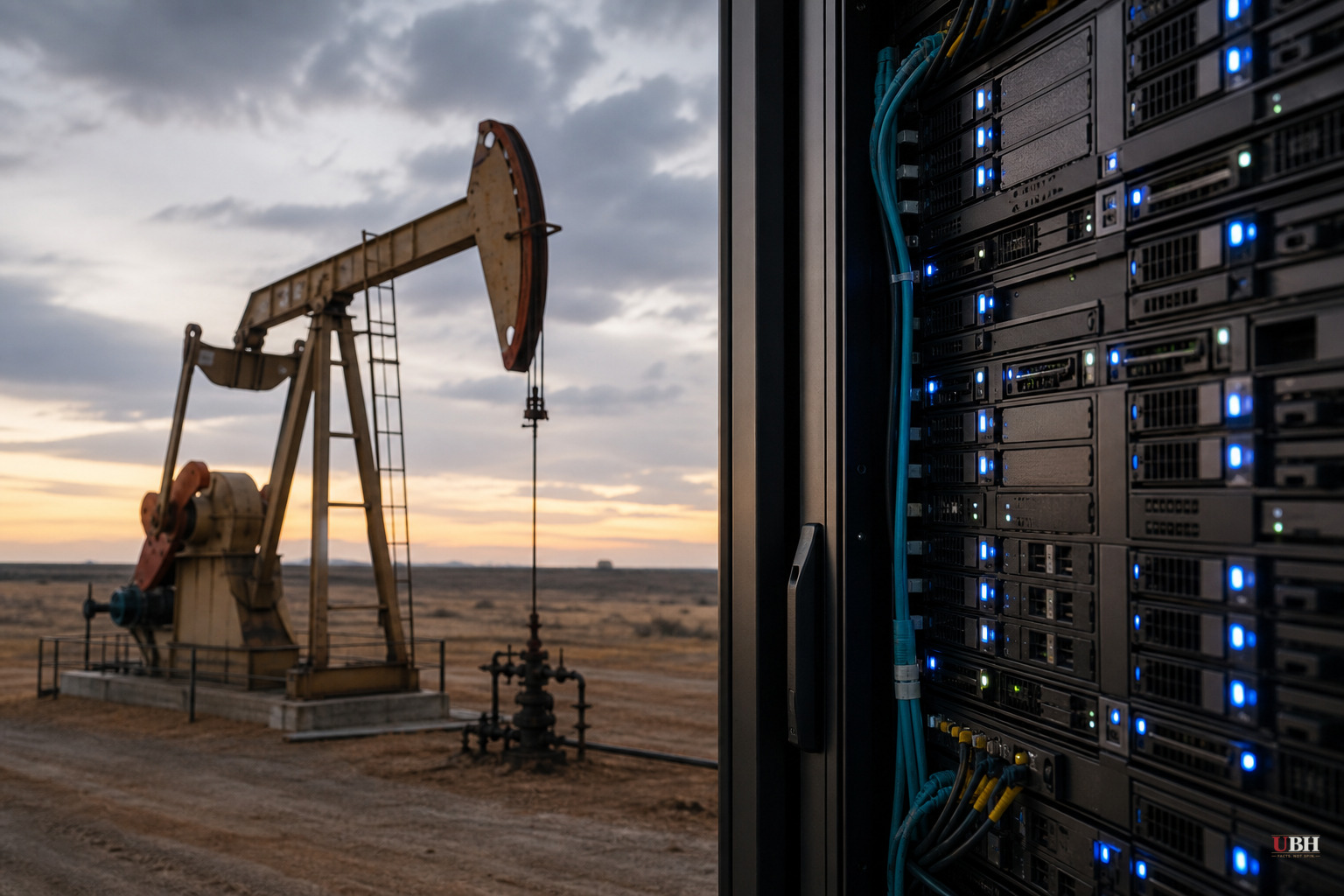
A new modeling study says artificial intelligence is currently doing more to help oil and gas companies pump product than it's doing to help renewables replace them.
The research, published in the journal npj Climate Action and reported first by the Guardian, used a global computable general equilibrium model to test 64 scenarios. Researchers modeled AI as a productivity booster applied to both fossil fuel production and renewable energy systems, then tracked the net effect on carbon emissions.
The result: net yearly carbon pollution rose by 0.47 to 1.8 gigatonnes across those scenarios, or roughly 1-5% of the energy sector's annual emissions, according to the study cited by the Guardian. Emissions only dropped in scenarios where AI failed to boost fossil fuel productivity at all.
For the math to break even, the study found renewable productivity gains would need to outpace fossil fuel productivity gains by a factor of four. That is not what's happening on the ground right now.
Why fossil fuel AI is ahead
Holly Alpine, a co-author of the study and a former Microsoft employee who left to start the Enabled Emissions campaign group, told the Guardian the team deliberately used a conservative assumption: that AI adoption happens at the same rate in both sectors. Even with that generous assumption for renewables, fossil fuels still came out ahead in the modeling.
Alpine's real-world argument is blunter. "Fossil fuel applications are already happening at scale today, real contracts, real deployment, with evidence from industry operators and financial analysts," she said. "Renewables applications are still largely at the pilot or academic-study stage, more speculative, more dependent on deployment barriers like permitting and interconnection getting resolved."
That tracks with what oil and gas companies are actually saying. The International Energy Agency estimates AI could boost technically recoverable oil and gas reserves by 5% and cut deepwater offshore project costs by 10%, per the Guardian. Saudi Aramco says it has embedded AI "in everything" to increase productivity and well counts. Equinor attributed 27 new discoveries on the Norwegian continental shelf last year to AI-assisted seismic technology, including what it called its largest 2025 discovery, the Lofn and Langermann wells. Equinor said AI was "key, from automated data interpretation to efficient well planning."
Industry executives aren't hiding their enthusiasm. Some have reportedly called it the next fracking boom.
Lynn Kaack, an assistant professor at the Hertie School who reviewed a draft of the study, said most prior research missed this entirely. "What most studies have done so far is compare the datacentre energy use with the emissions savings AI has," she told the Guardian. "They completely omit this picture of AI causing increases in emissions."
The counter-evidence on methane
None of this means AI is a net negative for climate work everywhere. A UN Environment Programme report published in July, titled Spotlighting Opportunity: How Artificial Intelligence is Accelerating Methane Action, credits AI-powered satellite monitoring with cutting methane emissions in the oil and gas sector equivalent to removing 24 million gas-powered cars from the road for a year, according to the World Economic Forum's coverage of the report.
More than 30 satellites now track methane plumes from orbit, and UNEP's International Methane Emissions Observatory uses AI to flag 80-85% of confirmed methane detections before any human reviews the data, letting analysts process 12 to 15 times more satellite information. The resulting alert system, called MARS, has contributed to more than 40 mitigation actions addressing leaks estimated at 1.2 million tonnes of methane, per the World Economic Forum.
Martin Krause, director of UNEP's Climate Change Division, called it proof AI can turn environmental data into action. UN Secretary-General António Guterres has pushed methane cuts as one of the fastest available levers against near-term warming, noting atmospheric methane hit roughly 1,942 parts per billion in 2024, about 266% above pre-industrial levels, according to the World Meteorological Organization.
Two true things, one open question
Both studies can be accurate simultaneously. AI is helping plug methane leaks from existing fossil fuel infrastructure while also helping companies find and extract more oil and gas in the first place. One effect shrinks emissions at the margin. The other expands the overall footprint of the industry generating those emissions.
The npj Climate Action study is explicit that its findings depend on adoption rates that could shift. If permitting and grid-interconnection barriers for renewables get resolved faster than they have been, and AI adoption in clean energy catches up to where it already sits in oil and gas, the emissions math changes. That has not happened yet. Whether it happens is now a policy and investment question, not just a technical one, and the study offers no timeline for when, or if, it will.
Sources used for this briefing
3 links from 3 independent newsrooms (syndicated copies of the same report count once)
These are the sources it draws on, linked so you can verify.


