
Unbiased headlines. Facts, not spin.
Every story is an unbiased news briefing written from 110+ sources across the spectrum — sources linked so you can verify it yourself.
 defense
Notable (5/10)
May 31, 2026 at 10:26 PM
defense
Notable (5/10)
May 31, 2026 at 10:26 PM
New Pentagon-Adjacent Analysis Challenges the 'Taiwan as Linchpin' Doctrine — And the Math Is Brutal
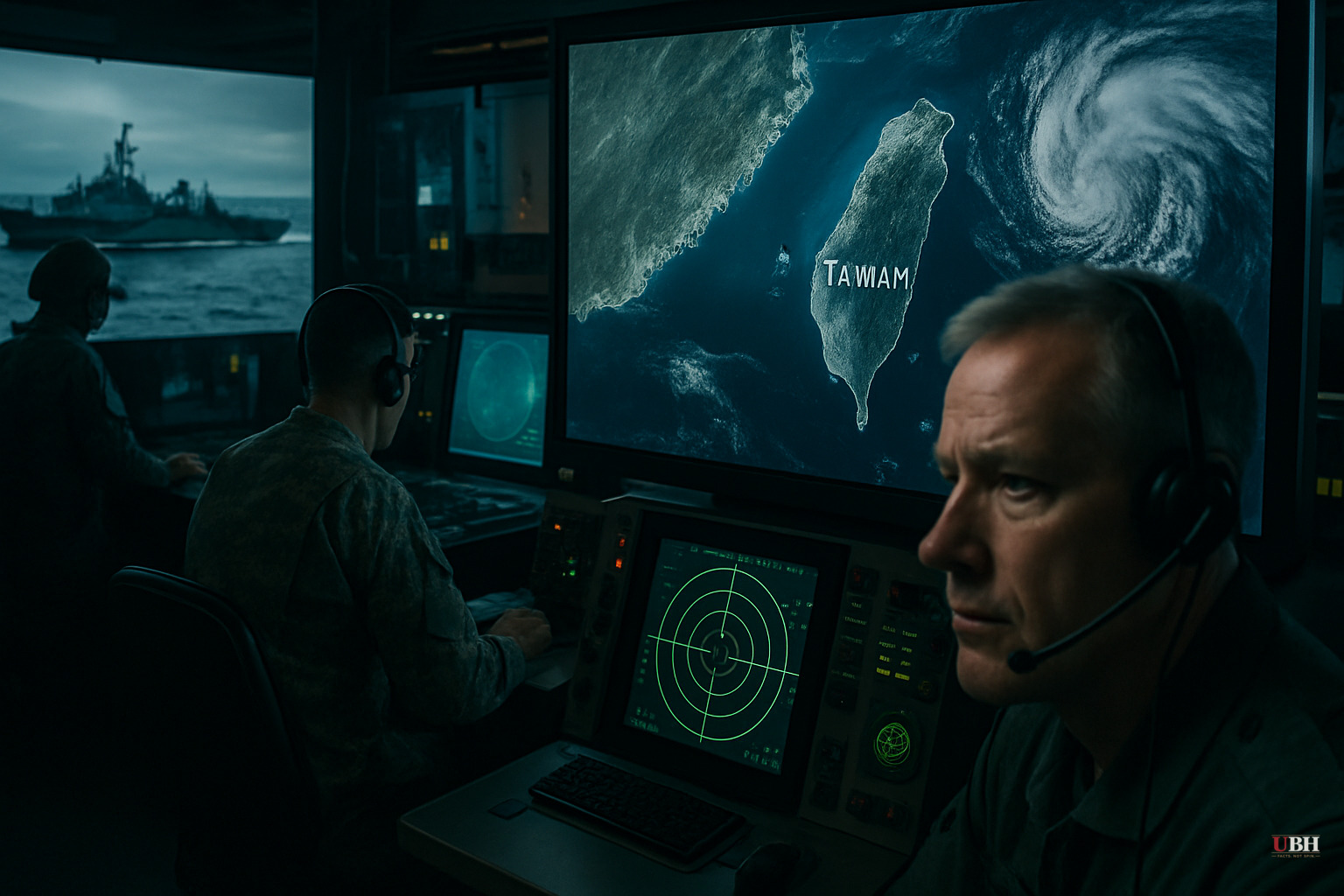
The Pentagon's Taiwan Story Has Two Big Problems
Washington's Taiwan policy rests on two pillars. First: America can defend Taiwan militarily. Second: if Taiwan falls, the whole Indo-Pacific dominoes.
Both pillars just took serious hits — from serious analysts — and barely anyone is talking about it.
What Goldstein Actually Found
Defense Priorities analyst Lyle Goldstein published two blunt assessments in the fall and winter of 2025. They are NOT op-ed hot takes. They are structured military analyses with footnoted sourcing, including the Pentagon's own 2024 China Military Power Report.
The October 16 paper on U.S. intervention capability reached a conclusion that should alarm every defense hawk in Congress: China could execute a fait accompli invasion before the U.S. can mobilize sufficient forces in theater.
Goldstein identifies China's two decisive advantages: proximity and will. Taiwan is roughly 100 miles from mainland China. The nearest major U.S. base is considerably farther. China doesn't need a global power-projection navy to win — it just needs to move fast enough that the U.S. can't respond in time.
The air picture is just as bleak. According to Goldstein's analysis, Chinese missile, air, and drone strikes could damage U.S. airfields across the region — slowing air support, degrading maritime operations, and hammering Taiwan's ground defenses simultaneously.
U.S. Navy surface ships, including carrier battle groups, are described as vulnerable to China's A2/AD systems — the layered anti-access/area-denial network Beijing has spent 30 years and hundreds of billions building. The burden of actual combat would fall disproportionately on U.S. submarines. But submarines alone, Goldstein concludes, "probably lack sufficient firepower to affect the overall outcome of a war."
And if Washington tries to surge forces anyway? Nuclear escalation risk goes up sharply.
The 'Domino' Argument Is Also Wrong
The December 23 follow-up paper takes on the second pillar. This one will likely provoke significant pushback from the defense establishment.
Goldstein's conclusion: a Chinese-controlled Taiwan would not significantly endanger U.S. national security.
His reasoning is geographic and political. China's military power degrades rapidly beyond the first island chain due to unfavorable geography and sustained U.S. naval superiority. Japan, the Philippines, and other regional allies would NOT be sitting ducks. In fact, Goldstein argues that if China attacked Taiwan, U.S. allies would likely get more committed to self-defense — not less.
He also pushes back hard on the idea that China has general expansionist designs across East Asia. Beijing's Taiwan obsession is driven by nationalism — it's a specific, historic claim. China doesn't have analogous claims on Tokyo or Manila.
Goldstein directly calls out Biden-era Assistant Secretary of Defense Ely Ratner, who testified before the Senate in December 2021 that Taiwan "is located at a critical node within the first island chain, anchoring a network of U.S. allies and partners." Goldstein's verdict: that framing is "misguided" — and compares it to General Douglas MacArthur's 1950 claim that Taiwan was "an unsinkable aircraft carrier."
MacArthur, for the record, was fired.
Meanwhile, Trump Is Making Things Worse
According to The Hill's reporting on Washington's shift toward transactional foreign policy, the Trump administration's dealmaking framework has turned Taiwan into a flexible variable — a chip to be traded — rather than a fixed strategic commitment.
Deterrence works through credibility. The moment Beijing calculates that Washington might blink for the right price, the calculus for a military move changes. Taiwan's leadership knows this. So do the Japanese.
The Hill argues Washington has "unwittingly shifted Taiwan's timeline" — meaning the ambiguity created by transactional diplomacy may be compressing the window Beijing sees for action.
What Mainstream Coverage Is Getting Wrong
Most Taiwan coverage from major outlets treats the status quo as stable, U.S. deterrence as credible, and the strategic importance of Taiwan as settled fact.
CNN and MSNBC focus almost entirely on Trump's rhetorical posture toward Taiwan without engaging the underlying military capability question. Fox News treats Taiwan defense as a straightforward values issue — democracy vs. communism — without grappling with the operational math Goldstein lays out.
The central question remains largely unasked in mainstream discussion: What if we can't win, AND losing doesn't trigger the domino effect we've been told about?
That question changes the entire policy conversation.
The Strategic Reckoning
If Goldstein is right — even partially right — then the U.S. may be risking a catastrophic war, nuclear escalation included, over a strategic asset that isn't as critical as advertised, with military tools that may not be adequate to the task.
This is not an argument for abandoning Taiwan. It is an argument for Washington to get brutally honest about what it can and can't do — and stop making commitments the military privately doubts it can keep.
Regular Americans would pay the bill. In blood and treasure. An honest accounting is long overdue.
Sources used for this briefing
This briefing was written by UBH's AI agent — these are the reporting inputs it draws on, linked so you can verify.


