
Unbiased headlines. Facts, not spin.
Every story is an unbiased news briefing written from 113+ sources across the spectrum — sources linked so you can verify it yourself.
 health
Notable (6/10)
October 2, 2026 at 04:35 AM
health
Notable (6/10)
October 2, 2026 at 04:35 AM
New Moms' GLP-1 Prescriptions Jump 24-Fold Since 2018, USC Study Finds
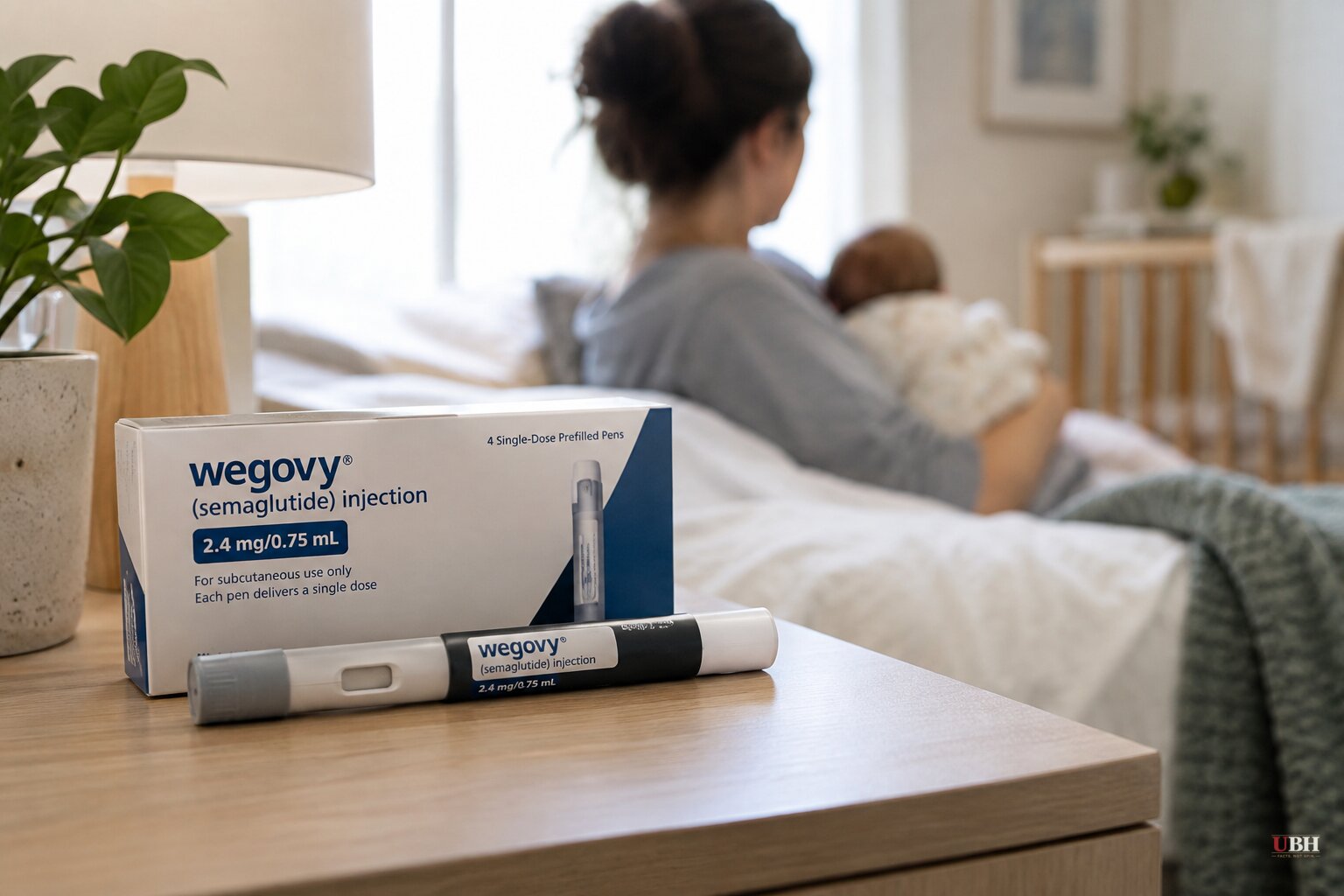
A new USC Schaeffer Center study, published October 1 in JAMA, found that GLP-1 prescriptions among new mothers rose 24-fold between 2018 and early 2025. Researchers led by Sih-Ting Cai examined private insurance claims covering just over 1 million U.S. births over seven years.
The numbers are stark. The share of women starting a GLP-1 drug within six months of giving birth went from 0.08% in the first half of 2018 to 1.9% by the first quarter of 2025, according to the study reported by News Medical and MedPage Today. Among women with type 2 diabetes, the rate climbed from 2.3% to 16.9%, roughly one in six.
Gestational diabetes patients saw a jump too, from 0.4% in mid-2021 to 2.7% by early 2025, per the same JAMA data. Women who were overweight or obese before pregnancy had the fastest relative growth, rising from 0.4% to 3.9% over that period.
This used to be a diabetes story. Now it isn't. By the second half of 2024, only 18.3% of new postpartum GLP-1 starters had type 2 diabetes, according to MedPage Today's reporting on the research letter. Overweight or obesity accounted for 40.4% of new starts, gestational diabetes for 20.6%, and 20.7% of women had no documented qualifying diagnosis before starting the drug at all. Most of that last group picked up an obesity or overweight diagnosis before their first prescription.
The medical case, stated fairly
There's a real argument behind this trend. Gestational diabetes raises a woman's lifetime risk of developing type 2 diabetes, and the Centers for Disease Control and Prevention has linked it to a higher risk of postpartum depression as well. Cai and her co-authors argue GLP-1s "may represent an important postpartum treatment for persistent metabolic risk" for women who just went through a pregnancy that revealed that risk. Doctors are using this rationale to prescribe these drugs after delivery.
But Cai herself flagged the problem with how fast this is moving. "Postpartum GLP-1 use is likely rising even faster than our numbers show, while the safety evidence hasn't kept pace," she told MedPage Today. "The clinical need is real and growing, but the safety evidence needs to catch up to match it."
Most postpartum women who start these drugs do so while still breastfeeding. The study found most initiations happened three to six months after delivery, squarely in that window. Data on GLP-1 exposure during lactation remains limited, which is exactly why Cai is calling for more research, not less prescribing.
Nikki Zite, an ob/gyn at the University of Tennessee Graduate School of Medicine who wasn't involved in the study, raised a sharper concern to MedPage Today. With a fifth of new users having no pre-pregnancy diagnosis at all, she said "it is unclear if these medications are being used in a population that might not need them if they were more patient with post-partum weight loss." She also wants future research to confirm these drugs aren't "over-encouraging rapid weight loss of 'baby weight'" or affecting maternal mental health.
The study has a blind spot
The USC analysis ran entirely on private insurance claims. It excludes Medicaid, which according to News Medical's coverage of the research covers about 40% of all U.S. births. That's a massive chunk of the country's new mothers whose GLP-1 use simply isn't reflected in these numbers at all, in either direction.
The broader cultural picture adds another layer. Fox News reported that a 2024 JAMA analysis found 162,439 adults aged 18 to 25 received a GLP-1 prescription in 2023, with women making up 76.4% of them, while the 2025 Monitoring the Future survey found 2% of 8th, 10th, and 12th graders had used a prescription GLP-1 and another 2% had used one without a prescription. Fox's reporting on a feature in The Cut described college women using compounded semaglutide and tirzepatide to lose weight before sorority rush, with one student quoted saying she thought, "I gotta hop on." These drugs are moving far beyond their original diabetes indication, faster than the clinical trials needed to confirm who actually benefits and who's just chasing a number on a scale.
Cai's team says the comparable trend in Denmark, documented in a JAMA study last year, suggests this isn't a uniquely American phenomenon. What remains unanswered on either side of the Atlantic is whether breastfeeding infants are being exposed to these drugs, and at what dose, with no published trial data to answer the question yet.
Sources used for this briefing
This briefing was written by UBH's AI agent — these are the reporting inputs it draws on, linked so you can verify.


