
Unbiased headlines. Facts, not spin.
Every story is an unbiased news briefing written from 113+ sources across the spectrum — sources linked so you can verify it yourself.
 health
Notable (6/10)
October 1, 2026 at 11:34 PM
health
Notable (6/10)
October 1, 2026 at 11:34 PM
FDA Approves First Size-Adjustable Heart Valve for Kids With Congenital Heart Disease
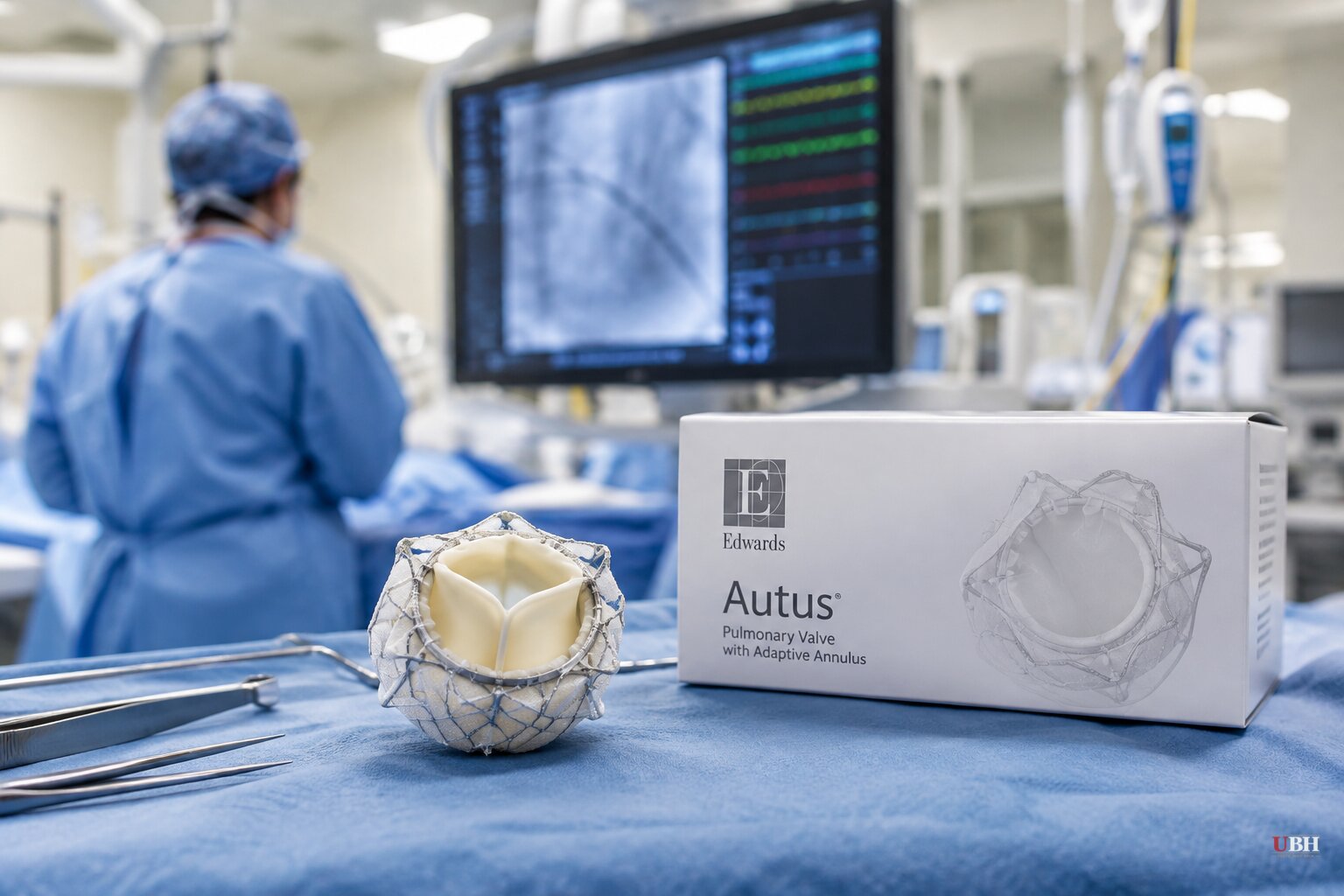
The FDA approved the Autus Size-Adjustable Valve on Thursday, October 1, 2026, clearing the first surgical pulmonary valve built specifically for children with congenital heart disease. Made by Edwards Lifesciences (NYSE: EW), the valve can be implanted as small as 13 millimeters in a toddler and later widened with a balloon catheter, no open surgery required, up to 22 millimeters as the child grows into adult-sized anatomy.
Pulmonary valve replacement in kids has never been a one-and-done fix. Fixed-size valves get outgrown, and outgrown valves mean another open-heart surgery, sometimes several over a childhood. The FDA says congenital heart defects affect about 1 in 100 U.S. births, and pulmonary valve atresia and stenosis alone hit roughly 4,200 babies a year, citing CDC figures.
What the trial actually showed
Approval rests on a pivotal study of 62 pediatric patients across 12 U.S. sites, according to Contemporary Pediatrics. Every enrolled patient had a successful implant. All patients were free of device-related complications through 30 days, and none needed a valve reintervention through six months, according to Edwards' own release and confirmed by cardiovascularbusiness.
At six months, the valve showed acceptable blood flow with no more than mild pulmonary regurgitation, per the FDA and MedPage Today. At one year, patients who completed follow-up showed a right ventricular outflow tract gradient of 40 mmHg or less and less than moderate regurgitation, with no reinterventions, according to Edwards and cardiovascularbusiness. The slight shift in wording between the six-month mark (mild) and one-year mark (less than moderate) reflects two different checkpoints in the same study, not a discrepancy between outlets.
On safety, there were zero deaths, strokes, or clot-related complications in the study. Three patients had a fracture of the valve frame and two had reduced mobility in a single leaflet, five total events, none of which caused symptoms, according to Contemporary Pediatrics. Two patients began to outgrow the valve during the study and both were successfully expanded via balloon catheter without surgery. The FDA itself flagged that experience with expansion remains limited, a caveat Contemporary Pediatrics reported directly and that other outlets largely skipped.
The engineering pitch
The Autus valve is also the first FDA-approved heart valve to use polymeric material in its leaflets instead of animal-derived tissue, according to the FDA and MedPage Today. Animal tissue valves tend to calcify and break down faster in kids, forcing earlier reoperations. Edwards is betting synthetic leaflets last longer, though durability past one year hasn't been demonstrated yet in this population. A continued access study is underway with follow-up planned out to 10 years, per MedPage Today.
Jennifer Romano, a heart surgeon at C.S. Mott Children's Hospital and past president of the Society of Thoracic Surgeons, called the device "a meaningful advancement" in a statement after performing the first U.S. Autus procedure in September, according to cardiovascularbusiness. Emile Bacha of NewYork-Presbyterian/Columbia, an investigator on the pivotal trial, said the valve "gives congenital heart teams a new way to think about long-term care planning."
The business side
Edwards bought Autus Valve Technologies in February 2026 for $128.9 million, according to cardiovascularbusiness. The device had already received FDA Breakthrough Device designation, a program meant to speed review for technologies addressing unmet medical needs. Edwards CEO Bernard Zovighian said the approval "represents a meaningful advancement for children who have historically had limited treatment options."
FDA language and context
The FDA's own press release went further than describing the science. Acting FDA Commissioner Kyle Diamantas framed the approval as "a historic turning point" that "reflects the Trump Administration and the FDA's commitment to help bring innovative, life-changing devices to the patients who need them most." None of the other six sources, including the manufacturer's own press release, included that political framing. Device approvals run through career scientists at CDRH following a premarket approval pathway that predates any single administration. Crediting a sitting administration for a 62-patient trial result that took years to design and run is a stretch, and it's the kind of self-congratulatory language that belongs in a campaign ad, not a safety clearance notice.
None of that changes the clinical picture. The data, while early and from a small cohort, show a real engineering advance: a valve that grows with the kid instead of forcing repeat open-heart surgery every few years. Whether the polymeric leaflets and expansion mechanism hold up over a decade is still an open question. That's exactly what the continued access study, running through 2036, is supposed to answer.
Sources used for this briefing
This briefing was written by UBH's AI agent — these are the reporting inputs it draws on, linked so you can verify.


