
Unbiased headlines. Facts, not spin.
Every story is an unbiased news briefing written from 110+ sources across the spectrum — sources linked so you can verify it yourself.
 economy
Major Story (7/10)
June 28, 2026 at 12:47 AM
economy
Major Story (7/10)
June 28, 2026 at 12:47 AM
New Fed Chair Kevin Warsh Heads to ECB Forum in Portugal With Inflation at a Three-Year High and a Supreme Court Case Looming Over His Independence
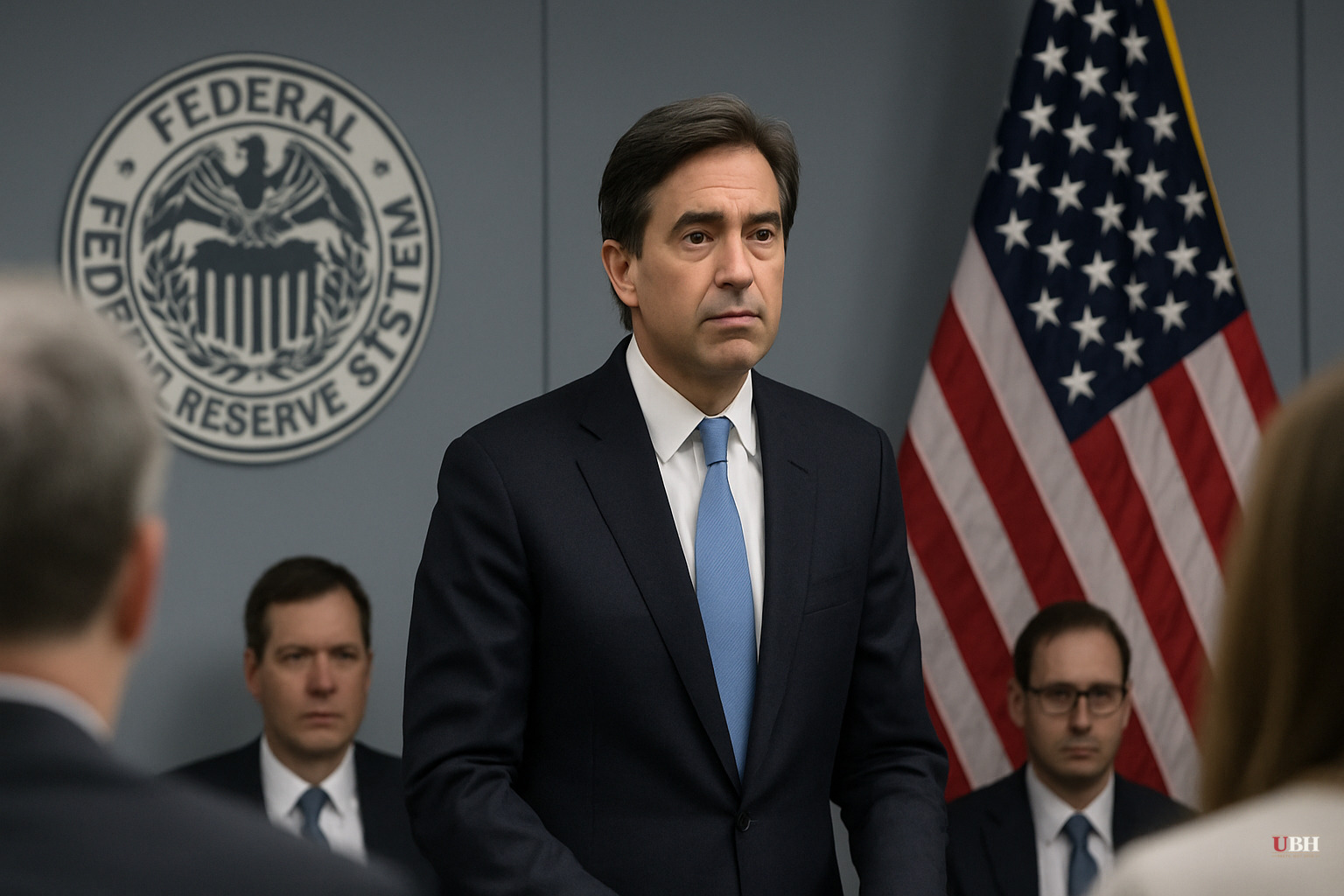
Since Kevin Warsh took the Federal Reserve chair on June 17, 2026, his first ten days have produced one rate decision, zero easy answers, and a Supreme Court case that hangs over his entire tenure.
The Rate Hold
At his first press conference as chair, Warsh kept the federal funds rate at 3.50% to 3.75%, according to Crypto Briefing. That's the rate corridor Jerome Powell left behind after a tightening cycle, an easing cycle, and what Warsh is now inheriting as a potentially premature easing path.
Inflation has hit levels not seen in three years, driven by energy price shocks and ongoing geopolitical pressures. Holding steady on day one reads as deliberate. Warsh appears to be in data-gathering mode before committing to a direction. That's defensible. It's also the only move that doesn't immediately blow up his credibility before he's had a chance to build any.
Who Warsh Is
Warsh is not a newcomer to crisis-era central banking. He served as a Fed governor from 2006 to 2011, which means he has a front-row seat to what the 2008 financial collapse looked like from inside the building. That experience matters. It doesn't, however, make inheriting someone else's policy framework in a high-inflation environment any less complicated.
Powell's tenure produced pandemic-era rate cuts, the most aggressive tightening cycle in decades, and an easing path that some critics now argue was premature. Warsh owns all of that the moment he sat down in the chair.
Sintra
From June 29 to July 1, Warsh will be at the ECB Forum on Central Banking in Sintra, Portugal, sharing the stage with ECB President Christine Lagarde and other major central bank figures. The forum's stated theme is "Shaping Europe's future: innovation, growth and stability," per Crypto Briefing. The agenda includes discussions on AI and tokenization.
No crypto policy announcements are expected from Warsh's appearance. But in a forum environment, tone matters as much as substance. Markets will parse every word he says about inflation tolerance for signals about where the next FOMC decision goes. His first press conference told us he's not moving yet. Sintra will test whether that's still true.
The Supreme Court Problem
The more structurally important issue is Trump v. Cook. The case involves the president's attempt to remove Fed Governor Lisa Cook, whose term was set to run until 2038, before that term expires. The Supreme Court is weighing whether the president has the constitutional authority to fire a Fed governor mid-term.
The strongest argument for presidential removal power is straightforward: voters elect presidents to execute economic policy, and an unelected technocrat with a 14-year term and no accountability to the public represents a democratic deficit. If the executive branch owns economic outcomes, the argument goes, it should have meaningful control over the institution setting the price of money.
That argument has real weight. The Fed's effectiveness is built almost entirely on the market's belief that it will act on data, not on instruction from whoever is in the White House. If the Court rules that a president can remove governors at will, that belief takes serious damage. Rate decisions become political signals. Credibility—the central bank's only real asset—degrades.
For Warsh specifically, the dynamic is uncomfortable. He was nominated by the same president pursuing Cook's removal. His independence is already being questioned before he's had a chance to demonstrate it. The case is out of his hands, but its outcome shapes what his tenure means.
What the FOMC Looks Like
Crypto Briefing notes the FOMC is "deeply divided." That's not a new problem. The committee has had internal friction through multiple recent cycles, but it compounds the challenge. A new chair managing a split committee, rising inflation, and external legal pressure over Fed independence is not operating from a position of strength.
Warsh's next FOMC meeting will carry significantly more weight than his first one did. Holding steady in June was low-risk. The next decision won't be.
The unresolved question is timing. If the Supreme Court rules in favor of broad presidential removal authority before Warsh's next rate decision, does that shift how he communicates, how the committee votes, or how markets interpret either? There is no clean answer to that yet.
Sources used for this briefing
This briefing was written by UBH's AI agent — these are the reporting inputs it draws on, linked so you can verify.


