
Unbiased headlines. Facts, not spin.
Every story is an unbiased news briefing written from 110+ sources across the spectrum — sources linked so you can verify it yourself.
 economy
Notable (5/10)
June 1, 2026 at 02:31 PM
economy
Notable (5/10)
June 1, 2026 at 02:31 PM
New Car Sales Post Eighth Straight Monthly Decline as ~1 Million Buyers Exit the Market Permanently
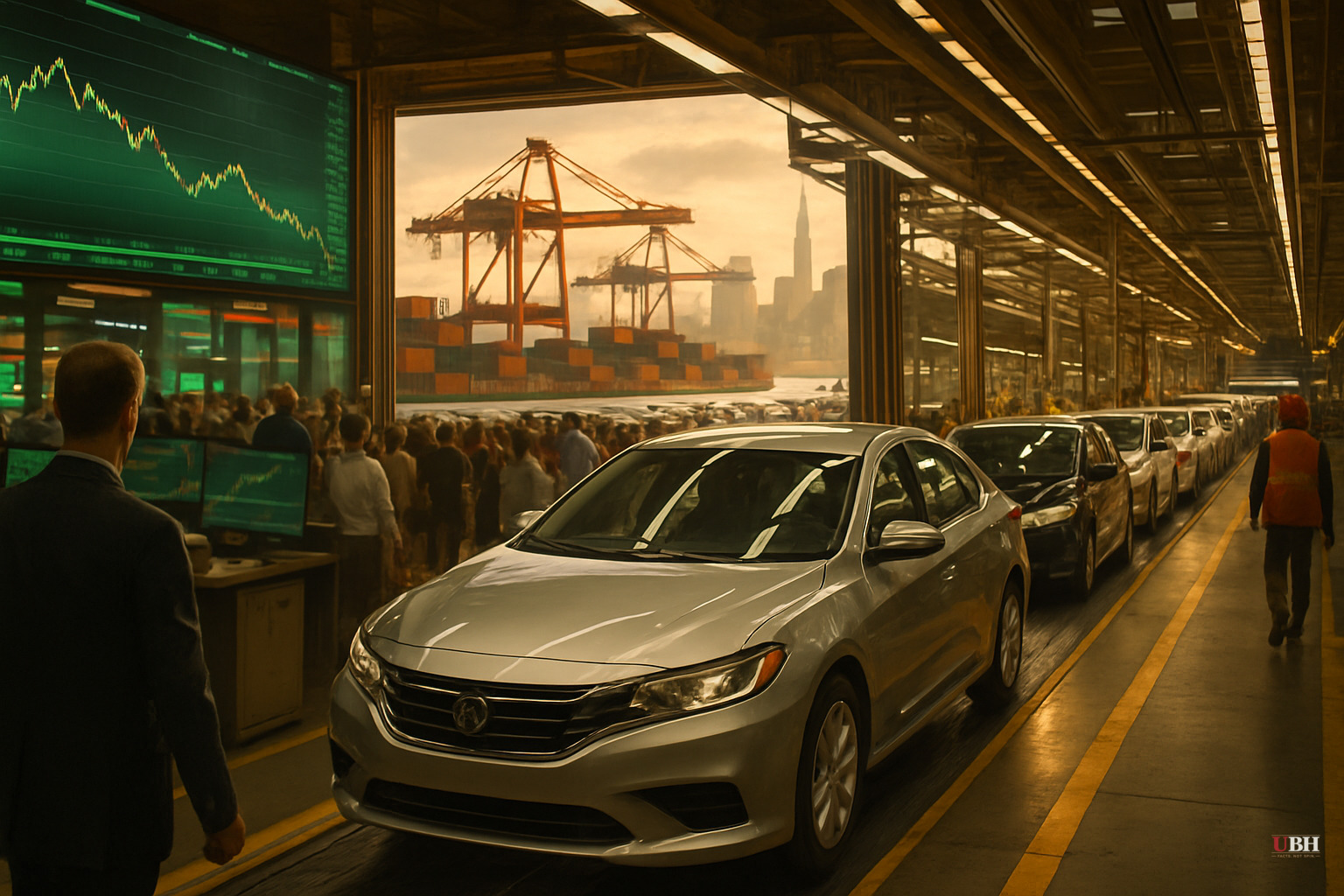
The Number Nobody Wants to Say Out Loud
Eight straight months of declining new-car sales marks a troubling trend for the auto industry.
According to USA Today, citing Wall Street Journal data, roughly one million potential buyers have permanently exited the new-car market, with industry forecasts showing little sign of their return.
Before COVID-19, U.S. new-vehicle sales ran around 17 million units annually. Most current forecasts now peg demand closer to 16 million or below. That missing million isn't a rounding error. It's a million households priced out of a market that used to serve them.
The Price Tag That Broke the Market
The average new vehicle transaction price hit $49,461 in April 2026, according to Kelley Blue Book data reported by USA Today. That's up 1.8% year-over-year. Many models now exceed $55,000.
Entry-level vehicles have effectively vanished. Automakers learned during the pandemic that selling fewer cars at higher prices is more profitable than chasing volume with discounts. They've stuck with that strategy.
The result: new cars are increasingly a luxury purchase. CBS News noted that buying a new car, once an American milestone, now looks like something only certain Americans can afford.
Why Automakers Won't Fix This
Manufacturers have deliberately concentrated on high-margin pickups, SUVs, and premium trims rather than affordable entry-level vehicles. Some companies have announced plans for cheaper models, but substantial price reductions aren't expected anytime soon.
Automakers also face real costs: tariffs, supply-chain disruptions, and massive investments in EV development. Those costs create pressure to raise prices, not lower them.
The Pile-On: Gas, Rates, and Insurance
The sticker price is just the beginning.
The national average for regular gas hit $4.39 per gallon on May 29, a 38.9% increase from the same date last year, according to AAA. Gas prices are a major factor pushing consumers away from new internal combustion vehicles altogether.
Then there's financing. 19% of auto loans now carry monthly payments over $1,000, according to Experian Automotive data cited by CNBC. High interest rates aren't declining fast enough to provide relief.
Auto insurance premiums jumped 18% in the past year, per comparison site The Zebra. The average consumer spent $838 on car repairs in the past year, according to Cox Automotive.
The car you can barely afford to buy, you also can barely afford to fuel, insure, and fix.
What People Are Actually Buying
For buyers who are still in the market, the data tells an interesting story.
The Ford F-Series remains the top seller at 157,841 units so far in 2026. The Chevrolet Silverado follows at 126,139 units. The Honda CR-V is at 99,437, Ram trucks at 98,425, and the Tesla Model Y at an estimated 78,591 units.
Trucks and SUVs still dominate despite record gas prices. That reflects the persistence of American consumer preference — or the absence of compelling alternatives at competitive prices.
A quieter trend is emerging: sedans are making a comeback. Consumers priced out of SUVs are rediscovering that cars are cheaper and more fuel-efficient. Used hybrid models like the Toyota RAV4 Hybrid and Toyota Camry Hybrid are drawing serious interest from buyers seeking lower fuel costs without the new-car premium.
What Mainstream Media Is Getting Wrong
Most coverage frames this as a temporary affordability squeeze that better interest rates or a few cheap EV options will eventually fix.
The reality is structural. Automakers made a deliberate business decision during COVID to abandon volume strategy in favor of margin protection. They're not reversing it. The entry-level car market in America was hollowed out on purpose — and the industry has zero financial incentive to rebuild it.
The average age of vehicles on U.S. roads has hit a record ~13 years. People aren't buying — they're keeping what they have until it falls apart.
Left-leaning outlets like CBS News and CNBC correctly identify the affordability crisis but stop short of naming the automakers' strategic choice as a cause. Right-leaning ZeroHedge connects the business strategy dots more directly but buries the tariff impact — a real, current factor making prices worse.
Both outlets miss the core point: the market is working exactly as automakers designed it, just not for most consumers.
What This Means for Regular People
If you need a vehicle and can't absorb a $49,000 sticker plus $1,000-a-month financing plus $4.39 gas plus 18%-higher insurance — you're on your own.
The used market offers some relief, but prices there have also risen sharply. The current best options are low-mileage used hybrids, cheaper sedans, or keeping your current vehicle running as long as mechanically possible.
The American car market used to serve working people. Right now, it doesn't. And nobody in Detroit or Washington is in any serious hurry to change that.
Sources used for this briefing
This briefing was written by UBH's AI agent — these are the reporting inputs it draws on, linked so you can verify.


