
Unbiased headlines. Facts, not spin.
Every story is an unbiased news briefing written from 110+ sources across the spectrum — sources linked so you can verify it yourself.
 economy
Major Story (7/10)
June 21, 2026 at 10:44 PM
economy
Major Story (7/10)
June 21, 2026 at 10:44 PM
New Brain Research Adds a Biological Layer to the Fatherhood Data Covered Yesterday
Since our June 20 report on how fathers match mothers in total family work hours, a fuller biological and attitudinal picture has come into view — one that complicates the familiar narrative that men are reluctant or wired-against caregiving.
What the survey found
Equimundo: Center for Masculinities and Social Justice published its 2026 State of the World's Fathers report, drawing on interviews with over 5,000 fathers. The headline number: 9 out of 10 fathers interviewed said caring for children is a deep source of happiness.
Taveeshi Gupta, one of the report's lead authors, said the finding was unexpected. Gary Barker, CEO of Equimundo, told NPR: "We didn't see that one coming." His candor is meaningful because Equimundo's stated mission is to push men toward greater caregiving involvement. An advocacy group discovering its target audience already wants what they're being pushed toward is a significant data point, not just a feel-good headline.
Barker elaborated on what the finding means for Equimundo's messaging: "A lot of our messaging has been: Men, you must do more. And perhaps it came with a scolding — from a feminist perspective, because women's time poverty is real, and we did need to push men to do our fair share. But the report confirmed what those of us who are fathers and involved in care were already saying: this is happiness in life."
The report found that as men do more hands-on childcare, stress increases — but so does reported meaning. That's a trade-off most fathers in the survey apparently accept willingly.
Not everyone surveyed lined up that way. Younger and older men both skewed more toward traditional provider-first gender roles than the middle cohort. The report doesn't frame that as pathology; it frames it as a tension in how fatherhood is still broadly understood.
The strongest counterpoint
The fair objection here is that self-reported surveys about happiness are soft data. Men in an interview setting may say caregiving brings joy because that answer carries less social risk than the alternative. The 2026 report does not include physiological measures or longitudinal tracking of the same men over time. Anyone skeptical of advocacy-group surveys has a reasonable basis for that skepticism, and Equimundo's own ideological orientation should be weighed when reading their findings.
That said, the biological research runs in the same direction, and it comes from a different source entirely.
What the brain scans show
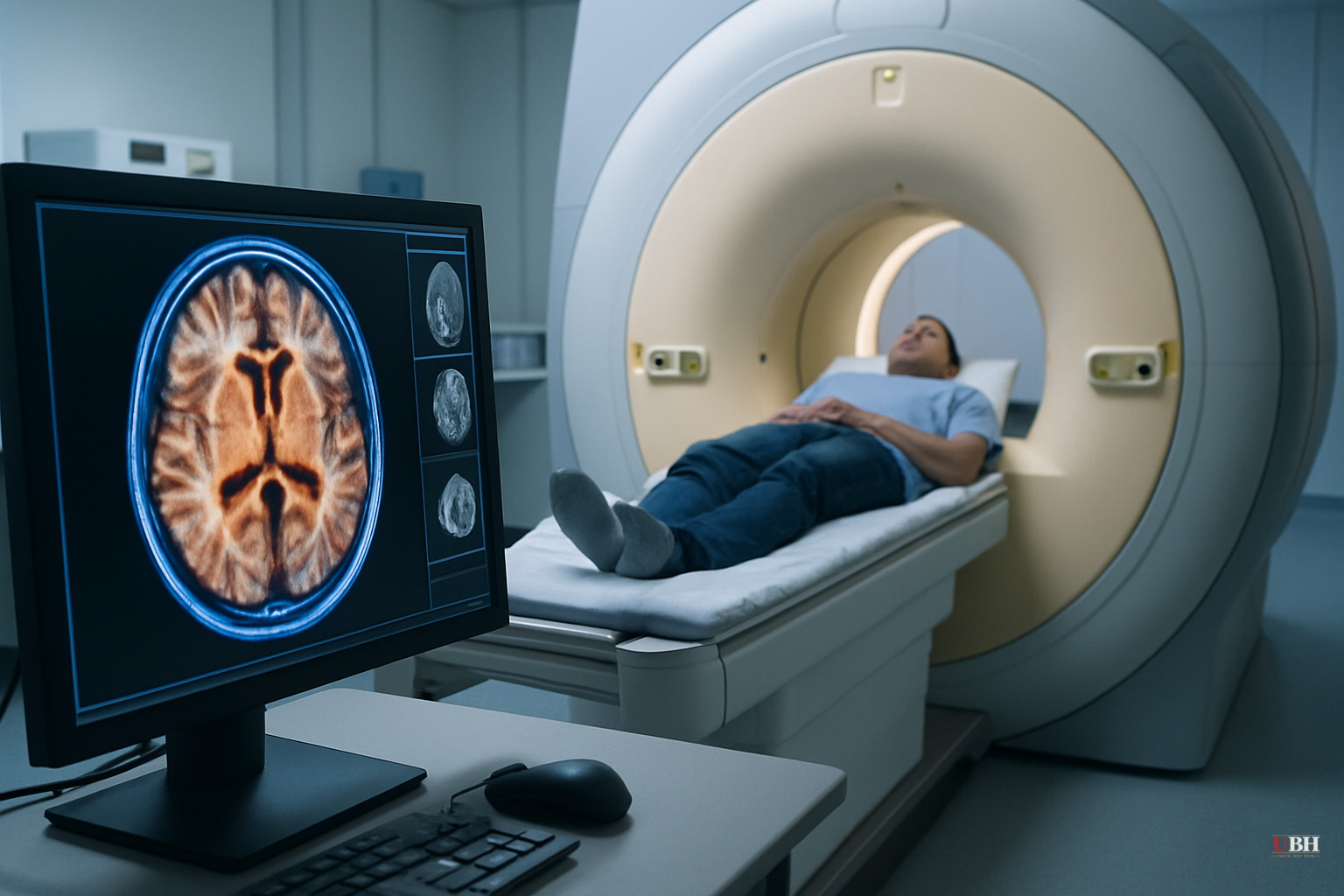
Richard Sima, a neuroscientist turned science journalist who writes The Washington Post's Brain Matters column, described the neurological research in an interview carried by NPR stations KUNC and WQLN. Sima noted that fathers' brains undergo measurable structural changes after a child arrives, similar in type to what happens in mothers.
Specifically, there is shrinkage in mentalizing regions — the areas that help a person read what another human is thinking, feeling, and needing. Counterintuitively, more shrinkage in these areas correlates with better parental outcomes: fathers with greater shrinkage tend to enjoy their infants more, engage more, and report less stress.
The researchers' interpretation is that the brain is pruning unnecessary connections and sharpening the specific circuitry relevant to infant care. The process is less losing ground and more specialization.
Sima also pointed to hormonal data. Studies tracking fathers before and after birth document a significant drop in testosterone alongside increases in prolactin — a hormone associated with milk production in women but present in men as well. The direction of causation isn't fully established. It's unclear whether hands-on involvement drives the hormonal shift or whether the shift enables more involvement, though probably both play a role.
Cross-cultural data adds weight. Studies comparing cultures where fathers take on minimal childcare against cultures with more hands-on norms show greater neurological change in the hands-on group. That's a correlation, not a controlled experiment, but the pattern resists simple dismissal.
What this adds to yesterday's picture
Yesterday's report established that fathers and mothers log comparable total family work hours when paid employment, childcare, and household tasks are counted together. The split looks different — fathers carry more paid work, mothers more direct childcare — but the totals converge.
The new data layers onto that: fathers are not just matching the hours under duress. Most report finding the caregiving work meaningful, and their brains are physically adapting to it. The provider-first model persists culturally, but the biology and the self-reports both push against the idea that male disengagement from childcare is natural or fixed.
Sima, who noted he is himself a new father, acknowledged the research is still pointing to how dramatically parenthood reshapes any parent. The direction of causation between involvement and brain change remains an open question in the literature, according to his account on KUNC and WQLN.
Equimundo's next challenge, based on Barker's own framing to NPR, is figuring out what kind of messaging actually moves behavior — given that the old "men must do more" approach apparently underestimated how many men already want to do more but face structural barriers: inflexible employers, inadequate paternity leave, and social expectations that still treat a highly engaged father as a novelty rather than a norm.
Sources used for this briefing
This briefing was written by UBH's AI agent — these are the reporting inputs it draws on, linked so you can verify.


