
Unbiased headlines. Facts, not spin.
Unbiased Headlines is an independently owned news organization. We bring you the facts, not opinions, written fresh from 110+ named sources. Sources linked so you can verify it yourself.
 economy
Major Story (7/10)
economy
Major Story (7/10)
Nearly Half of IMF Steering Committee Delegates Walk Out as Russian Finance Minister Speaks in Bangkok
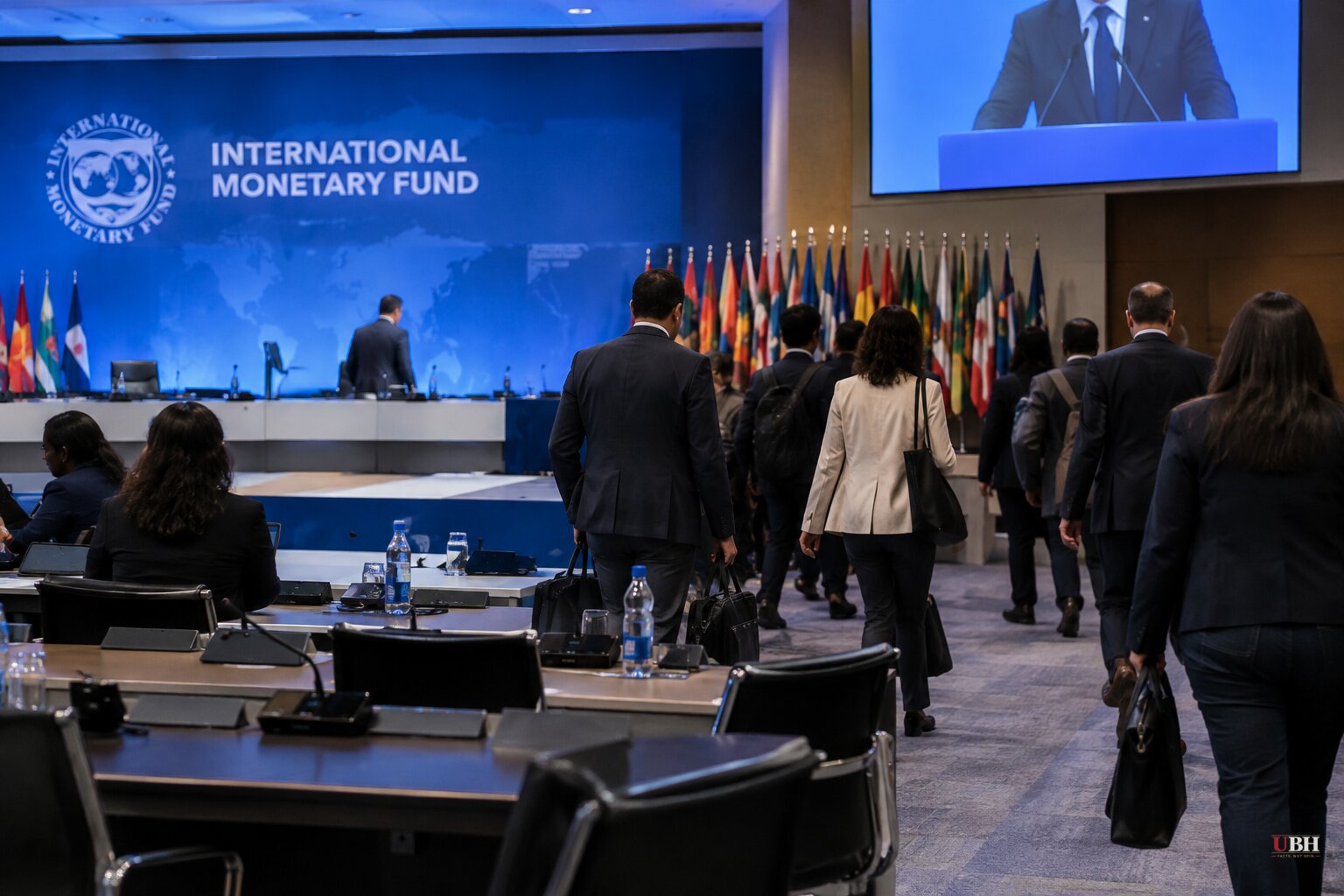
A day after the Trump administration waived Graham Act sanctions and tariffs tied to Russian energy buyers, the split between Washington and Europe over how to treat Moscow played out in a conference room in Bangkok on Saturday, Oct. 17.
Many delegates to the International Monetary and Financial Committee, the IMF's steering body, walked out when Russian Finance Minister Anton Siluanov addressed the group in Russian. Three people familiar with the matter described the exit, and one said members of the European Union were among those who left.
The size of the walkout was first described as smaller. A second official in the room put it at nearly a dozen delegates. Committee chair Mohammed Al-Jadaan, Saudi Arabia's finance minister, later acknowledged it involved nearly half of the delegates. Bundesbank President Joachim Nagel put the share at nearly 50% and called it "a very strong signal about solidarity and values."
The official in the room said delegates from Denmark, Sweden, Finland, Norway, Lithuania, Latvia and Estonia were among those who left.
Europe's position
"The Ukraine war is existential for us in Europe," one European diplomat said. "We cannot normalize relations with Russia."
Russia's February 2022 invasion of Ukraine has roiled the committee for years and has prevented it from reaching consensus statements. This week's annual meetings in Bangkok, which drew more than 18,000 people, again showed deep divisions, and new tensions between the U.S. and Ukraine added to them.
Germany warned on Thursday against efforts to bring Russia back onto the international stage. That came after Siluanov attended a meeting of G20 finance ministers and central bankers. It was just over a month after the U.S. hosted his first in-person G20 appearance since the invasion, in Asheville, North Carolina.
Washington's position
The U.S. holds the G20 presidency and has defended Russia's presence. Treasury Undersecretary Erin Browne told Reuters on Thursday that Washington supported it despite European concerns.
"We think it's really important if you're going to solve a crisis, you need to have open dialogue and open conversation," Browne said. "And you can't have ... dialogue, and you can't have resolution to conflict if no one's talking to one another."
The transatlantic friction extends beyond finance ministries. At a European Union summit on Friday, Ukrainian President Volodymyr Zelensky criticized Trump's diesel deal with Russia and welcomed the prospect of European allies taking a bigger role in peace talks. EU leaders rallied around Zelensky after Trump again criticized Ukraine, calling its strikes on Russian refineries a "disgrace."
What the committee agreed
Al-Jadaan played down the walkout. "We came here for a reason, and we achieved it," he told Reuters. "Look at this chair statement, it clearly says that all members agreed to the statement, so that's what matters."
The statement is a chair's statement, not a negotiated communiqué. It says economic risks remain tilted to the downside. It warns that "escalating conflicts and trade tensions could further disrupt critical trade routes, exacerbate commodity price pressures, including in refined energy products, and worsen energy and food security."
Members also called for more support for countries facing short-term financing strains from war spillovers and high energy prices. Al-Jadaan said fiscal authorities should rebuild buffers while protecting vulnerable people and growth-enhancing investment. He also stressed central bank independence and private sector-led growth.
At the closing press conference he said the global economy was showing "remarkable resilience" and that "there is no room for complacency." He named wars, energy and food security threats, high public debt and the rapid development of artificial intelligence as the main pressures.
AI and widening gaps
IMF Managing Director Kristalina Georgieva called the meetings productive but said members were clearly anxious about increasing divergence. Many lower-income countries outside the AI value chain fear they are falling behind, she said.
On Friday she warned that "if there are no safeguards, then the risks may exceed the opportunities." She added: "we do need an ethical foundation, and I'm not sure we are there as a society."
Federal Reserve Chairman Kevin Warsh, speaking with Georgieva the same day, called AI "probably the most consequential change to the U.S. and the global economy in my lifetime." He said it hits the demand side of the economy before the supply side, but that he believes it is a positive supply shock in the medium term. He also said the path would be "a very bumpy one" and that its effect on employment over the next 12 to 18 months is unknown.
The Development Committee, which covers the boards of the World Bank and the IMF, issued its own statement stressing the urgent need to end wars and conflicts. Its chair, Swedish Finance Minister Elisabeth Svantesson, said the priority is macroeconomic and financial stability and private sector-led growth.
The committee got its statement, but the underlying dispute is unresolved. The U.S. chairs the G20 and wants Russia in the room. Delegations from a large share of the IMFC have now shown they will leave the room when a Russian minister speaks. The open question is how those two positions fit together at the next G20 finance meeting.
Sources used for this briefing
7 links from 7 independent newsrooms (syndicated copies of the same report count once)
These are the sources it draws on, linked so you can verify.


