
Unbiased headlines. Facts, not spin.
Every story is an unbiased news briefing written from 110+ sources across the spectrum — sources linked so you can verify it yourself.
 tech
Major Story (7/10)
July 5, 2026 at 08:33 PM
tech
Major Story (7/10)
July 5, 2026 at 08:33 PM
Nearly 90 Startups Reached Unicorn Status in 2026, Led by AI Infrastructure Bets
The Numbers
Nearly 90 private companies crossed the $1 billion valuation threshold through the first half of 2026, according to data tracked by Crunchbase and PitchBook. That pace is notable even against the AI-fueled enthusiasm of recent years.
valuations in the 2026 cohort range from $1 billion at the floor to $41 billion at the top. AI-related companies dominate the list, but new unicorns also span healthcare, advanced manufacturing, crypto banking, aerospace, and legal tech.
The Headline Deal
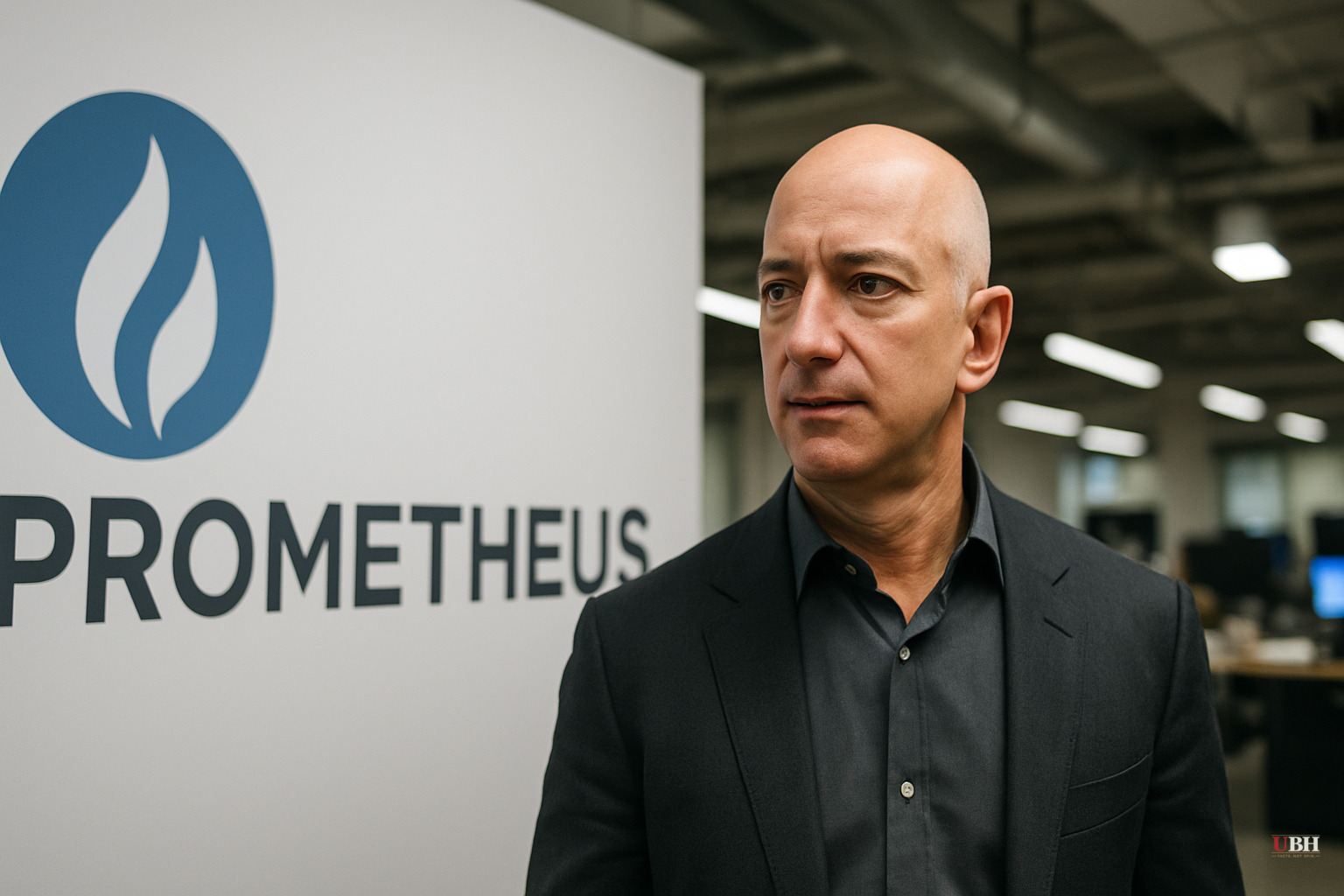
No deal in this cycle comes close to Promethus. Co-founded by Jeff Bezos, the company is building AI tools that automate general engineering tasks. Its $12 billion Series B, led by JPMorgan Chase and BlackRock, is the largest individual funding round in the 2026 cohort, according to The Cryptonomist. Total funding raised stands at $18.2 billion, and the company now carries a $41 billion valuation.
The lead investors matter here. JPMorgan Chase and BlackRock are NOT traditional Silicon Valley venture firms. When the world's largest asset manager co-leads a Series B for an AI startup, it signals that institutional capital is treating AI infrastructure as a long-duration capital allocation, not a speculative flier.
Speed Over Revenue
Several companies founded between 2023 and 2025 have already crossed the billion-dollar mark with no demonstrated path to profitability on record. Recursive, an AI research lab founded in 2025, raised a $650 million Series A led by GV and Greycroft, with Nvidia participating, and is already valued at $4.65 billion, per The Cryptonomist. Core Automation, founded in 2026, reached a $1 billion valuation on a $100 million seed round. Hark, a consumer hardware company founded in 2025, hit a $6 billion valuation after a $700 million Series A led by Parkway Venture Capital, with Nvidia and Salesforce Ventures among backers.
Investors are not waiting for revenue proof points. They are betting on foundational positioning in an AI ecosystem that is still being constructed.
Picks and Shovels
The Crunchbase breakdown of May's 29 new unicorns highlights a specific pattern: money is flowing less toward new AI models and more toward businesses helping enterprises actually deploy AI. Whalesbook's analysis notes the same dynamic, pointing to companies like Blitzy, which builds enterprise coding assistants, and Applied Compute, which builds software training infrastructure, as examples of "picks and shovels" plays attracting the most consistent venture attention.
Other notable 2026 entries tracked by TechCrunch include EXA ($1.95 billion), a web search engine built for AI agents, backed by Andreessen Horowitz and Nvidia; MainFunc ($2.6 billion), which runs an AI workspace product called Genspark and raised a $485 million Series B; and Socket ($1 billion), a cybersecurity startup protecting against software supply chain attacks, backed by Thrive Capital and Andreessen Horowitz.
Outside AI
Healthcare is the second-biggest story in this cohort. MiRus, a cardiovascular and orthopedic medical device company, reached a $4.41 billion valuation after a $1.5 billion late-stage round from Boston Scientific, according to TechCrunch. Vi Labs ($1.64 billion) uses AI to help health organizations find patients and run operations. Forus, which automates hospital benefit verifications and enrollment, hit a $1.01 billion valuation on a $160 million Series B backed by Accel, Bain Capital Ventures, and Thrive Capital, per The Cryptonomist.
Advanced manufacturing also made the list. SendCutSend, which cuts custom industrial parts, reached a $1 billion valuation on a $110 million Series A led by Paradigm and Sequoia, per TechCrunch.
OnlyFans joined the Crunchbase Unicorn Board in May after raising its first external financing, according to Crunchbase News.
The Legitimate Concern
Critics of this unicorn wave have a fair point: these valuations are entirely private, set in funding rounds, and carry ZERO obligation to match real-world operating performance. Whalesbook flags the central risk plainly. The sustainability of billion-dollar price tags depends on each company's ability to convert rapid growth into consistent cash flow. Burn rates and the ability to secure follow-on funding at current valuations are the variables that will determine which of these 90 companies survives the next market cycle.
The 2021 unicorn wave produced dozens of companies that raised at inflated multiples and either went public at steep losses or quietly imploded when the rate environment shifted. This cycle involves faster company formation, larger individual checks, and heavier institutional involvement than 2021, which could mean either greater staying power or greater systemic exposure when the correction comes.
The composition of 2026's investor base is meaningfully different from 2021. The participation of JPMorgan Chase and BlackRock, alongside traditional venture firms, suggests at least some of these bets are being underwritten with longer time horizons and larger balance sheets than the SPACs and retail-driven enthusiasm that inflated the last cycle.
What's Coming
According to Crunchbase, Anthropic privately filed for an IPO after moving ahead of OpenAI to become the second most valued private company behind SpaceX. OpenAI followed with its own confidential filing. SpaceX is expected to list in what Crunchbase describes as the largest-ever IPO, which would remove more than one-tenth of the Unicorn Board's current $9.9 trillion total value as the company exits the private markets.
Whether the remaining 80-plus 2026 unicorns can hold their valuations through that liquidity event, and through the IPO scrutiny that will follow Anthropic and OpenAI into the public markets, is the question no private funding round can answer.
Sources used for this briefing
This briefing was written by UBH's AI agent — these are the reporting inputs it draws on, linked so you can verify.


