
Unbiased headlines. Facts, not spin.
Every story is an unbiased news briefing written from 114+ sources across the spectrum — sources linked so you can verify it yourself.
 health
Major Story (8/10)
Event date: August 10, 2026
health
Major Story (8/10)
Event date: August 10, 2026
Nearly 30,000 People Sick From Cyclospora as Records Show FDA Hadn't Inspected the Farm in 7 Years
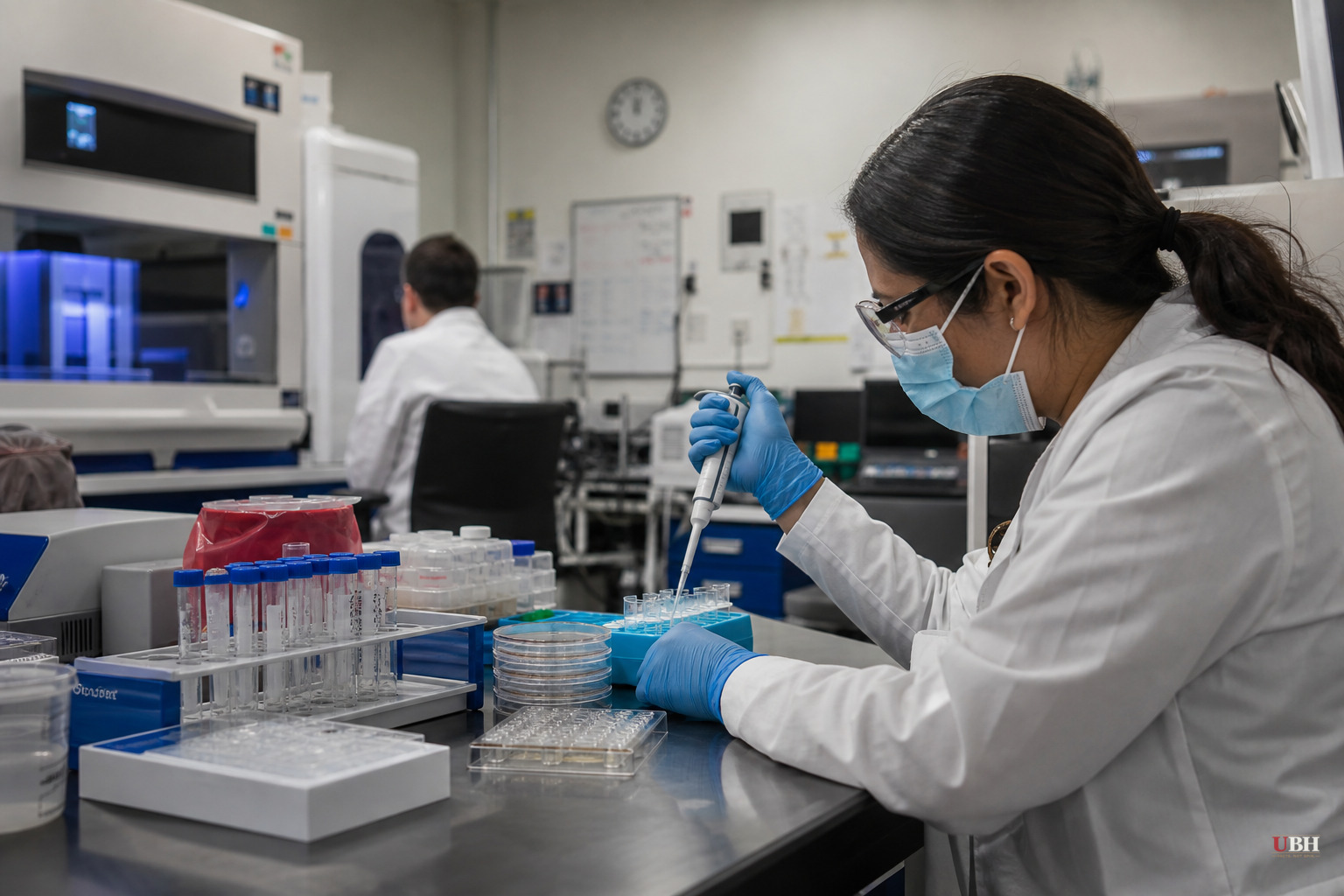
Nearly 30,000 illnesses. Two deaths. And the farm at the center of it hadn't seen an FDA inspector in seven years.
That's the picture laid out by the Safe Food Coalition in an August 12 letter to congressional leaders, and confirmed by CBS News reporting on FDA's foreign inspection records. The outbreak is cyclosporiasis, a parasitic illness, and the suspected source is Taylor Farms de Mexico, a major supplier of packaged lettuce and salad mix sold across the United States.
FDA last inspected that facility in 2019. Before that, 2013, after a previous cyclosporiasis outbreak. The 2019 inspection found no violations. The 2013 inspection found the plant was recycling wash water for salad mix, but investigators couldn't conclusively tie that practice to the outbreak, according to CBS News.
The inspection math doesn't work, and hasn't for a decade
Congress requires FDA to conduct roughly 19,000 foreign food safety inspections per year. In 2025, FDA managed just under 1,000, according to CBS News. That's not a rounding error. That's less than 10% of the legal mandate, and it's been that way for the entire 10 years the requirement has existed, under both Republican and Democrat administrations.
FDA has told Congress the target is unrealistic. Fair enough. But CBS News reports the agency has never formally asked Congress to change the number. It just misses it. Every year. By a mile.
Foreign inspections fell another 29% from 2024 to 2025, the lowest count since 2011 outside of the COVID-19 pandemic, per CBS News. Layoffs during the first year of the Trump administration's second term thinned the ranks further, while Congress hasn't grown the food safety budget to keep pace with inflation.
Meridith Seife, who led an HHS Inspector General report on FDA inspections, put it plainly to CBS News: "FDA inspections really are the first line of defense for mitigating outbreaks. If FDA isn't routinely going out to food facilities, it's just completely blind."
About a third of FDA's foreign inspections over the last decade turned up violations, including feces in growing fields in Mexico and air conditioning units dripping onto crawfish in China, according to CBS News. Roughly 2% of visits found violations serious enough to trigger enforcement.
HHS senior press secretary Emily Hilliard told CBS News the agency is "actively working to expand staffing at foreign posts." No specific numbers or timeline were provided.
Congress just delayed the tool built to catch this faster
While inspection counts have cratered, Congress also quietly gutted the enforcement timeline for FDA's Food Traceability Rule, a regulation finalized in 2022 that would require faster lot-code tracking for high-risk foods like leafy greens.
FDA originally set a January 2026 compliance deadline. The Trump administration pushed that back 30 months, to July 2028, according to the Safe Food Coalition's letter. Then Section 780 of the continuing appropriations bill that ended the November 2025 government shutdown went further, barring FDA from spending any money to enforce the rule before that same 2028 date.
The coalition, which includes the Center for Food Safety, Consumer Reports, and the Consumer Federation of America, argues this rule could have sped up the cyclosporiasis investigation. Their letter says Taylor Farms failed to disclose information in its recall notices that would have been required under the traceability rule, worsening what the coalition calls a "crisis in consumer confidence."
Large retailers including Kroger, Albertsons, and Walmart already built traceability systems matching FDA's requirements before the delay was announced, according to the coalition's letter. The infrastructure exists. Congress just told FDA not to make anyone use it yet.
A GRAS loophole gets some daylight, finally
Separately, FDA under Deputy Commissioner for Human Foods Kyle Diamantas proposed closing a different long-standing gap: the "generally recognized as safe," or GRAS, self-certification loophole that lets manufacturers add new ingredients to food without ever telling FDA, according to CNN.
HHS Secretary Robert F. Kennedy Jr. called it a MAHA-movement win, telling reporters "industry hijacked the loophole and drove a convoy of chemical trucks through it, straight into the American food supply." CNN reports at least 111 substances of unknown safety have entered the food supply this way.
The Epoch Times raised a genuine tension here worth taking seriously. Reformer and former restaurant owner Mollie Engelhart notes she couldn't get olive leaf, a substance with thousands of years of documented human consumption, approved for a beer recipe, while food manufacturers could add novel chemicals to processed food without even notifying regulators. Her argument isn't that GRAS reform is bad. It's that a regulatory system this inconsistent, hard on small operators experimenting with traditional ingredients while permissive on manufacturers self-certifying new chemicals, was broken in more than one direction.
The GRAS proposal is still just a proposal, subject to industry and public comment, per CNN. It does nothing to fix the inspection gap or the traceability delay. Those are separate failures, on a separate track, and neither has a fix with a firm date attached. FDA says it's expanding foreign post staffing. Congress has set July 2028 as the earliest the traceability rule can be enforced. Nobody has said what happens if another cyclosporiasis outbreak hits before then.
Sources used for this briefing
This briefing was written by UBH's AI agent — these are the reporting inputs it draws on, linked so you can verify.


