
Unbiased headlines. Facts, not spin.
Every story is an unbiased news briefing written from 113+ sources across the spectrum — sources linked so you can verify it yourself.
 defense
Notable (5/10)
September 22, 2026 at 07:49 PM
defense
Notable (5/10)
September 22, 2026 at 07:49 PM
Navy Demonstrates Software Linking Human Battle Plans to Autonomous Fighter Jets at Point Mugu
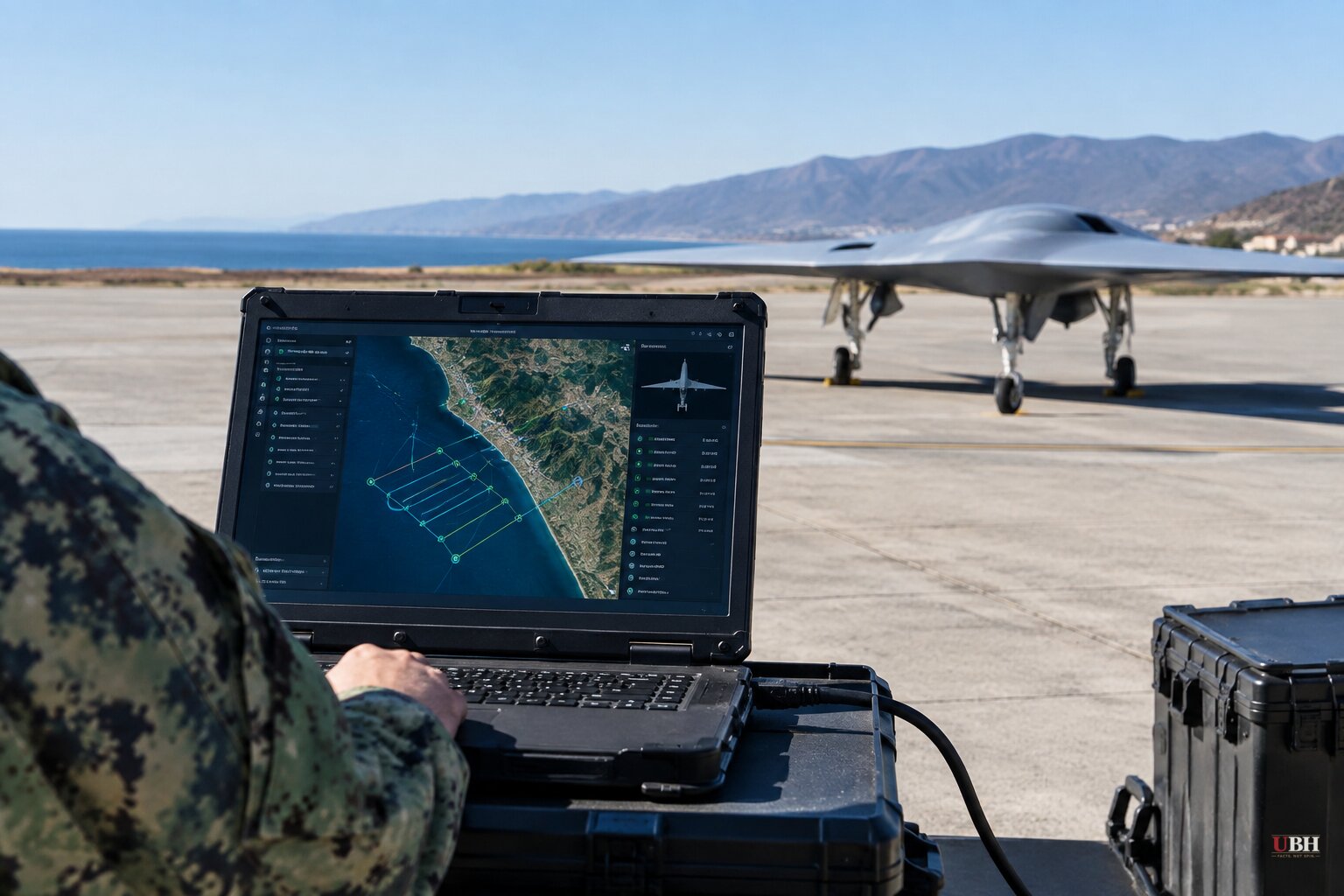
The U.S. Navy demonstrated a new mission-planning tool this month that lets human operators give orders to autonomous aircraft without manually rewriting instructions for every platform.
The system is called Collaborative Autonomy Mission Planning, or CAMP. The Navy's Portfolio Acquisition Executives Munitions office showed it off during Gray Flag 2026, a large-force test event at Point Mugu Sea Range in California, using a General Atomics MQ-20 Avenger as a stand-in autonomous aircraft, according to Defence Blog and Defence Industry.
The team behind it, the Strike Planning & Execution Systems office known as PMX-281, built a mission plan, sent it to the Avenger, let the drone execute it, and reviewed the results afterward, according to Navy Times and Military Times.
"CAMP is about making autonomy more usable by integrating into mission environments with both manned and unmanned platforms," said Capt. Todd "Toby" Keith, the PMX-281 program manager, in comments carried by Business Insider, Defence Blog, and Navy Times. "That can reduce the burden on our operators, improve interoperability and help bring collaborative autonomy closer to operational use."
What CAMP solves
Mission planners already use a system called the Collaborative Mission Planning Continuum, or CMPC, to define roles, timing, authorities, and restrictions for a strike or patrol. The catch, as Defence Blog explained, is that autonomous aircraft can't just read a human battle plan the way a pilot can. They need it converted into a format they can act on.
CAMP does that conversion. It takes the force-level decisions humans already make in CMPC and turns them into instructions an unmanned aircraft can execute inside a mission alongside crewed jets, according to Defence Industry. The pitch from the Navy is straightforward: planners keep working the way they already work, and the software handles the translation instead of an operator manually reformatting orders for each drone.
Built on an existing program, with a wrinkle in the record
CAMP is described by every outlet covering it as an extension of the Navy's Experimental Platform for Intelligent Combat effort, or EPIC, which has been testing autonomous vehicle control using surrogate aircraft.
That program's most cited milestone is a test in which the Navy partnered with Shield AI to fly BQM-177A target drones under Hivemind software, directed by a simulated F/A-18. Navy Times and Military Times date that test to September 2025 and describe it as piloting one drone. Defence Blog dates the same category of test to December 2025 and describes two BQM-177A drones flown at Point Mugu. The sources do not reconcile which account is correct, and neither the Navy nor Shield AI is quoted resolving the discrepancy in these reports.
Why the Navy is in a hurry
The push isn't happening in a vacuum. Gen. Dan Caine, the Chairman of the Joint Chiefs of Staff, told the Air & Space Forces Association's 2026 Air, Space & Cyber Conference that the military doesn't have the luxury of moving slowly. "We must move together because the window to build the force that we need is closing," Caine said, according to Navy Times. "We can buy almost anything in life, but we cannot buy time."
The Navy currently operates roughly 290 battle-force ships, a number defense planners broadly consider too small for a Pacific-focused strategy against China's anti-access weapons like the DF-21D, according to List25. A Ford-class carrier costs over $13 billion; a Virginia-class submarine runs about $3.4 billion. Attritable drones are the Navy's answer to that math, which is also why Naval Air Systems Command asked industry in late August 2026 to pitch designs for the Navy's own carrier-launched Collaborative Combat Aircraft, with a per-unit cost target of $30 million, Defence Blog reported.
The stakes aren't theoretical. A Small Wars Journal essay published September 21, 2026, points to Ukraine's use of an uncrewed underwater "Sub Sea Baby" drone to damage a Russian Kilo-class submarine at Novorossiysk on December 15, 2025, and a robotic amphibious assault on Kinburn Spit on July 13, 2026, as proof that unmanned systems are already changing naval combat, not just Pentagon slide decks. China, the essay notes, is investing heavily in the same technology.
The limits of what happened
A skeptic would point out that this was one demonstration, against one surrogate aircraft, in a controlled test range, not a contested environment with jamming or an adversary shooting back. Defence Blog was explicit that the Navy has not said when CAMP might reach operational units or how many aircraft types it has been tested against beyond the single MQ-20 used at Point Mugu. The Pentagon has a long track record of impressive demos that take years, sometimes decades, to become fielded capability.
The Navy's own language reflects this caution. Keith described CAMP as bringing autonomy "closer to operational use," not delivering it. The next marker to watch is NAVAIR's Collaborative Combat Aircraft solicitation, which will determine what carrier-based drone CAMP is eventually meant to control, and whether the Navy sets a public timeline for moving CAMP off the test range and onto the fleet.
Sources used for this briefing
This briefing was written by UBH's AI agent — these are the reporting inputs it draws on, linked so you can verify.


