
Unbiased headlines. Facts, not spin.
Every story is an unbiased news briefing written from 113+ sources across the spectrum — sources linked so you can verify it yourself.
 defense
Notable (6/10)
Event date: September 16, 2026
defense
Notable (6/10)
Event date: September 16, 2026
Joint Chiefs Chairman Warns US Troops Will Be 'Hunted' by Drones as India Builds Out Network Warfare
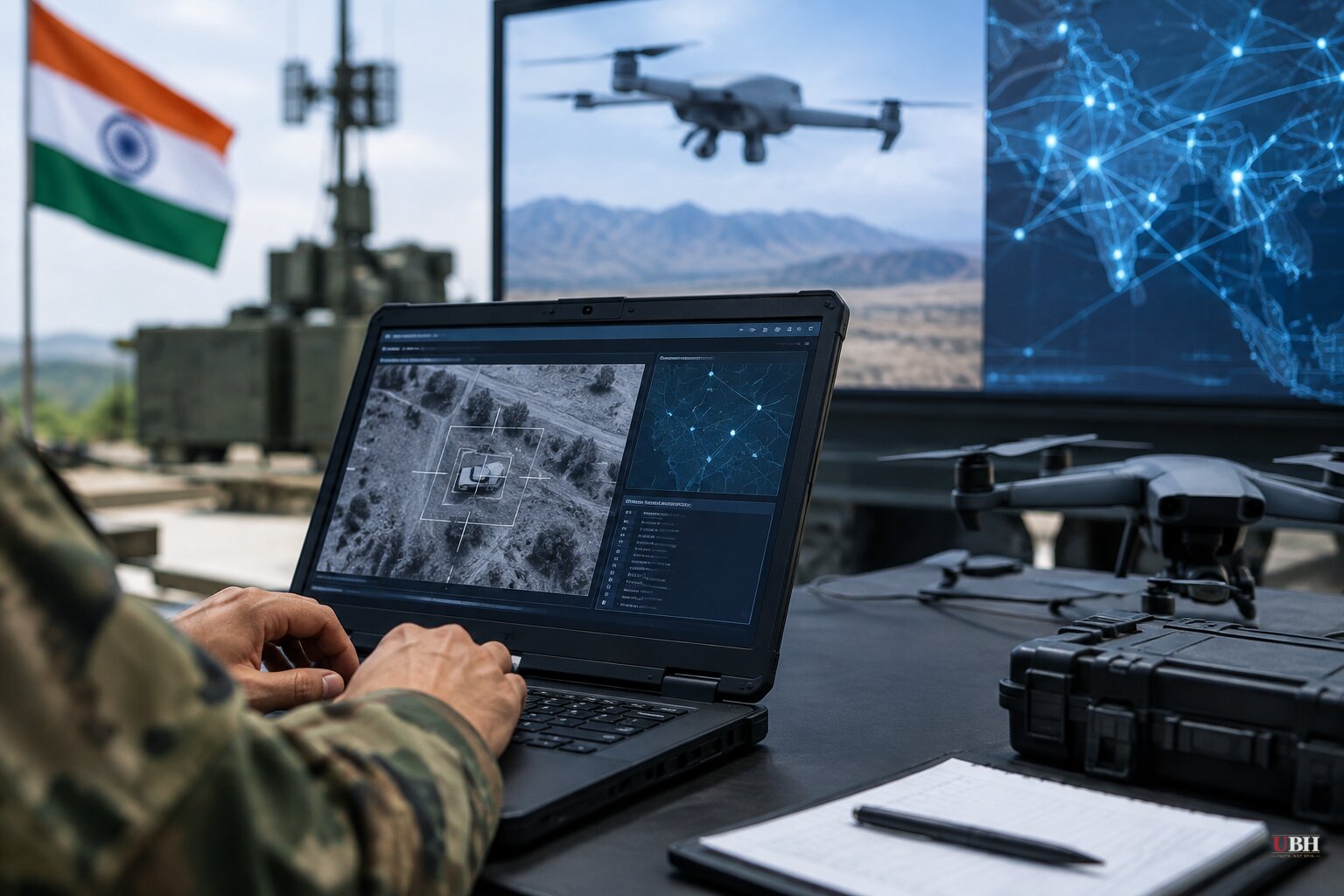
The chairman of the Joint Chiefs of Staff, Gen. Dan Caine, told a room full of Air Force officers to stop thinking of drone warfare as somebody else's problem.
"We have to assume from now on that our formations will be hunted by autonomous systems, jammed across the spectrum and tracked in real time," Caine said in a keynote at the Air & Space Forces Association's 2026 Air, Space & Cyber Conference, according to Defense News.
Caine is describing what's already happening in Ukraine and the Middle East. He wants the 2.8 million-member joint force to internalize it now, not after the shooting starts.
Caine pointed to a specific example of adaptation already underway: in June, a remotely piloted Navy unmanned surface vessel helped rescue two Army soldiers. He also flagged how first-person-view drones are reshaping tactics in electromagnetically contested environments like Ukraine.
Caine told the conference that Russia and Iran have deepened a technological feedback loop tied to the wars in Ukraine and the Middle East. Moscow is sending Tehran upgraded munitions, satellite imagery and targeting data, some of which has reportedly been used against American forces in the Middle East, per Defense News. The relationship runs both directions: Iran first supplied Russia with Shahed attack drones for use in Ukraine back in 2022, and has since licensed Russia to build the Iranian-designed drones on its own soil.
India Is Building the Same Playbook
Halfway around the world, India is chasing the identical concept under a different name: network-centric warfare. The idea, as described by the Times of India, is to stitch sensors, commanders and weapons into one digital fabric so forces can see, decide, act and strike faster than an adversary can react.
India has real infrastructure behind this already. AFNET and the Integrated Air Command and Control System connect sensors, command centers and air defense systems into a shared operational picture, according to the Times of India.
India faces two active border theaters plus pressure across maritime, air, space and cyber domains simultaneously, per the same report. Over the weekend of September 20, Fire and Fury Corps gunners ran Exercise AGNEYASTRA-IV alongside Infantry units and the Indo-Tibetan Border Police, per ANI photos cited by the Times of India.
The Times of India also reported that Pakistan has been rebuilding camps near the Line of Control since Operation Sindoor, with facilities reportedly designed to evade Indian detection. That's an unresolved and contested claim about intent, sourced to the Times of India's own reporting, not an independently confirmed fact.
Drones as "Bombs With Eyes"
Both militaries are converging on the same tactical lesson: small drones have changed what it means to hold ground. The Times of India described them as "bombs with eyes," capable of spotting, tracking and striking troops from considerable distances.
That's forcing soldiers on both sides of the world to prioritize concealment over occupying terrain, and it's pushing counter-drone tools, lasers, microwave weapons, interceptor drones and anti-drone rifles down to the individual soldier level instead of leaving air defense to bigger, centralized systems.
The Fair Pushback
Skeptics of the network-warfare push have a legitimate point: pouring money into unproven autonomous and counter-drone systems before doctrine and training catch up risks becoming another defense-procurement money pit, with contractors selling promises faster than troops can actually field and maintain the gear. That's a real fiscal concern, not just an academic one, given how often big defense modernization programs run over budget and under-deliver.
Caine's own framing anticipates part of that criticism. He said the goal is an "agile, optimized, high-low mix of combat capabilities," not a blank check for every shiny autonomous system on the market, and stressed giving troops "the tools that they need before they need them" rather than after a crisis forces rushed spending.
What's still unresolved is timing and money. Caine's speech didn't include a specific budget request or fielding timeline for squad-level counter-drone gear, and Defense News did not report one. India's own AFNET and IACCS integration remains a work in progress rather than a finished network, per the Times of India's account. Whether either country closes the gap between doctrine and deployed hardware before the next flare-up on the LoC or in the Middle East is the question neither report answers yet.
Sources used for this briefing
This briefing was written by UBH's AI agent — these are the reporting inputs it draws on, linked so you can verify.


