
Unbiased headlines. Facts, not spin.
Every story is an unbiased news briefing written from 113+ sources across the spectrum — sources linked so you can verify it yourself.
 defense
Major Story (7/10)
Event date: September 12, 2026
defense
Major Story (7/10)
Event date: September 12, 2026
Lithuania's PM Says Country Has Evacuation Plans and Would 'Fight Back' If Russia Attacks
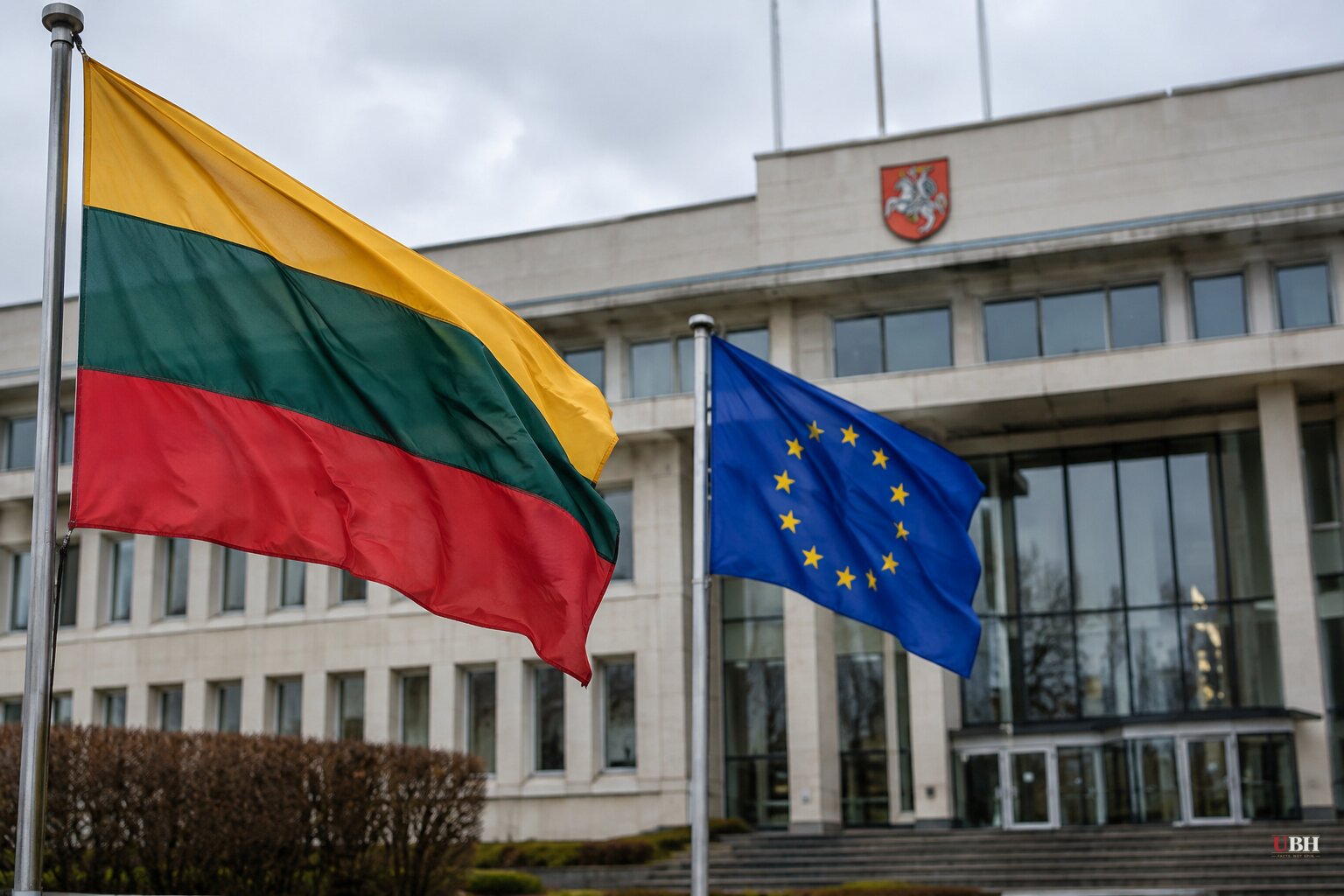
Since NATO fighter jets shot down a drone in Lithuanian airspace near Pratkūnai earlier this month, the country's leadership has moved from responding to a single incident to publicly laying out how it would handle a wider conflict.
Lithuanian Prime Minister Inga Ruginienė told BBC Newsnight her government has drafted evacuation plans for a range of scenarios, including getting elderly residents out of cities "smoothly" to avoid traffic jams if fighting broke out. She said the plans are precautionary, not a sign an attack is imminent, according to Khaama Press.
"If we are attacked, we will fight back. We will engage," Ruginienė said, adding that Lithuanians feel "constantly threatened" by Russia. "We're thinking about a variety of scenarios, not all of them are being discussed very much publicly," she told the BBC. "We face concrete threats, not on a daily basis, but we're experiencing them and it's a true reality for us."
Ruginienė also said the UK needs a "shift in the mindset" on defense, while acknowledging Lithuania sits far closer to the threat than Britain does.
The drone that triggered the shift
The interview follows NATO's downing of a drone that entered Lithuanian airspace near the Kaunas Reservoir. Lithuanian air force commander Antanas Matutis said it was "likely" carrying explosives, according to NPR. Vilmantas Vitkauskas, head of Lithuania's crisis management center, told public broadcaster LRT the drone probably entered from Belarus and flew for roughly 30 minutes before being intercepted.
Lithuanian Defence Minister Dovilė Šakalienė said the drone came from the direction of Belarus, a close Russian ally, but its precise origin has not been officially confirmed. Moscow has not commented on the incident, and no government has presented public evidence directly tying the Kremlin to this specific drone.
UK Defence Secretary John Healey called the interception proof of NATO readiness: "Thanks to the swift and professional actions of Lithuanian and Italian forces, NATO once again demonstrated our readiness to protect our airspace. We stand united, around the clock, in defence of every inch of NATO territory."
NATO Secretary General Mark Rutte separately said strikes "close to NATO territory" reflect Vladimir Putin's "desperation and also his desire to sow fear and terror," and pledged to reinforce the alliance's eastern flank.
A broader mobilization across Europe
CNN analyst Brett McGurk, a former senior U.S. national security official under four presidents, laid out a string of developments suggesting European governments are bracing for something larger than isolated incidents. Belarus, Russia's closest military ally, ran large exercises near the Suwałki Gap, the narrow corridor linking the Baltic states to the rest of NATO. French President Emmanuel Macron convened a confidential intelligence briefing for political leaders and announced new protections for critical infrastructure. Polish Prime Minister Donald Tusk warned Russia could disguise drone or missile strikes on NATO territory as accidents.
Britain has told citizens to stockpile canned food and water, per McGurk's CNN piece, and its defense chief called this the "most dangerous" period in decades. Germany is preparing hospitals for a possible Russian attack, with Chancellor Friedrich Merz warning of "decisive moments" for the continent's peace. Even Switzerland, long neutral, adopted a new national security strategy built around resilience and self-defense.
On the U.S. side, federal prosecutors charged five people accused of working with Russian intelligence in a network allegedly plotting attacks and murders, including inside the United States, and commissioning strikes on civilian and military infrastructure in Europe, according to CNN. President Trump announced progress toward a permanent U.S. Army base in Poland and, according to McGurk, sent the CIA director on a secret mission two weeks earlier to warn Moscow against attacking NATO territory.
A separate incident Tuesday saw a Danish air force helicopter fired on with flares during what Denmark's Foreign Ministry described as routine photographic surveillance of a Russian vessel, NPR reported.
Outstanding questions
Almost none of these incidents has been definitively pinned on the Kremlin. The Lithuanian drone's origin remains unconfirmed. Ukraine has attributed some Baltic airspace incursions to Russian electronic warfare scrambling Ukrainian drones' own navigation, not deliberate Russian attacks. Moscow has offered no response to any of the specific claims. Governments across Europe also have their own incentives, from defense budgets to domestic politics, to emphasize threat levels. None of that proves the alarm is manufactured, but it means the current picture rests heavily on official statements and intelligence assessments that have not been independently verified in public.
Lithuania, Estonia and Latvia remain bound by NATO's Article 5 mutual-defense clause. Vilnius is now telling its own population, on the record, to expect the government to move people out of cities if the current pattern of incursions turns into something worse.
Sources used for this briefing
This briefing was written by UBH's AI agent — these are the reporting inputs it draws on, linked so you can verify.


