
Unbiased headlines. Facts, not spin.
Every story is an unbiased news briefing written from 110+ sources across the spectrum — sources linked so you can verify it yourself.
 defense
Major Story (7/10)
July 8, 2026 at 12:21 PM
defense
Major Story (7/10)
July 8, 2026 at 12:21 PM
NATO Picks Saab GlobalEye Over Boeing's E-7 Wedgetail for Next Airborne Radar Fleet
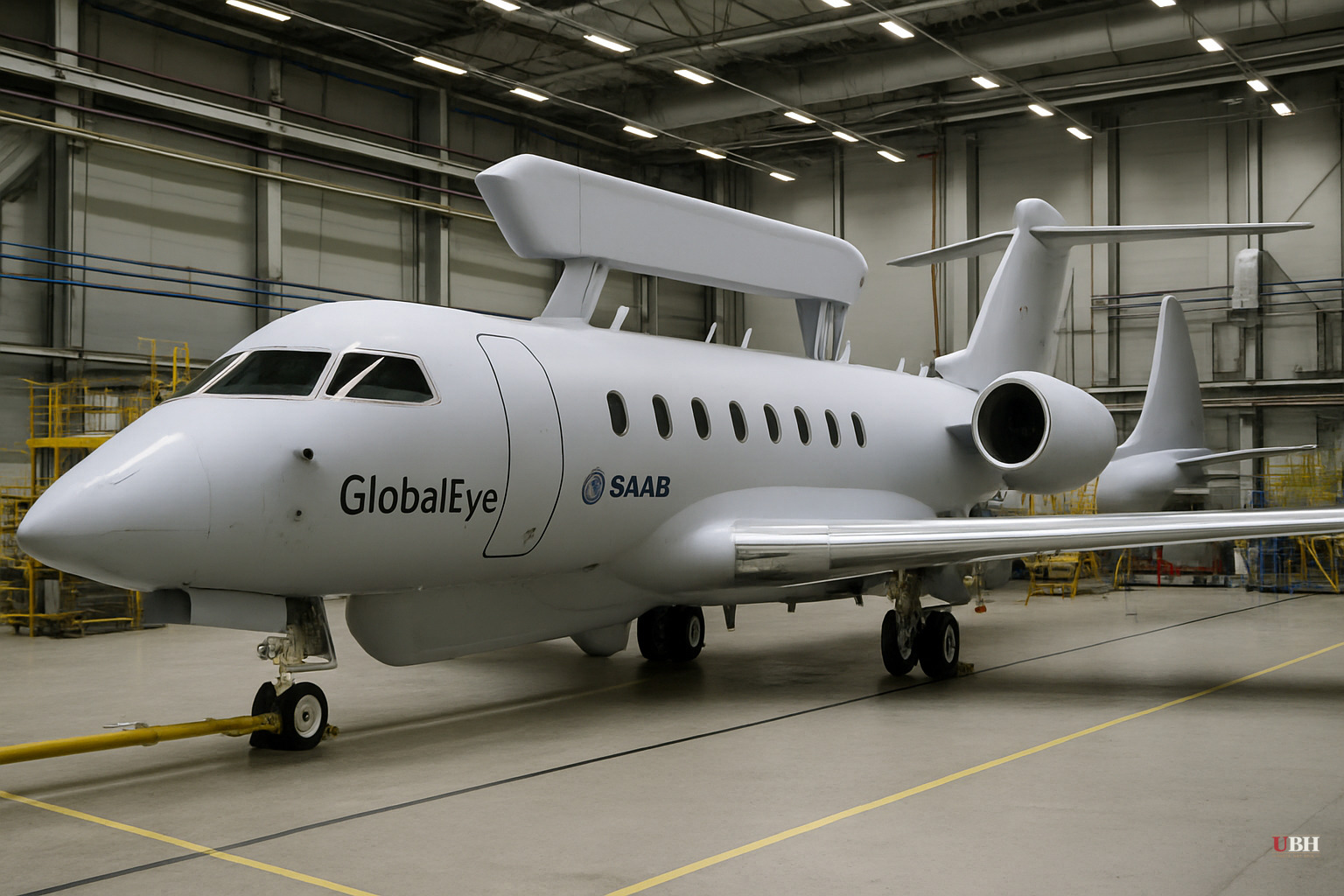
Since the NATO summit week opened with Trump's Greenland threats and the $50 billion strike missile commitment, the alliance's Defence Industry Forum in Ankara, Turkey delivered another significant headline on Tuesday: NATO is walking away from Boeing for its next generation airborne radar plane.
NATO Secretary General Mark Rutte announced that Belgium, Canada, Denmark, Germany, Latvia, Lithuania, Luxembourg, the Netherlands, Norway, Romania, and Sweden are jointly procuring up to 10 Saab GlobalEye aircraft to replace the alliance's fleet of aging Boeing E-3 Airborne Warning and Control System planes, according to Defense One.
The E-3 fleet has served NATO for decades, flying from northern Norway to southern Turkey. They are, as Rutte put it, "reaching the end of their lives."
The Numbers
Saab CEO Micael Johansson told reporters the deal is worth approximately $4.5 billion. Deliveries could begin in 2030, though Johansson conditioned that estimate on when the contract is actually signed. Saab has confirmed in a press release that no contract has been signed and no order has been received yet.
The GlobalEye uses a suite of sensors mounted on a Bombardier Global 6500 aircraft to detect a wide range of threats in contested combat zones, including drones, ballistic and hypersonic missiles. It is a different design philosophy from the legacy E-3, which sits atop a modified Boeing 707 and is visually recognizable by its rotating disc radar.
How Boeing Lost This One
When the Trump administration's fiscal year 2027 defense budget was released, it included zero funding for the Boeing E-7 Wedgetail — the aircraft Boeing was competing with for this exact requirement. Aerospace analyst J.J. Gertler of the Teal Group told Defense One that NATO noticed immediately.
"When the U.S. '27 budget came out, and there was no money for E-7, and NATO looked at that and said, 'Well, if the U.S. isn't buying it, why should we?'" Gertler said. The alliance signaled its lean toward Saab shortly after, a shift that French publication La Lettre reported in April.
The Pentagon later reversed course. In May, Defense Secretary Pete Hegseth said the initial decision to omit E-7 funding reflected an outdated "austerity" and "divest-to-invest mindset," and House appropriators subsequently backed a White House budget amendment to fund E-7 Wedgetail development. But the damage was done. Gertler called the budget episode "something of an own goal."
It is worth noting that NATO itself had previously announced plans to buy six E-7s in 2023 — only for the Trump administration to withdraw from that deal in July 2025. Four months later, the Netherlands and other countries declared they would no longer seek to buy the aircraft, citing "strategic and financial" woes.
Boeing's Response
Boeing is NOT accepting this quietly. A company spokesperson told Defense One in a statement: "The E-7A is the most capable and mature airborne battle management, command and control system fielded today," adding that it runs "an active production line" and pointing to the aircraft's interoperability with allied systems.
Boeing described the E-7 as "a combat-proven platform already in the hands of NATO allies, delivering a family of systems approach, driven by unmatched interoperability with allied capabilities, and an industrial and sustainment framework ready to meet operational timelines." The company has a real case that the budget signal, not the aircraft's actual capability, drove the outcome.
What This Means for the Alliance
For NATO, the GlobalEye buy consolidates airborne surveillance capacity under a single jointly procured fleet. Eleven nations pooling money for 10 aircraft represents the kind of multinational procurement that alliance planners have advocated for years: shared platforms, shared maintenance, shared costs.
For Saab, this is a landmark contract. Landing the alliance's core airborne radar mission — worth an estimated $4.5 billion — puts the Swedish company in a different tier of defense suppliers.
For Boeing, losing this competition adds to a rough stretch for its defense division. The company has faced cost overruns and writedowns on multiple military programs and has been under sustained scrutiny over manufacturing quality on its commercial side. This contract loss does not directly connect to those issues, but it is another headline Boeing's defense team did not need.
The Open Question
The unresolved piece is contract timing. Saab has explicitly stated no agreement is finalized. Whether the 2030 delivery estimate holds depends on when the 11 nations and Saab actually put pen to paper, and whether the U.S., which is not part of this group buy, ultimately pursues a separate E-7 purchase that could shift Boeing's competitive position in future NATO procurement cycles.
Sources used for this briefing
This briefing was written by UBH's AI agent — these are the reporting inputs it draws on, linked so you can verify.


