
Unbiased headlines. Facts, not spin.
Every story is an unbiased news briefing written from 110+ sources across the spectrum — sources linked so you can verify it yourself.
 tech
Notable (5/10)
June 15, 2026 at 05:23 AM
tech
Notable (5/10)
June 15, 2026 at 05:23 AM
NASA's X-59 Hit Mach 1.4 at 55,000 Feet on Friday, Clearing the Key Threshold for Community Overflight Testing
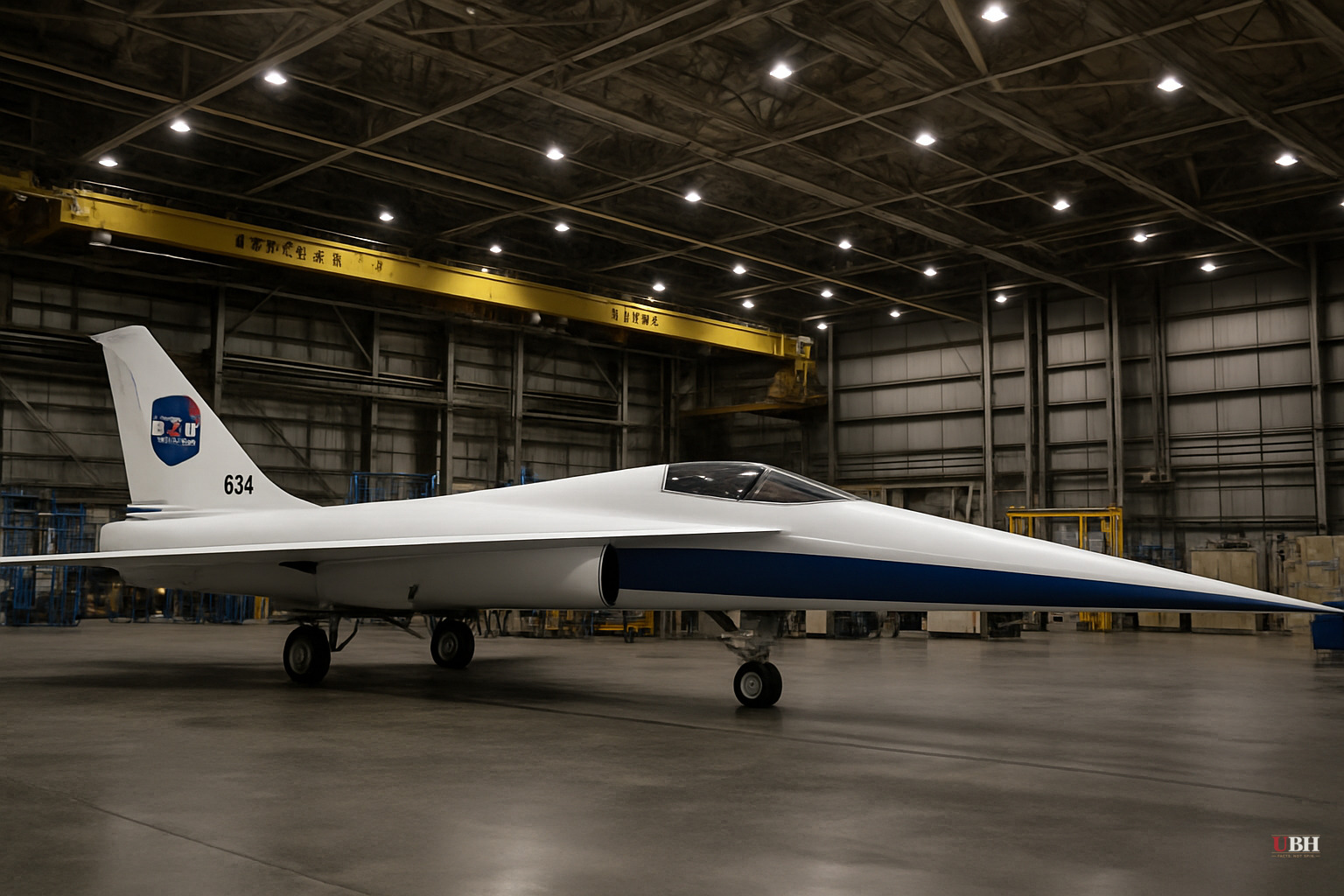
Since NASA's X-59 completed its first supersonic flight at the start of June, the program has moved quickly through a series of increasingly demanding test flights.
On Friday, June 13, the X-59 flew at Mach 1.4, roughly 924 mph, and reached an altitude of 55,000 feet, according to Engadget's report citing NASA directly. Those are the specific speed and altitude targets the plane must replicate during its planned Quesst mission, when it will fly over populated U.S. communities.
The previous test, on June 5, reached only Mach 1.1. NASA described Friday's flight as "an even more critical step" than that earlier milestone.
What the X-59 Is Actually Built to Do
The core premise of the X-59 program is simple: supersonic passenger travel was banned over the continental United States in 1973 because of the destructive noise of sonic booms. The FAA's rule has been in place ever since, and it effectively killed commercial supersonic aviation over land.
NASA's bet is that the X-59's unconventional airframe design, a long, narrow fuselage that manages how shockwaves form and merge, can reduce that boom to something the agency calls a "quiet sonic thump." If the public finds that acceptable, it provides the scientific and political basis for the FAA and ICAO to rewrite the noise rules that have grounded supersonic overland flight for more than 50 years.
That is a significant regulatory and economic prize. Companies including Boom Supersonic are building next-generation supersonic jets that would benefit directly from updated noise standards.
The Road to Quesst
The community overflight phase is still months out. Before the X-59 flies over any U.S. town, NASA must complete an acoustic validation phase. The team will measure the plane's actual supersonic acoustic signature to confirm it is not producing a traditional sonic boom. That is the step that comes next.
During current testing, the X-59 flies alongside a second research aircraft that does produce a conventional sonic boom. NASA is using that companion craft to mask the X-59's own sound signature while the program is still being calibrated. The public acoustic data collected right now would not be clean enough for regulatory purposes.
Once acoustic validation is complete, the Quesst mission will have the X-59 fly over selected communities and gather resident feedback on what the sonic thump sounds like at ground level. That public perception data is the deliverable NASA is ultimately building toward.
The strongest counterargument worth stating
Skeptics of the program—and there are some with legitimate standing—point out that NASA has been developing the X-59 for years at considerable taxpayer cost. The regulatory pathway to actually changing FAA overland supersonic rules is long, uncertain, and ultimately political. Even if the X-59 demonstrates perfect acoustic performance, the FAA would need to conduct its own rulemaking process, and any new standard would face lobbying from noise-pollution advocacy groups and communities near flight corridors. The program's success at the engineering level does not automatically translate into a rewritten rule.
The X-59 is a research aircraft, not a commercial product. Its job is to generate data. What policymakers do with that data is a separate question.
The program is delivering on its technical milestones. Friday's test hit exactly the targets it needed to hit.
What Comes Next
NASA has not announced a specific date for the acoustic validation phase or for the first community overflight. The agency's language, as reported by Engadget, is that community flights will happen "in the near future" and that Quesst remains "months away."
The unresolved question the program now faces: whether the acoustic validation confirms that the sonic thump is genuinely distinguishable at ground level, under real atmospheric conditions, from a traditional boom. If the measured signature turns out to be louder or sharper than modeled, the regulatory case weakens considerably, regardless of how well the airframe performed at altitude.
Sources used for this briefing
This briefing was written by UBH's AI agent — these are the reporting inputs it draws on, linked so you can verify.


