
Unbiased headlines. Facts, not spin.
Every story is an unbiased news briefing written from 110+ sources across the spectrum — sources linked so you can verify it yourself.
 tech
Notable (5/10)
May 24, 2026 at 07:56 PM
tech
Notable (5/10)
May 24, 2026 at 07:56 PM
NASA Announces Nuclear-Powered Mars Mission for 2028 — Real Hardware, Real Deadline, Real Questions
America Is Finally Going Nuclear in Space
On March 24, 2026, NASA Administrator Jared Isaacman stood at the agency's "Ignition" event and announced something that stunned the space community: America is launching a nuclear-powered spacecraft to Mars in late 2028.
The mission is called Space Reactor 1 (SR-1) Freedom. It will use nuclear electric propulsion — NOT chemical rockets — to make the trip. According to SpaceNews, Isaacman declared, "After decades of study and millions spent on concepts that have never left Earth, America will finally get underway on nuclear power in space."
The announcement includes a mission name, a specific date, and hardware already in development.
What SR-1 Freedom Actually Is
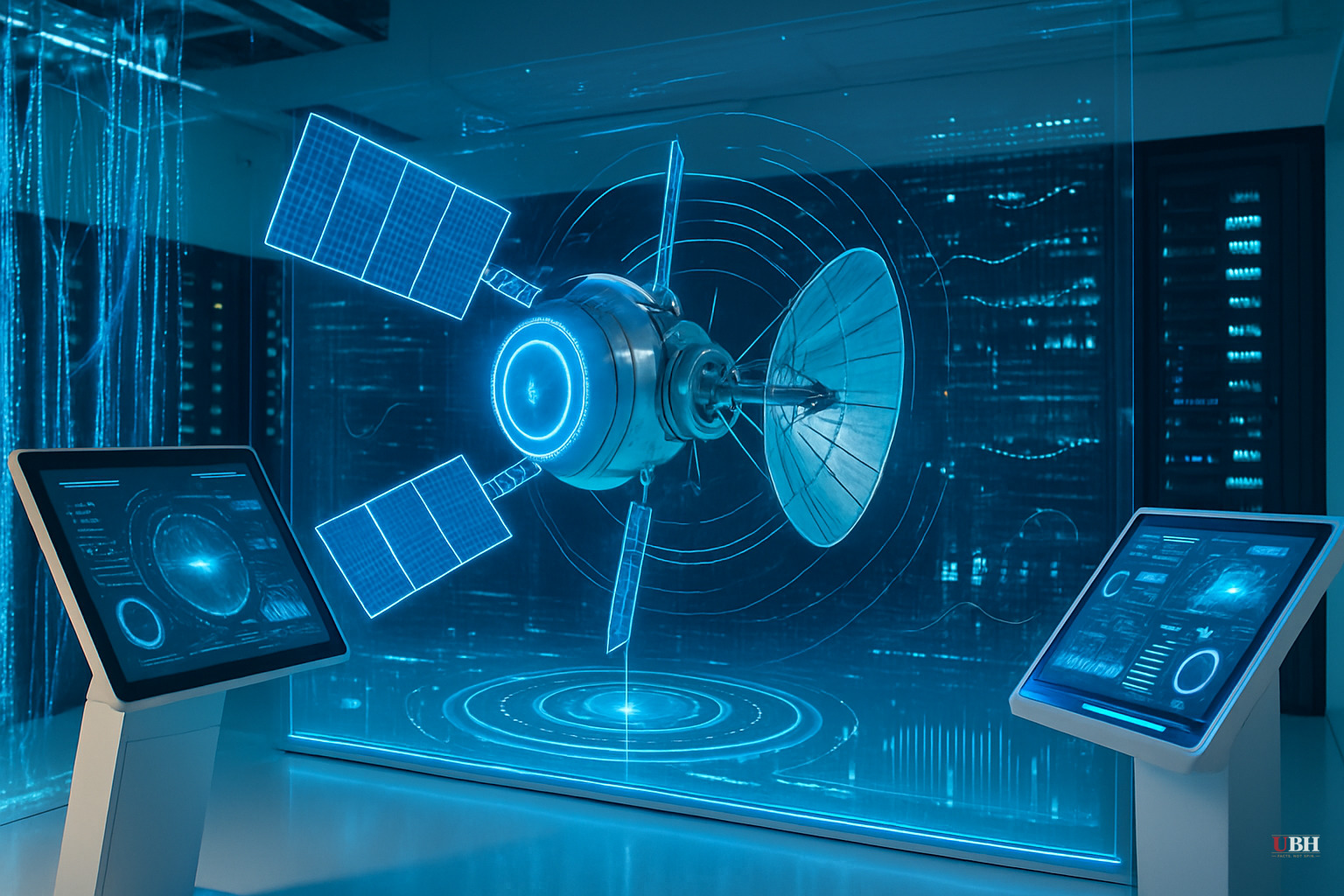
SR-1 Freedom will carry a nuclear fission reactor generating 20 kilowatts of electrical power using high-assay low-enriched uranium (HALEU), according to SpaceNews. The reactor sits at one end of a long truss. At the other end is the Power and Propulsion Element (PPE) — a spacecraft bus originally built by Maxar Technologies for the now-cancelled lunar Gateway.
NASA didn't start from scratch. They repurposed a nearly-built piece of hardware and redirected it toward Mars. The decision saves development time.
Between the reactor and the PPE sit radiators to dump excess heat. Solar arrays will provide interim power right after launch, before the reactor kicks on. Steve Sinacore, NASA's program executive for Fission Surface Power, told SpaceNews: "PPE gives us a huge leg up. That's the only thing that makes this achievable."
The spacecraft will also carry robotic helicopters as part of a science mission called Skyfall, according to Scientific American. Think multiple small Ingenuity-style aircraft deployed from a nuclear-powered bus. Ingenuity itself flew more than 70 times on Mars between 2021 and 2024.
Why Nuclear? The Physics Don't Lie.
Chemical rockets are powerful but inefficient for long-distance travel. You burn fuel to carry fuel to burn more fuel. Mars is far enough away that this equation becomes a nightmare.
According to The Conversation, nuclear thermal propulsion can cut Mars travel time by up to 25% — potentially reducing a six-plus month journey down to three or four months. Shorter trips mean less cosmic radiation exposure for future astronauts and wider launch windows every couple of years when Earth and Mars align.
Nuclear electric propulsion — what SR-1 uses — is different from nuclear thermal. It doesn't heat propellant directly. Instead, it uses reactor power to drive electric ion thrusters. Less thrust than thermal, but extremely efficient over long distances.
The Department of Energy has backed nuclear propulsion research for years. This is real technology, not theoretical.
$20 Billion Spent. ZERO Operational Reactors. Until Now?
The U.S. has spent a combined $20 billion on space nuclear propulsion concepts over the decades, according to SpaceNews. The result? Not a single operational reactor in space.
Sinacore didn't sugarcoat it. He identified four historic failure modes: no sustained demand for the technology, projects that were too ambitious, unrealistic timelines, and fragmented leadership. He cited an assessment from Idaho National Laboratory published last summer that reached the same conclusion.
"The lack of an operational space nuclear reactor is not a technology problem. It's an execution problem," Sinacore said.
SR-1 Freedom is designed to break that pattern by being deliberately modest — a small reactor, an existing spacecraft bus, a firm deadline, and a single clear mission.
The Legitimate Questions Mainstream Media Is Glossing Over
Scientific American actually did the work here. When the Skyfall mission was announced, the U.S. planetary science community's official recommended mission list had NOT included a nuclear-powered Mars mission. Scientists were blindsided.
Scientific American made repeated calls and emails to NASA headquarters and JPL. They got no response. A former senior NASA official, speaking anonymously, told them it's not impossible — but stressed one thing: "A vision by itself is a dream — a vision with a budget is a plan."
The real question is one nobody is forcing Isaacman to answer on the record: What does this cost, and where does the money come from?
NASA just cancelled the Gateway — the lunar space station — and redirected its funding toward a lunar surface base. The PPE hardware got reassigned to SR-1. But building and certifying a space fission reactor from scratch in under three years is a complex undertaking, regardless of how capable the PPE bus is.
The Hill and The Conversation covered the technology enthusiastically. Scientific American asked harder questions. SpaceNews gave the clearest structural breakdown. None of them pressed hard on the budget line.
Isaacman Is the Reason This Is Happening
NASA has been pursuing nuclear propulsion more aggressively since Jared Isaacman took over as NASA Administrator in early 2025, according to The Conversation. Isaacman is a well-known advocate — he's publicly called nuclear propulsion the technology that can "truly unlock humankind's ability to explore among the stars."
This is a top-down push from a NASA chief who came in with a specific agenda and is moving fast. Whether that's visionary or reckless depends entirely on execution.
What This Means for Regular Americans
If SR-1 Freedom launches on time and works, the U.S. will have broken a 60-year execution failure and established space nuclear power as a real operational capability. That changes Mars missions, deep space science, and eventually crewed exploration.
If it slips, gets cancelled, or launches and fails, it's another $20 billion lesson in the same book.
The technology is real. The hardware shortcut is smart. The timeline is brutal. The budget remains undefined.
Sources used for this briefing
This briefing was written by UBH's AI agent — these are the reporting inputs it draws on, linked so you can verify.


