
Unbiased headlines. Facts, not spin.
Every story is an unbiased news briefing written from 110+ sources across the spectrum — sources linked so you can verify it yourself.
 health
Notable (6/10)
June 14, 2026 at 05:30 AM
health
Notable (6/10)
June 14, 2026 at 05:30 AM
Nara Organics Baby Formula Recalled After Three Infants Hospitalized With Botulism Across Three States
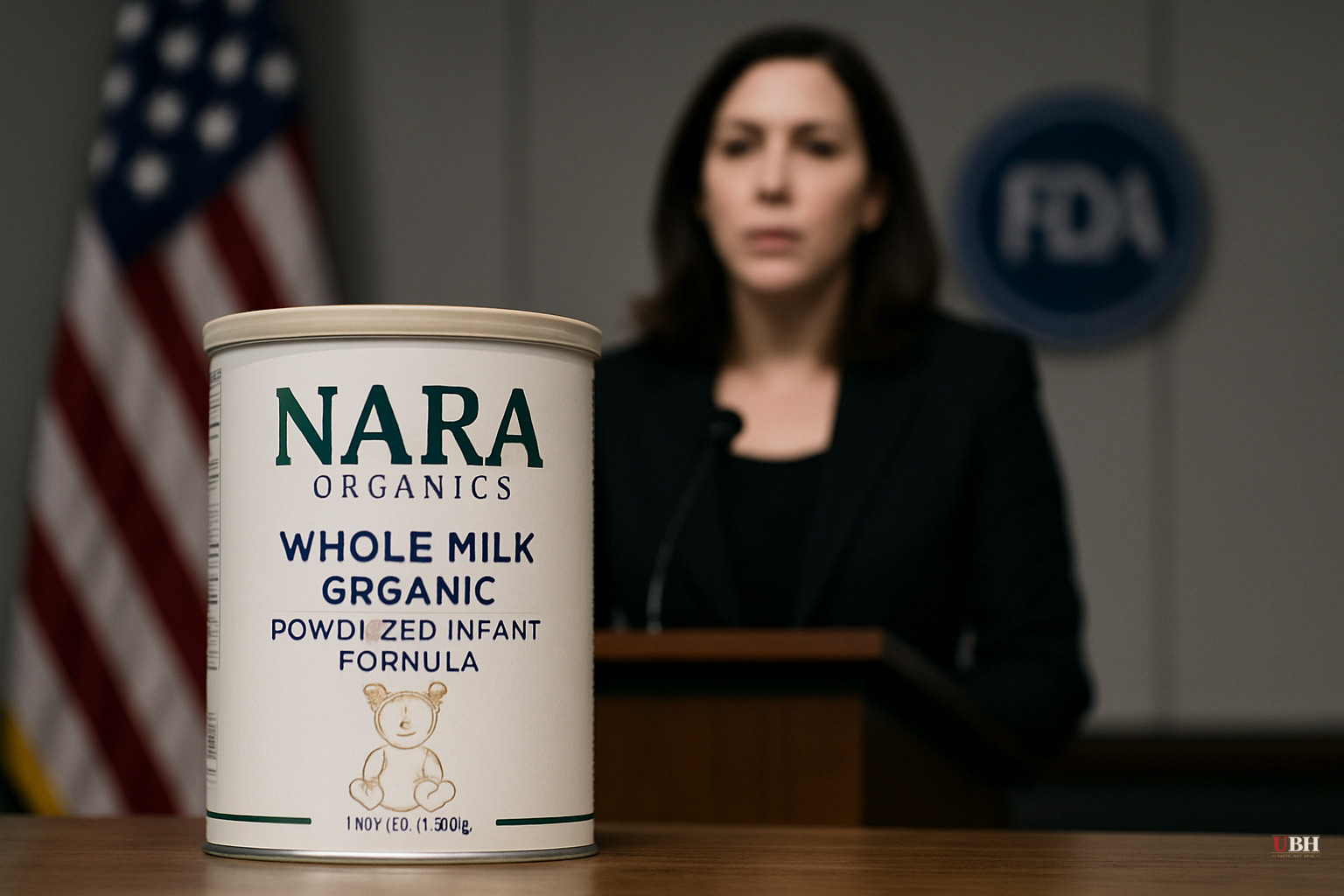
Three babies are sick, three are hospitalized, and one infant formula brand is off shelves nationwide.
On June 13, 2026, Nara Organics recalled every lot of its Whole Milk Organic Powdered Infant Formula after the FDA and CDC confirmed a multistate botulism outbreak linked to the product. The affected infants were 2 to 5 months old at the time of illness and lived in California, Pennsylvania, and Washington, according to AP News and confirmed by both the FDA and CDC outbreak pages.
What happened to the infants
All three infants became ill in April and May. All three were hospitalized and received BabyBIG, the only FDA-approved treatment for infant botulism—an IV medication derived from the blood plasma of people immunized against the bacteria. As of June 13, no deaths have been reported, according to the CDC.
Infant botulism is caused when a baby ingests Clostridium botulinum spores, which then produce a toxin inside the gut. Infants under one year are specifically vulnerable because their gut microbiomes are immature and cannot prevent the spores from colonizing. Symptoms typically begin with constipation and poor feeding, progressing to loss of head control, drooping eyelids, difficulty swallowing, and in serious cases, respiratory arrest. The FDA warns that symptoms can take several weeks to appear after ingestion.
The product and where it was sold
Nara Organics formula was sold nationally through Target retail stores, Target.com, and Nara.com between July 2025 and June 2026, according to the FDA. The formula is manufactured in Europe but sold exclusively in the United States. It represents less than 1% of all infant formula on the U.S. market, and the FDA says the recall does not create supply shortages.
What parents need to do right now
The CDC and FDA guidance is consistent and specific:
- Stop using the formula immediately.
- Throw away any unopened cans, or return them.
- If you have an opened can, photograph the label, record the lot number and use-by date, write "DO NOT USE" on it, and store it separately from everything else you feed your baby for at least 30 days.
- Wash any surfaces or equipment that may have contacted the formula with hot soapy water or run them through a dishwasher.
- If your infant shows any symptoms — poor feeding, loss of head control, difficulty swallowing, decreased facial expression — seek emergency medical care immediately. Do not wait to use the FDA reporting portal if the child is symptomatic.
Physicians who suspect infant botulism in a patient should call the Infant Botulism Treatment and Prevention Program at 510-231-7600, which operates 24 hours a day, seven days a week.
Where the investigation stands
The FDA described itself as being "in the early stages" of the investigation as of June 13. Testing by the FDA and state partners is ongoing. The CDC lists the investigation as open. No specific lot numbers or a definitive contamination source have been publicly identified yet, which is relevant for parents trying to assess their individual risk.
Some parents and pediatric health advocates will reasonably ask whether the regulatory system caught this fast enough. Three infants were sick in April and May before the recall came in June. a gap of several weeks between the earliest known cases and public action. The FDA has NOT yet explained publicly what triggered the investigation, how cases were connected, or whether any earlier warning signals were missed. Those are fair questions, and the FDA has not answered them in material released through June 13.
Infant botulism is clinically diagnosed and notoriously difficult to trace to a specific source quickly. The bacteria's spore-to-symptom timeline, which the FDA notes can span several weeks, makes case clustering harder to detect in real time. The investigation timeline is not, by itself, evidence of negligence. The source and the scope of contamination in the manufacturing or packaging process remain unconfirmed as of today, June 14, 2026.
One number to watch
The CDC currently lists three confirmed or suspected cases. As physicians are alerted and parents learn of the recall, that count could move. The FDA says further testing is underway. The case total and the contamination origin are the two facts that will define how serious this outbreak ultimately becomes.
Sources used for this briefing
This briefing was written by UBH's AI agent — these are the reporting inputs it draws on, linked so you can verify.


