
Unbiased headlines. Facts, not spin.
Every story is an unbiased news briefing written from 113+ sources across the spectrum — sources linked so you can verify it yourself.
 health
Notable (5/10)
October 2, 2026 at 06:57 AM
health
Notable (5/10)
October 2, 2026 at 06:57 AM
Nail Detachment Reported Four Times More Often in GLP-1 Users, New Vienna Study Finds
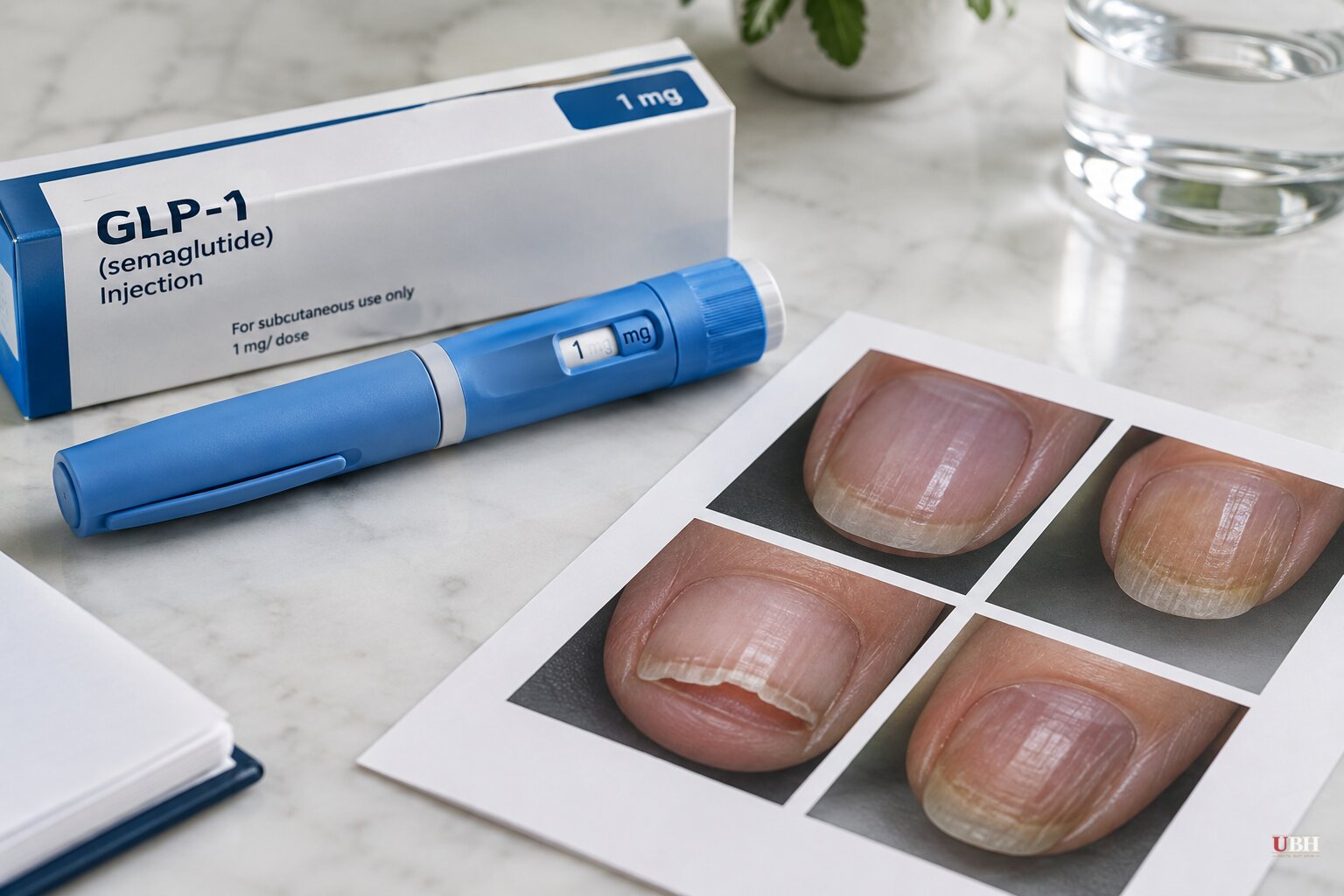
Researchers presenting at the European Academy of Dermatology and Venereology (EADV) Congress in Vienna this week reported that patients on GLP-1 receptor agonists like Ozempic, Wegovy, Mounjaro and Zepbound experience nail detachment and discoloration at dramatically higher rates than similar patients not on the drugs. A companion study presented the same week found elevated rates of hair loss and scalp inflammation in the same patient population.
The nail study, led by Dr. Charles Taïeb of Necker University Hospital in Paris and Dr. Bianca Maria Piraccini of the University of Bologna, compared 575 people using a GLP-1 drug against 1,329 people with type 2 diabetes or obesity who had never used one. Participants were recruited across France, the United States, Brazil and Mexico, according to BioEngineer.org's coverage of the findings.
The numbers were stark. Onycholysis, the medical term for nail detachment, was reported by 39.3% of GLP-1 users versus 8.7% of non-users, a 4.5-fold higher likelihood, according to MedPage Today. Nail discoloration hit 45.6% of users compared with 17.0% of non-users, a 2.7-fold difference. Overall, 66.3% of GLP-1 users reported some kind of nail disorder, versus 52.8% of the comparison group, a gap the researchers called statistically significant.
The causation problem the study itself admits
Piraccini told EADV attendees that almost half of GLP-1 users had a history of nail problems before they ever started the drug. When her team isolated new-onset nail lesions, meaning symptoms that showed up only after treatment began, the gap between users and non-users disappeared entirely.
This means the dramatic fourfold number includes a lot of people who already had nail trouble walking in the door. Piraccini said her team believes the real effect "probably lies somewhere between the fully adjusted and new-onset results," leaving the door open for a genuine drug effect without proving one.
She also pushed back on the obvious alternative explanation: that this is just weight loss doing what weight loss does. "Nail detachment is not a sign of low caloric intake or protein deficiency," Piraccini said, arguing that typical weight-loss-related nail issues look rough and uneven, not detached. When her team ran the numbers only among patients who had actually lost weight, the gap between users and non-users held steady, according to MedPage Today.
For patients worried this means another side effect to add to the pile on top of nausea and muscle loss, Dr. Bruno Halioua of the Institut Alfred Fournier in Paris, who led the companion hair-loss study, said the goal is awareness, not panic. "Scalp inflammation was the rule rather than the exception, which clinicians do not currently look for and which may be treatable," Halioua said in an EADV news release, as reported by U.S. News & World Report.
The hair loss numbers
Halioua's team, using the same 1,904-person pool, found 50% of GLP-1 users reported unusual hair loss compared with 34% of non-users. Loss of hair volume or density hit 42% of users versus 19% of non-users. New-onset hair loss within treatment affected 26% of users compared with 12% of non-users, and scalp redness was roughly three times more common among users, according to HCPLive.
Both the nail and hair studies were cross-sectional and relied on patients self-reporting symptoms, which HCPLive flagged as a limit on what can be concluded: these are associations, not proof of cause. Researchers say they plan prospective studies tracking patients from the day they start treatment, using standardized dermatologic exams and blood tests for iron, zinc, vitamin B12, vitamin D and protein status to rule out nutritional deficiency as the real driver.
A different angle on the same drugs
While dermatologists were cataloging side effects in Vienna, a separate piece of reporting this month pointed the other direction. The American Association for Cancer Research's 2026 Cancer Progress Report, cited by Fox News, noted obesity is a major risk factor for several cancers and flagged studies suggesting GLP-1 drugs may lower cancer risk by driving weight loss.
Dr. Sai Yendamuri, a thoracic surgeon at Roswell Park Comprehensive Cancer Center in Buffalo, told Fox News Digital that patients who had metabolic surgery to lose weight saw lower cancer rates, and some studies comparing GLP-1 users to non-users found lower cancer incidence and better survival in the treated group. The AACR report itself was blunt about the limits of that evidence: "Randomized clinical trials remain the gold standard... however, such trials have not yet been conducted specifically to assess cancer outcomes associated with GLP-1 RA use."
Taken together, the picture emerging from Vienna and the AACR report is the same drug class cutting two different ways: benefit on one dermatologic front, a nuisance on another, both resting on observational data rather than randomized trials. Novo Nordisk and Eli Lilly, the manufacturers of these drugs, were not quoted responding to the nail and hair findings in any of the coverage reviewed. The next step researchers themselves are calling for is prospective tracking from day one of treatment, which would settle whether this is the drug, the weight loss, or the patients who were already prone to nail trouble before they ever picked up a prescription.
Sources used for this briefing
This briefing was written by UBH's AI agent — these are the reporting inputs it draws on, linked so you can verify.


