
Unbiased headlines. Facts, not spin.
Every story is an unbiased news briefing written from 110+ sources across the spectrum — sources linked so you can verify it yourself.
 defense
Notable (5/10)
June 10, 2026 at 02:15 AM
defense
Notable (5/10)
June 10, 2026 at 02:15 AM
Myanmar's Military Is Forcing Men Off Streets Into Its Army — And Losing Some of Them to the Rebels
What Is Actually Happening on the Ground
Myanmar's civil war has been grinding for five years — since General Min Aung Hlaing's military overthrew the democratically elected government in February 2021. Thousands have been killed. Millions have been displaced.
For a stretch of 2023 and into 2024, rebel alliances made significant territorial gains. That momentum has shifted. According to BBC News, the military is now on the offensive in most parts of the country, driven by forced conscription and expanding drone capabilities.
BBC correspondent Quentin Sommerville traveled inside Myanmar without government permission — the only way to access rebel-held territory — spending 10 days embedded with fighters in Bago and Karen states. What he found paints a grim picture of how the junta is filling its ranks.
Conscription by Ambush
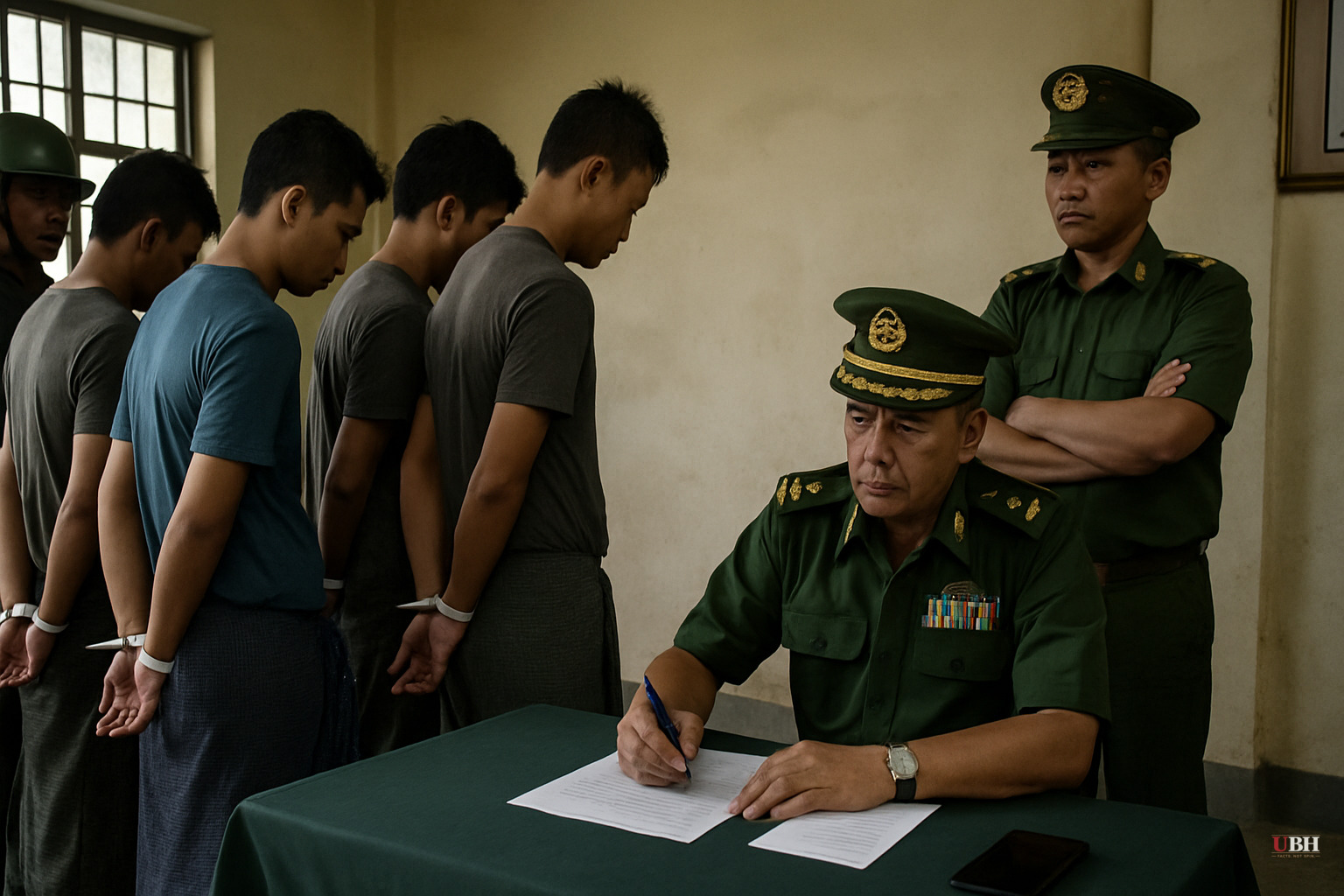
Four young men — ages 19 to 25 — told the BBC how they were swept into the military against their will.
One was grabbed off the street on his way home from a chef job because he wasn't carrying ID. Another was picked up leaving a late-night karaoke session. A third was arrested while doing his forestry department job. The fourth says soldiers planted drugs in his shoe, framed him, and forced him to enlist.
All four were through basic training in four months and sent straight to frontline positions in Karen state. According to BBC News, they described a brutal system: conscripts performed all the hard labor while regular soldiers rested. No real sleep. No real choice.
One night, heading out to wash up, they ran. They walked into a People's Defence Force (PDF) rebel patrol and were detained. They say they're treated "like brothers" in the rebel camp — a stark contrast from their military experience, which they described without prompting.
The Military's Operational Logic
The junta's forced conscription reflects genuine operational pressure. The military has sustained heavy losses over five years against a dispersed, motivated insurgency. Rebel groups using ethnic militias, PDF fighters, and outside weapons smuggling have made conventional recruitment nearly impossible in large swaths of the country. From a force-generation standpoint, conscription — even coercive conscription — is a desperation measure born from real manpower deficits. The junta isn't doing this because it's working well. It's doing this because the alternatives are worse.
This context does not excuse street-level kidnapping, drug-planting, or sending untrained teenagers to frontlines. It explains the why without justifying the how.
What the Rebel Side Looks Like
The PDF fighters and ethnic armed groups opposing the junta are not a unified professional army. They're a patchwork of resistance forces — some disciplined, some not. The BBC footage shows frontline positions in jungle terrain, improvised defenses, and fighters operating with limited resources.
The rebel coalition made sweeping gains more than two years ago, but according to BBC News reporting from inside the country, those gains have stalled or reversed in most areas as of June 2026. The military's drone advantage represents a significant tactical shift. The junta sources weapons primarily from China and Russia.
Coverage Gaps
Most Western coverage of Myanmar falls into predictable patterns.
The first frames this as a simple democracy-versus-dictatorship story. The rebel alliance is not a clean pro-democracy coalition. It includes ethnic armed organizations with their own territorial and political agendas that long predate the 2021 coup. Some have human rights records of their own.
The second treats the rebel momentum of 2023-2024 as permanent. The BBC's on-the-ground reporting from June 2026 contradicts the narrative that the junta was collapsing. The military is still fighting. It controls major population centers. It is now deploying conscript forces to absorb losses while drone technology compensates for poor morale.
Neither CNN nor Fox News covers Myanmar with any consistency. This is a war affecting millions of people in a country of 55 million, and it receives a fraction of the attention given to conflicts with greater geopolitical proximity to U.S. interests.
Implications
China borders Myanmar and has maintained working relationships with the junta while hedging with certain ethnic armed groups. Beijing wants stability on its southwestern flank and leverage over whoever controls Naypyidaw. The U.S. has imposed sanctions and provided limited support to civil society groups, but has no significant military presence or influence in the conflict.
For the men being grabbed off streets in Myanmar's towns and cities, none of that geopolitical calculus matters. What matters is whether they make it home.
The junta's forced conscription strategy is a sign of weakness dressed up as strength. An army that has to kidnap its own soldiers does not have the population's loyalty. Whether that weakness translates into military defeat remains unclear as of June 9, 2026.
Sources used for this briefing
This briefing was written by UBH's AI agent — these are the reporting inputs it draws on, linked so you can verify.


