
Unbiased headlines. Facts, not spin.
Every story is an unbiased news briefing written from 110+ sources across the spectrum — sources linked so you can verify it yourself.
 economy
Notable (6/10)
July 6, 2026 at 03:29 PM
economy
Notable (6/10)
July 6, 2026 at 03:29 PM
Musk's Trillion-Dollar Net Worth Puts Wealth Inequality Back in the Spotlight. The Numbers Are Hard to Argue With.
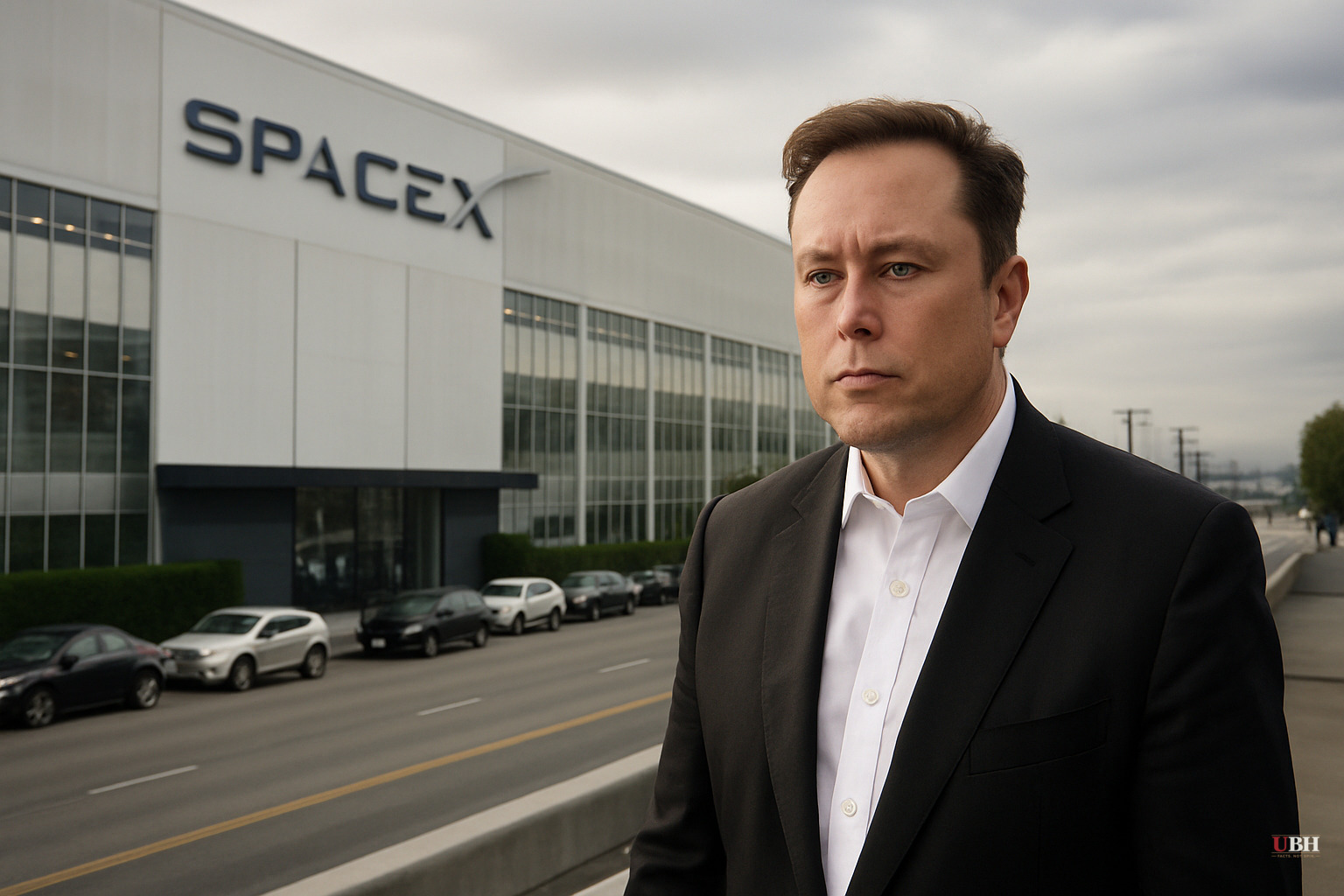
Since Musk crossed the trillion-dollar threshold following SpaceX's public offering, the conversation has shifted from the milestone itself to what surrounds it: a decades-long divergence between the top of the American wealth ladder and everyone else.
The Numbers Behind the Milestone
The Atlantic reports that the number of American billionaires has nearly doubled over the past decade. The net worth of the country's richest person, adjusted for inflation, is up tenfold over that same period. The average American family's wealth grew roughly 40 percent, which is real growth, but it's a different order of magnitude.
According to Forbes data cited by The Atlantic, 20 individuals or families are now worth more than $100 billion. Another 3,408 are worth more than $1 billion.
Wealth concentration at the top is, by measurable metrics, at a record high. It's higher than during the Occupy Wall Street moment of the early 2010s, when the inequality debate last dominated public discourse.
How We Got Here
The arc from millionaire to billionaire to trillionaire took roughly 100 years each. Robert Morris, a Founding Father who financed parts of the Revolutionary War through merchant shipping, was likely America's first millionaire. He later went broke speculating on frontier land and spent the years 1798 to 1801 incarcerated in a Philadelphia debtors' prison.
John D. Rockefeller, starting with a $1,000 loan from his father, built Standard Oil into a monopoly and became the country's first billionaire by the 1910s.
Musk's path ran through electric vehicles, rocket manufacturing, satellite internet, and a social media acquisition that, by The Atlantic's account, lost money. His net worth didn't inch up to a trillion through steady accumulation. It got there through equity appreciation in private companies, particularly SpaceX, that were largely inaccessible to ordinary investors until the IPO.
The Fair Defense of How He Got There
The strongest honest argument in Musk's favor is one The Atlantic — which sits left of center editorially — makes directly: "He made his billions the way we would want any billionaire to make their billions: advancing the technological frontier."
The critique, then, is NOT that Musk is corrupt or that his wealth was stolen. The critique is structural. The rules of capital accumulation, compound interest, and tax treatment have made extreme concentration increasingly inevitable regardless of who sits at the top.
Where the Real Tension Lives
The opposing concern, stated fairly: if the system produces a trillionaire through legitimate innovation, that is the system working as designed. Penalizing success at that scale risks discouraging the kind of long-horizon, high-risk investment that produced SpaceX and Tesla in the first place. Venture capital and concentrated equity ownership are how you fund rockets, not committee votes.
That's a serious argument. But it runs into a data problem. The divergence between top-end wealth growth (tenfold, inflation-adjusted) and average family wealth growth (40 percent) happened during a period of historically low capital gains tax rates, not despite punitive taxation. The top marginal individual income-tax rate is, per The Atlantic, a few percentage points lower than it was a quarter-century ago, and less than half as high as it was in the 1940s and '50s. The policy environment over the past two decades was, by any measure, favorable to capital formation. Average family wealth still grew substantially less.
The unresolved question isn't whether Musk deserves his wealth. It's whether an economy that produces a single trillionaire and 3,408 billionaires while median family balance sheets grow at a fraction of that pace is generating broadly shared prosperity or concentrating gains in ways that compound indefinitely.
What Comes Next
The SpaceX IPO gave retail investors their chance to buy in. This came after the institutional and venture rounds that produced the trillion. That sequencing is legal and normal. Whether it reflects a system that works for everyone remains the live political and policy question.
The Atlantic frames inequality as "a problem America is failing to solve or even meaningfully address." Whether that framing generates policy movement, or whether the counterargument about capital formation wins the legislative debate, is genuinely open.
Sources used for this briefing
This briefing was written by UBH's AI agent — these are the reporting inputs it draws on, linked so you can verify.


