
Unbiased headlines. Facts, not spin.
Unbiased Headlines is an independently owned news organization. We bring you the facts, not opinions, written fresh from 110+ named sources. Sources linked so you can verify it yourself.
 tech
Notable (6/10)
Musk Says Tesla Will Wind Down Cybertruck Production in Texas Around Mid-2027 to Make Room for Cybercab
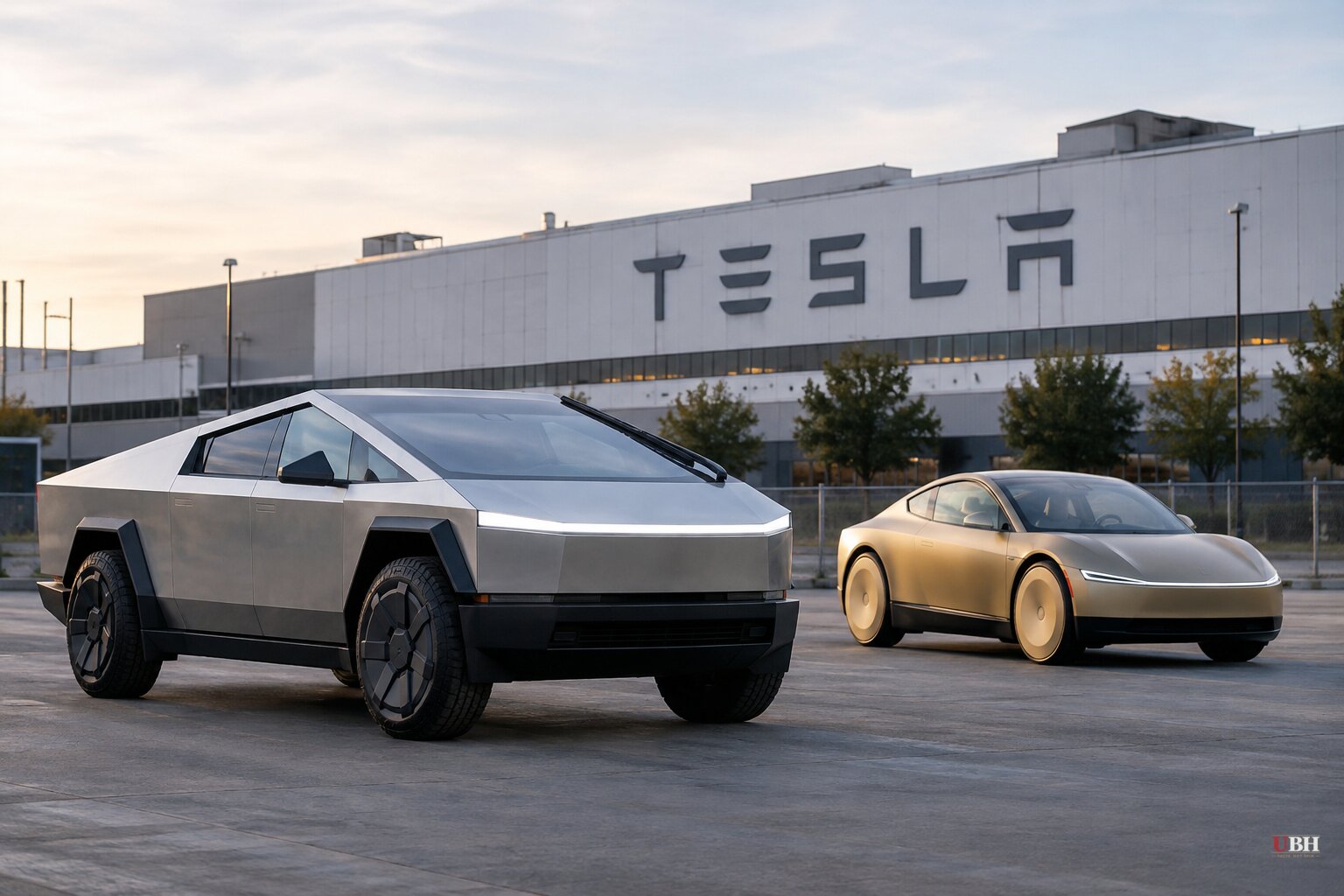
Tesla is planning to end Cybertruck production in Austin.
CEO Elon Musk said on X today, Nov. 6, that the company will be "winding down production of the Cybertruck at Gigafactory Texas around the middle of next year to make room for increased Cybercab production." The Cybercab is the two-seat robotaxi that is also built at the Austin plant.
Musk gave no firm end date. He did not say how many more trucks will be built, and he did not say what happens to outstanding orders.
One plant, no announced second home
Giga Texas is the only known Tesla facility equipped to build the truck's specialized components. Tesla has not said whether production will move elsewhere or stop altogether. Tesla did not immediately respond to a Reuters request for comment.
In a reply to a user on X, Musk said the "Cybertruck fleet will be around for a long time." He called it the "best vehicle Tesla has ever made" and described the wind-down as the "end of an era."
Wes Morrill, the Cybertruck's lead engineer, posted that the truck "was an incredible technology development platform and lives on through Cybercab." Replying to an owner, he said Tesla will maintain spare parts and that service support will continue.
The numbers
The Cybertruck was unveiled in November 2019 with a promised starting price of $39,900. Deliveries began in November 2023, and the entry-level model cost considerably more than that. Tesla once targeted annual production of 250,000 units.
Tesla does not break out Cybertruck sales. It reports the truck inside an "Other Models" category, which also covers vehicles other than the Cybertruck. That category totaled 8,295 deliveries in the third quarter, down from 12,364 in the second.
Kelley Blue Book estimates Tesla sold 11,586 Cybertrucks in the U.S. in the first nine months of 2026, down 28 percent from the same period last year. Car and Driver puts cumulative sales at just under 71,000 units.
That is roughly a quarter of one year's original production target, spread across nearly three years.
What held it back
The stainless-steel, sharp-edged design limited the truck's prospects outside the U.S. Regulatory approval proved hard to get in parts of Europe, cutting Tesla off from markets that could have raised volume. The truck also went through multiple recalls and quality-control problems, and Tesla repeatedly changed its price.
Mashable reported that Tesla recently canceled the Cybertruck launch in Australia and New Zealand.
The engineering case
Morrill's "technology platform" description has substance. The Cybertruck was the first Tesla with an 800-volt high-voltage architecture, and it replaced the industry-standard 12-volt low-voltage system with a 48-volt one. Tesla sent other automakers' CEOs a guide to building a 48-volt vehicle, and Ford CEO Jim Farley confirmed receiving it.
It was also the first Tesla with steer-by-wire, with no mechanical link between the steering wheel and the front wheels. Tesla says its Ethernet-based "Etherloop" wiring halves the weight of the communication cabling.
The argument from Musk and Morrill is that those ideas carry forward into the Cybercab even as the truck itself goes away. Mashable's read is blunter: the outlet wrote that Tesla "appears to be ready to accept" that the truck "never sold very well," and that it is "pretty obvious that Tesla is giving up on the pickup." Musk himself has not said the truck is being discontinued.
The Cybercab bet
The Cybercab has butterfly doors and no steering wheel, pedals or mirrors. Musk has said it will eventually be Tesla's highest-volume vehicle, supplying a global robotaxi network. Tesla began offering paid rides in a small fleet of Cybercabs in Austin in September, after years of delays to Musk's self-driving targets.
The move fits a broader pivot. When Tesla unveiled a new Roadster in October, Musk said it would be the last manually driven car the company produces, according to Mashable.
For buyers who want a conventional electric pickup, other options are arriving. Slate has launched an affordable electric pickup, Ford is developing a cheaper one called Fathom, and Rivian plans to launch its mid-size R2T next year, Mashable reported.
The open question
Tesla is redirecting factory space from a truck with a known, modest sales record to a vehicle whose regulatory footing is not settled. The automaker still has to answer questions from the U.S. auto safety agency, the National Highway Traffic Safety Administration, on whether it properly self-certified the Cybercab as compliant with federal motor vehicle safety standards.
Tesla has not said how it will respond, and the Cybertruck's wind-down is scheduled for roughly eight months from now.
Sources used for this briefing
7 links from 7 independent newsrooms (syndicated copies of the same report count once)
These are the sources it draws on, linked so you can verify.


