
Unbiased headlines. Facts, not spin.
Every story is an unbiased news briefing written from 110+ sources across the spectrum — sources linked so you can verify it yourself.
 economy
Notable (6/10)
July 15, 2026 at 12:34 PM
economy
Notable (6/10)
July 15, 2026 at 12:34 PM
Mortgage Rates Hit Near One-Year High as Oil Prices and Iran Conflict Push Borrowing Costs Up
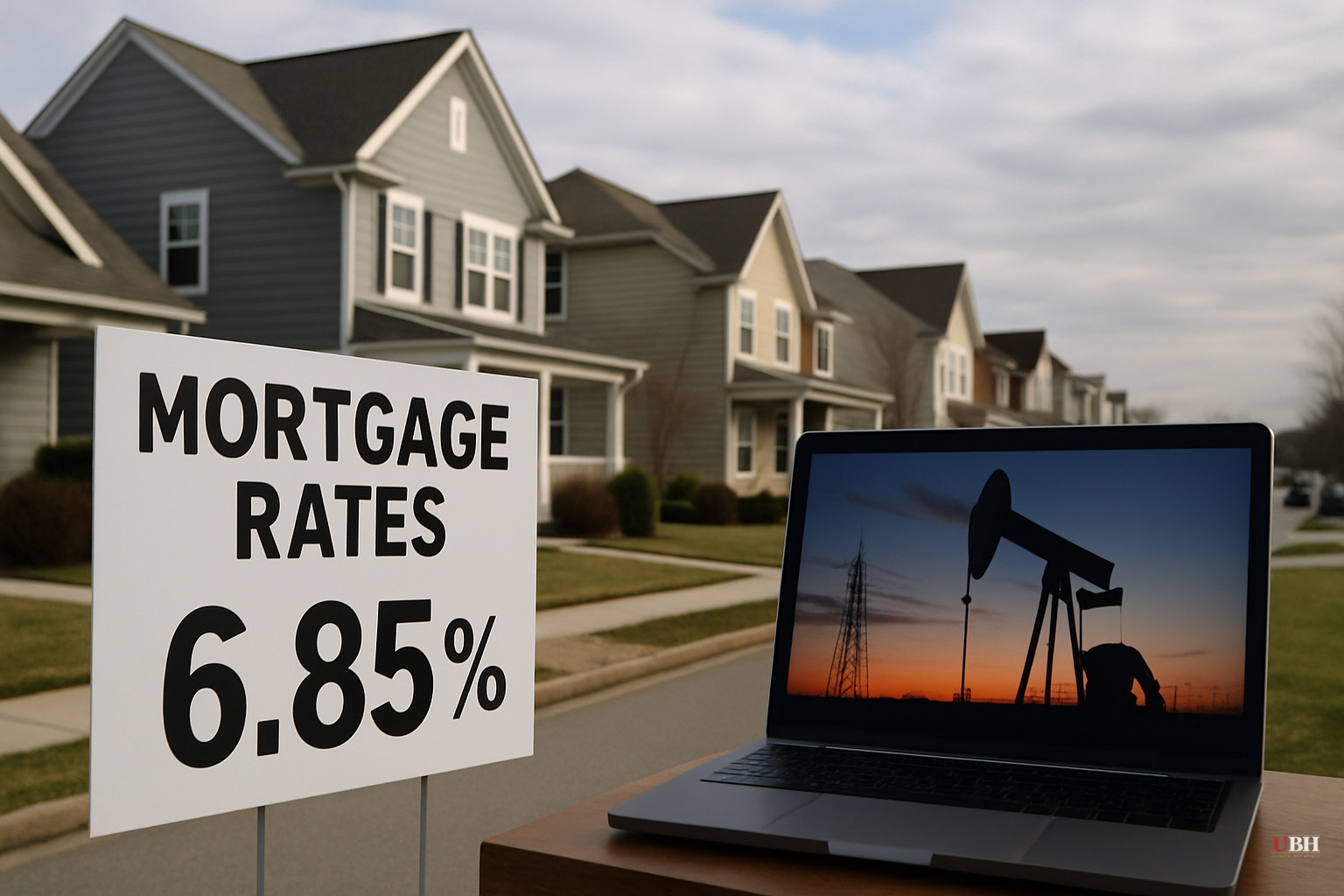
Rates Climb to Levels Not Seen Since Last Summer
Mortgage rates spiked to their highest point in nearly a year, and homebuyers noticed immediately.
The average contract interest rate for 30-year fixed mortgages with conforming loan balances rose to 6.65% last week, up from 6.58%, according to the Mortgage Bankers Association's seasonally adjusted survey reported by CNBC. Points also increased, to 0.67 from 0.64, for loans with 20% down.
Other trackers showed rates running even hotter. Mortgage News Daily's Matthew Graham reported the average top-tier 30-year rate hit 6.75% on Monday, July 13, matching a high last seen May 19 and the highest level in more than 11 months. The Mortgage Reports put the conventional 30-year rate at 6.64% as of Tuesday, July 14, calling it a one-month high. HousingWire's Mortgage Rates Center showed 30-year conventional loans averaging 6.86%, up 9 basis points on the week, with jumbo loans climbing to 6.87%.
The numbers differ slightly across sources because each tracks a different lender panel and methodology. But the direction is the same: up, and fast.
Buyers Retreat, Borrowers Refinancing Anyway
Total mortgage application volume fell 2.7% last week compared with the week before, according to the MBA data cited by CNBC. Applications to purchase a home dropped 7% week-over-week and sat 2% below the same week last year. High home prices and thin inventory of affordable listings are compounding the rate pain for buyers.
Refinance demand went the other direction, rising 4% for the week and running 7% above year-ago levels. FHA and VA refinance applications jumped 9% and 10%, respectively, according to Joel Kan, vice president and deputy chief economist at the MBA. Kan's data shows the refinance share of total mortgage activity climbed to 43.2% of applications, up from 40.6% the prior week.
Given rates barely moved year-over-year, just 17 basis points higher than a year ago, the refinance surge appears driven by a small base of refinance activity, meaning modest volume swings translate into large percentage jumps. Some borrowers are doing cash-out refinances to tap home equity gains regardless of rate.
Oil and Iran Are Driving This, Not the Fed
The immediate driver of the spike is fuel prices, not Federal Reserve policy. Oil prices surged past $80 a barrel, up more than 8% from the prior week, according to The Mortgage Reports. That increase stems from renewed military conflict between the U.S. and Iran.
Melissa Cohn, regional vice president for William Raveis Mortgage, told HousingWire that bonds are reacting to the Iran conflict more than anything coming out of the Fed. "Right now, mortgage rates are going to move with oil prices, and oil prices are increasing, so rates will rise as well," Cohn said. "
Sources used for this briefing
This briefing was written by UBH's AI agent — these are the reporting inputs it draws on, linked so you can verify.


