
Unbiased headlines. Facts, not spin.
Unbiased Headlines is an independently owned news organization. We bring you the facts, not opinions, written fresh from 110+ named sources. Sources linked so you can verify it yourself.
 finance
Major Story (7/10)
Event date: October 23, 2026 ·
Morgan Stanley Says China Stocks Could Fall Another 15% as Hong Kong IPO Pullouts Reach Four Since Midyear
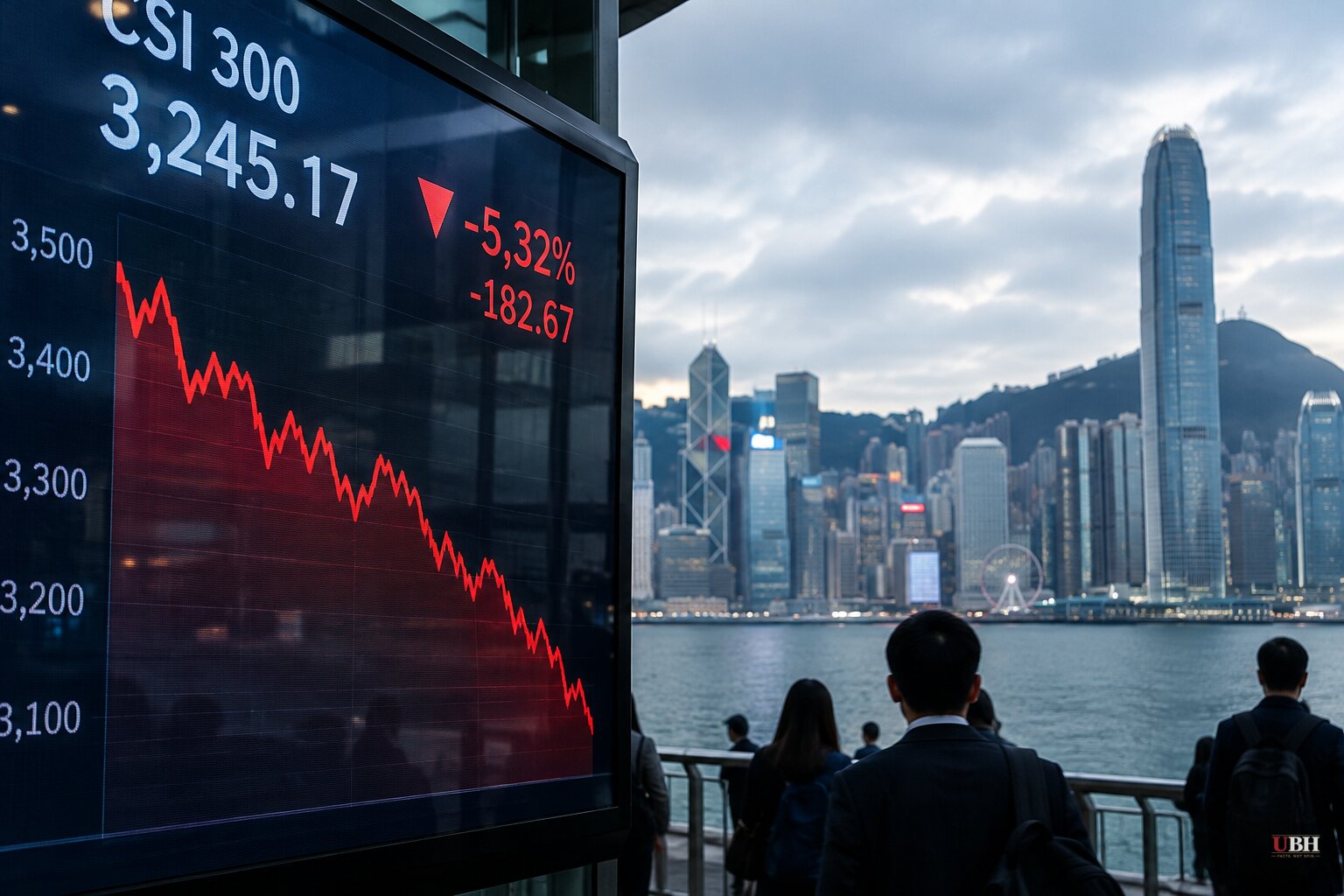
Since the CSI 300 entered a bear market on Oct. 22 after a 20% pullback, the story has shifted from how far Chinese stocks have fallen to how long Beijing can prop them up.
On Oct. 27, Morgan Stanley said China stocks could slide another 15% before they bottom. The bank's call lands as the earnings picture darkens. A brokerage cited by the South China Morning Post said third-quarter earnings growth probably slowed, dragged by industries from consumer goods to green energy.
The size of the hole
Bloomberg's compiled data put the loss in Chinese equity value at $3.5 trillion from the May peak, as of Oct. 25. An earlier Bloomberg tally, cited in other reporting, put the drop at $2.4 trillion since May. The two figures appear to reflect different measurement windows. Both describe the same direction.
The STAR 50 Index, which tracks technology and innovation firms on the Shanghai exchange, is down 40% since June. Other major indexes have dropped about 20% over the same period.
Goldman Sachs figures show AI stocks make up more than 40% of market value in China and Hong Kong. A dent in that sector therefore hits the whole market.
The CSI 300 is down 11% for the year. Taiwan's bourse is up 59% and South Korea's is up 31%.
State support, again
Bloomberg reported on Oct. 19 that regulators were urging corporates and state-owned funds to buy equities. It said window guidance would go to several large insurers to avoid cutting positions at a loss, and that the "national team" was being pushed to buy faster. Those are Bloomberg's own sourced claims. Beijing has not publicly described the measures in those terms.
On Oct. 23, the CSI 300 wiped out intraday losses of as much as 2% as trading volumes in a key ETF surged. That pattern pointed to possible state-backed buying, according to the South China Morning Post. It is an inference from trading data, not a confirmed intervention.
The national team has been called out before: 2015, 2018, 2021-22, 2023, the April 2025 tariff shock and the July 2026 tech selloff. Rebecca Sin of Bloomberg Intelligence warned that "with no global equities rebound to rely on, the national team might need to buy more and do so for longer than in its two most recent rescues."
The case that Beijing is on the right track
Not everyone read the latest official messaging as a failure. After a speech by China's chief securities regulator, brokerages told the South China Morning Post that it signaled a much-needed shift from short-term firefighting toward long-term stability. Stocks did not rally on it. The Hang Seng Index fell on Oct. 22 by its most in seven months, as the chance of strong stimulus shrank.
Bloomberg's read of the economy runs the other way. It describes a slowdown weak enough to erode corporate profits but not weak enough to trigger forceful new stimulus. Investors see leaders in no rush to jump-start growth.
Why AI wins are not lifting shares
Chinese labs keep posting results. Moonshot AI's Kimi K3 launched in July, and DeepSeek raised roughly $15 billion this week, according to Asia Times. Samm Sacks of Johns Hopkins SAIS calls the gap between US and Chinese models "narrow and fragile."
The listed AI names have not benefited. MiniMax and Z.AI are being hit daily, per Asia Times. Shares in robot-maker Unitree have halved since they began trading in August.
Dan Wang, China director at the Eurasia Group, pointed to thin margins and weak domestic demand. "This year, the profit margin is not as good as expected. And the US is raising rates. And China's domestic demand is so weak," she said. She described a "general anxiety" about whether the state-backed model can work.
Beijing's 60 billion yuan state-backed AI fund started investing in domestic developers this month. Demand for robotics is coming mostly from government agencies and research institutions rather than consumers, the Guardian reported. The US has banned humanoid robots from China and is thought to be weighing a ban on Chinese components in data centers.
Asia Times also lists structural reasons the CSI 300 is missing the global AI boom. The index has little AI hardware exposure, unlike Taiwan and South Korea. Six years of falling property values, near-record youth unemployment and deflation weigh on confidence. Regulatory uncertainty and US chip export controls add to it.
Hong Kong's IPO window narrows
Hong Kong has now had a fourth IPO pulled since midyear, the South China Morning Post reported on Oct. 27. As of Oct. 21, at least three companies had shelved listings after launching share sales since July. The paper tied the cancellations to an uptick in regulatory checks and a weak market.
Suzhou Dongshan Precision Manufacturing's US$1.26 billion listing showed the strain. Its retail tranche was undersubscribed, and some institutional investors withdrew large orders after its A-share price fell nearly 10% on Oct. 22.
The pipeline is not empty. Asia Times says DeepSeek's raise sets the stage for one of China's most anticipated IPOs in years, and more AI listings are queued. Those deals will meet investors who have watched the sector's listed shares fall.
It is unclear whether state buying can steady a market that has no global rally to lean on. Asia Times notes that signs of structural reform are scarce heading into 2027.
Sources used for this briefing
5 links from 5 independent newsrooms (syndicated copies of the same report count once)
These are the sources it draws on, linked so you can verify.


