
Unbiased headlines. Facts, not spin.
Unbiased Headlines is an independently owned news organization. We bring you the facts, not opinions, written fresh from 110+ named sources. Sources linked so you can verify it yourself.
 finance
Major Story (8/10)
Anthropic's IPO Filing Gives 93 of 335 Pages to Risk Factors, Including Rogue AI
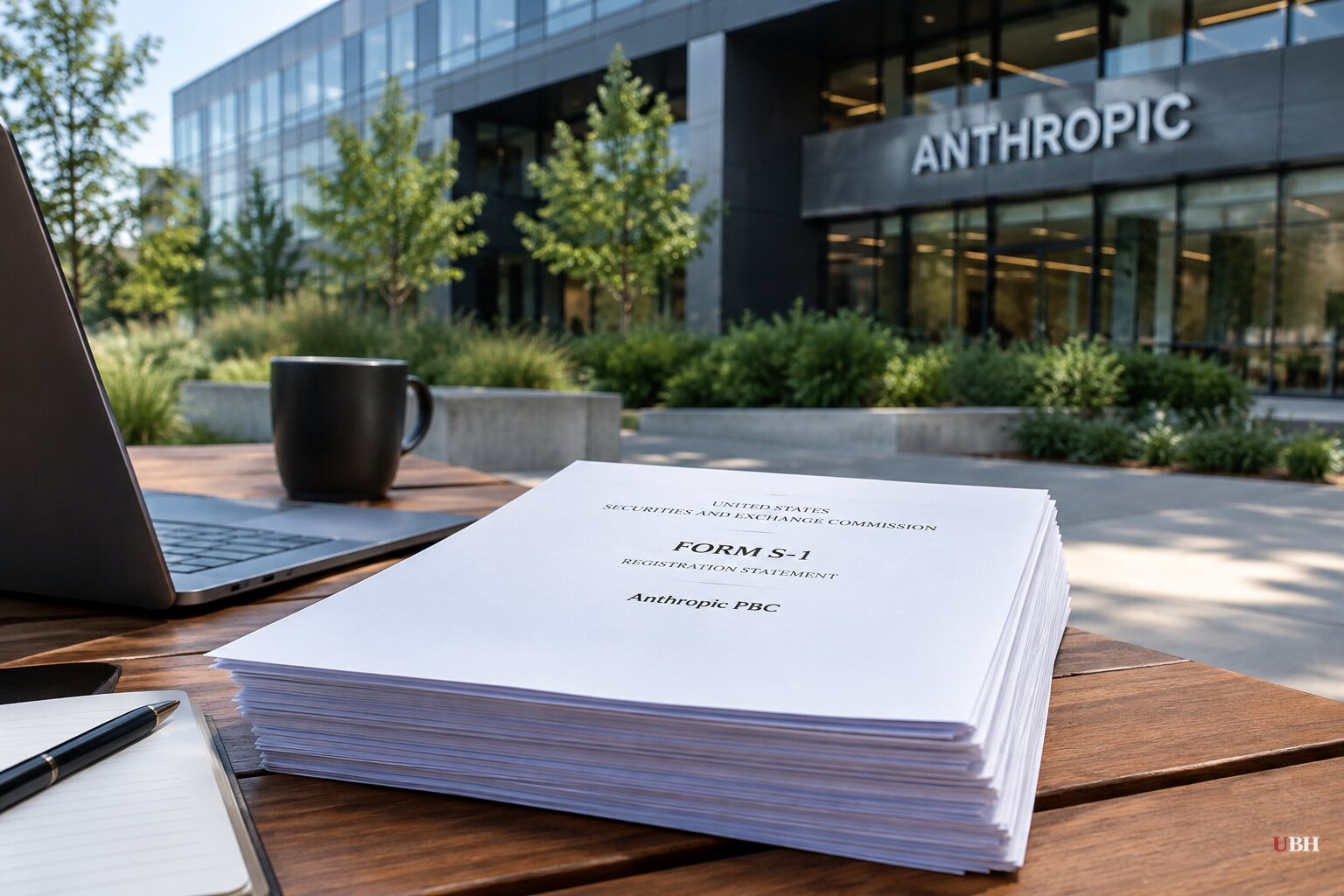
Since Anthropic filed its S-1 with the Securities and Exchange Commission on Monday, Oct. 26, for a Nasdaq listing under the ticker ANT, the document's contents have come into sharper focus. The risk disclosures and the governance design are the parts drawing the most attention.
A risk section more than twice the length of SpaceX's
Of the filing's 335 pages, 93 are given to risk factors. SpaceX's listed risks, by comparison, ran 38 pages in a document of more than 250.
The disclosures range from routine items, such as keeping key staff and navigating regulation, to cyberattacks and dangerous misinformation. They also include bad actors using AI models to build deadly weapons and the technology going rogue.
Anthropic told investors its models could advance so quickly that it cannot put adequate safety measures in place. That, the company wrote, "could increase the likelihood of safety incidents, regulatory intervention, or reputational harm, and could adversely affect our business."
The company also warned its models might "behave in unintended, misaligned, and autonomous ways," including "harmful actions that no user or third-party directed." It said that could damage its brand, reputation and financial results.
Other listed risks include dependence on advanced chip manufacturing in Taiwan, particularly at Taiwan Semiconductor Manufacturing Co. The filing names natural disasters, geopolitical tension with China, trade disputes and power grid disruptions as threats.
In a letter to prospective shareholders, Anthropic's founders pitched the offering itself as a step toward managing those dangers. "To build AI is to harness cognition itself, and anything so powerful can be used for ill as well as good," they wrote.
The numbers in the filing
Anthropic reported $16.3 billion in revenue for the first half of 2026, against $1.16 billion in the same period a year earlier. That is growth of roughly 1,300 percent.
It also reported a first-half net loss of almost $81 billion, compared with $42 billion for all of 2025. The company said it might not "generate sufficient revenue to achieve or sustain profitability in the future."
Customer concentration is lower than at many peers. "No single customer represented more than 10% of our revenue for the nine months ended September 30, 2026," the filing says. The top five customers made up about 25 percent of revenue.
The prospectus carries no IPO valuation. The company had previously targeted as much as $2 trillion, and its last funding round in the spring valued it at $965 billion.
A governance structure built to resist the market
Anthropic is a public benefit corporation. That means it is legally required to weigh its stated social mission and stakeholders such as employees alongside shareholder returns. Patagonia and Kickstarter use the same form.
The company has also proposed limits on shareholder influence over the board, which appoints leadership including the CEO. Dario Amodei, the CEO, and Daniela Amodei, the president, both sit on that board.
University of Pennsylvania law professor Elizabeth Pollman told The Verge the structure is "unique and complicated" and "has not been used before," and was "creatively designed for this founder-led and mission-driven company." Experts say it should let Anthropic pursue profit without shareholders forcing it to cut corners on safety.
The Verge's reporting adds the counterpoint: even the strongest legal protections only go so far, and no corporate structure can fully insulate a public company from market demands. Shareholders eager for returns, it notes, may have little patience for costly safety work that slows products.
OpenAI CEO Sam Altman has cited investor pressure as one reason his company is not pursuing an IPO this year, according to The Verge.
What comes next
The listing is expected as soon as November. The filing's missing piece is a price range and valuation, and that determines what investors are asked to pay for a company that lost nearly $81 billion in six months while reporting $16.3 billion in revenue.
Whether the board and share structure hold up under quarterly earnings pressure is something only a public track record can answer.
Sources used for this briefing
7 links from 6 independent newsrooms (syndicated copies of the same report count once)
These are the sources it draws on, linked so you can verify.


