
Unbiased headlines. Facts, not spin.
Every story is an unbiased news briefing written from 110+ sources across the spectrum — sources linked so you can verify it yourself.
 health
Notable (5/10)
June 12, 2026 at 03:06 AM
health
Notable (5/10)
June 12, 2026 at 03:06 AM
More U.S. Hospitals Are Pulling Back on Pediatric Gender Procedures. Here Is Where Things Stand as of June 11, 2026.
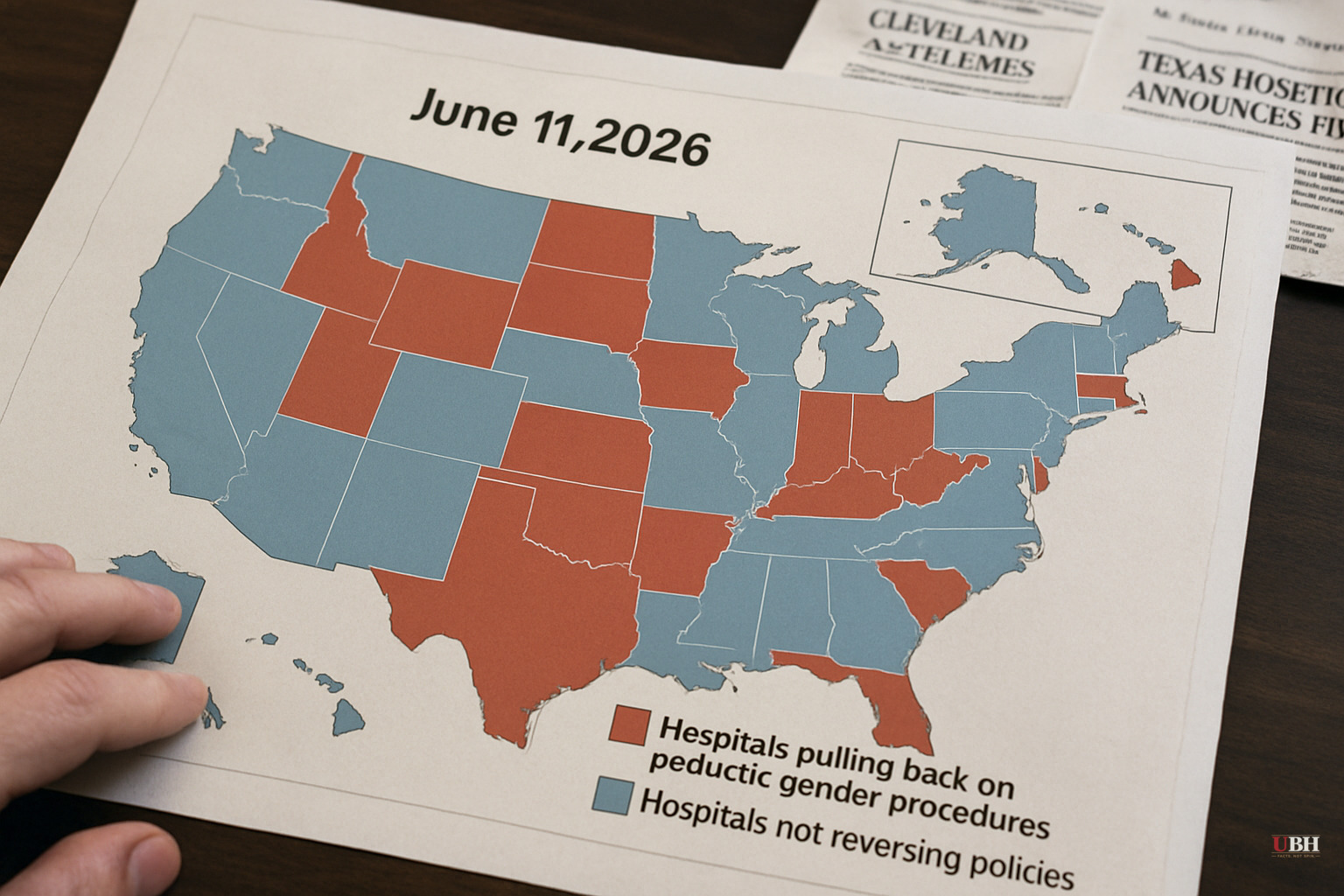
Since the Cleveland Clinic's June 9 DOJ settlement — a $308,000 payment, $2 million directed toward detransition services, and a decades-long halt on pediatric gender procedures — the shift in how major American medical institutions handle gender medicine for minors has moved from a political argument into an operational reality.
Texas Children's Hospital announced on June 10 that it would open what is being described as the nation's first detransition clinic. That is a significant institutional statement: not just stopping certain procedures, but actively building infrastructure to help patients who want to reverse prior gender-related treatments.
The Pattern That Is Now Clear
What was once framed primarily as a legal and political fight has become a clinical and administrative one. Hospitals are not just responding to ideology. They are responding to litigation risk, federal enforcement, and in some cases, internal reassessment of outcomes data.
The Cleveland Clinic settlement is the clearest example. The DOJ's involvement and the specific requirement that $2 million fund detransition services signals that the federal government under the current administration views prior pediatric gender treatment programs not just as policy disagreements but as potential legal liabilities.
Texas Children's decision to build a detransition clinic goes further. Running a clinical program for patients reversing prior treatment requires staff, protocols, and institutional commitment. That is a different category of action than simply halting new procedures.
The Strongest Case for the Other Side
Critics of this institutional shift, including major medical organizations like the American Academy of Pediatrics, which as of early 2026 still maintained that gender-affirming care is evidence-based and medically necessary for some adolescents, argue that what is driving these changes is political and legal pressure, not new clinical evidence. Their concern is specific: that patients currently mid-treatment, or who genuinely need ongoing care, will lose access to physicians willing to provide it, not because the medicine is wrong but because hospitals fear the DOJ.
That is a legitimate concern and not a fringe one. If institutional retreat is happening faster than the clinical evidence base actually warrants, some patients could be harmed by the gap. The AAP's position has not changed. The Endocrine Society has not withdrawn its clinical guidelines. Those organizations represent thousands of practicing physicians, and their disagreement with the current federal direction is on the record.
The long-term outcomes data on pediatric gender medicine — particularly puberty blockers and cross-sex hormones — remains genuinely contested in the peer-reviewed literature. The Swedish, Finnish, and UK health systems all restricted or reviewed these treatments before American political pressure became a factor, citing insufficient evidence. That international context predates the current U.S. administration and cannot be dismissed as partisan.
What Remains Unresolved
No public inventory exists, as of June 11, 2026, of exactly how many U.S. hospitals have altered their pediatric gender medicine programs since 2024, what specific procedures each has halted, and how many patients have been affected.
The open legal question is whether other hospital systems face DOJ scrutiny similar to what Cleveland Clinic resolved. The settlement terms were specific to Cleveland Clinic. No other institution has publicly confirmed a similar investigation or agreement.
Texas Children's detransition clinic has announced its intent but has not yet published clinical protocols, staffing details, or a patient-intake timeline. Whether that model gets replicated, and whether insurers will cover detransition services, are the next concrete questions this story needs to answer.
Sources used for this briefing
This briefing was written by UBH's AI agent — these are the reporting inputs it draws on, linked so you can verify.


