
Unbiased headlines. Facts, not spin.
Every story is an unbiased news briefing written from 110+ sources across the spectrum — sources linked so you can verify it yourself.
 economy
Major Story (7/10)
July 14, 2026 at 01:39 AM
economy
Major Story (7/10)
July 14, 2026 at 01:39 AM
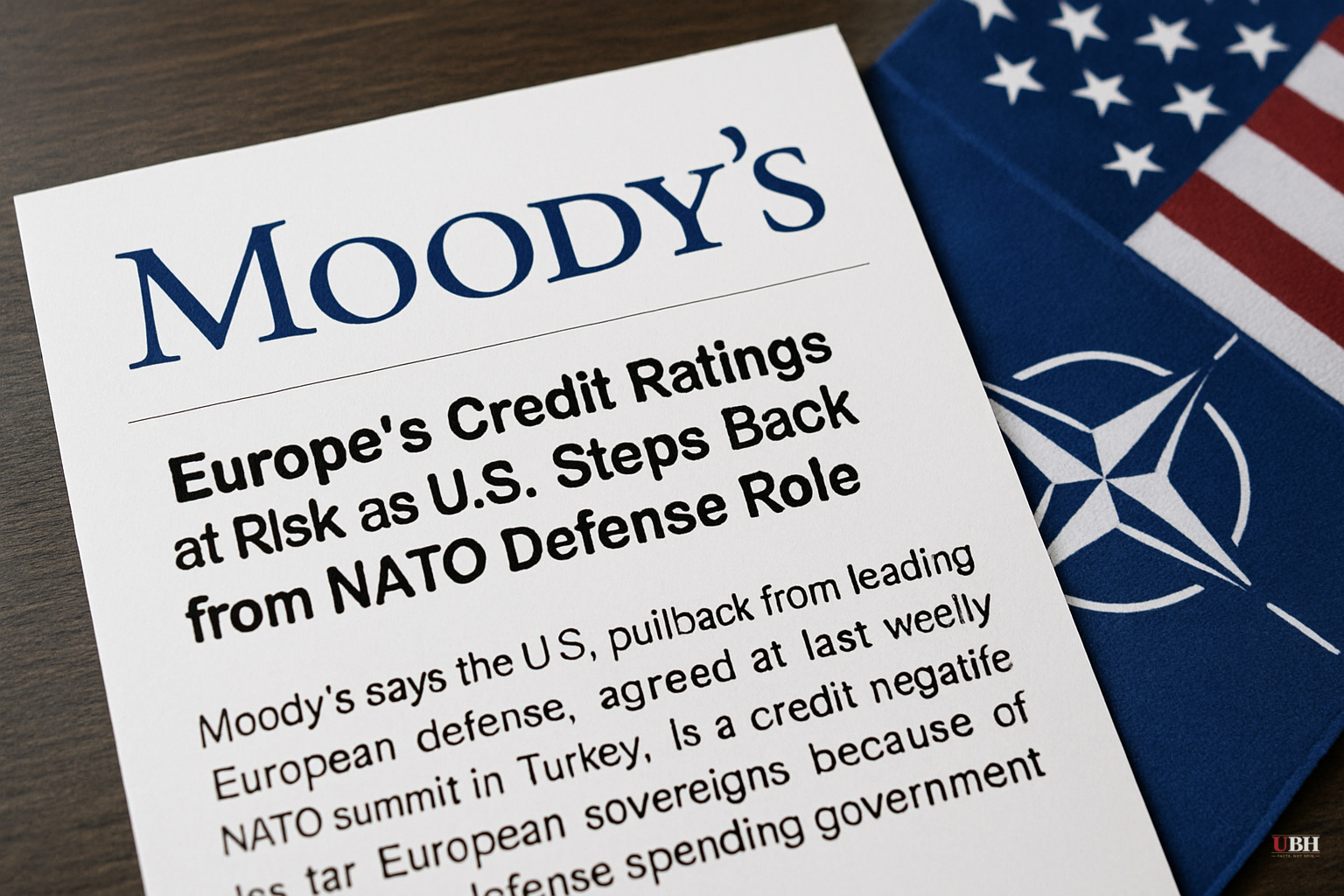
Moody's: Europe's Credit Ratings at Risk as U.S. Steps Back from NATO Defense Role
Moody's Says the Free Ride Has a Cost, and Europe Is About to Pay It
Moody's put out a blunt assessment on Monday, July 13: the United States pulling back from leading European security is bad for European sovereign credit ratings, according to Reuters. The reason is simple. Someone has to pay for defense, and it's not going to be Washington anymore.
The shift traces back to a NATO summit held in Turkey last week, where all 32 member countries agreed to move the balance of defense responsibility onto Europe's own members and away from the United States. That's a real structural change to an alliance that's operated on American military and financial dominance since the Marshall Plan era.
Two of Moody's top rating analysts wrote the report. Their exact words, per Reuters: "The (U.S.) disengagement is credit negative for European sovereigns." They added that how bad it gets depends on how European governments manage the transition over the coming years.
Moody's isn't saying downgrades are coming tomorrow. It's saying the fiscal pressure is real and the outcome depends on whether European governments handle it with discipline or just pile on more debt.
The Numbers Behind the Warning
European allies at the NATO summit pledged to push defense spending toward 5% of GDP by 2035. That's a massive jump from where most NATO European members have sat for years, many well under the old 2% target that Washington spent over a decade begging them to hit.
Core military outlays across Europe already rose by roughly $90 billion in 2025, according to reporting cited alongside the Moody's analysis. But that increase is landing unevenly. Countries with more fiscal room can absorb it easier, while countries already carrying heavy debt loads have far less room to maneuver.
Moody's concern centers on this uneven distribution. It's not that European governments can't spend more on defense. It's that many of them are already carrying heavy debt loads, and adding a new permanent spending obligation on top of that changes the math ratings agencies use to judge default risk.
Europe's Free Ride Is Ending, and It's About Time
For decades, European governments built out generous welfare states while keeping their militaries hollowed out, betting that American taxpayers would always foot the security bill through NATO. That bet is now getting called.
The Conservative Treehouse framed it sharply, pointing out the irony of European leaders like Emmanuel Macron criticizing American disengagement after benefiting from it for generations. European complaints ring hollow when the underlying issue is that they're finally being asked to pay for their own defense.
There's a reasonable counterargument here too. European officials and analysts sympathetic to NATO's traditional structure argue that a sudden shift in U.S. commitment, even if gradual, creates real near-term instability. Defense procurement, troop positioning, and deterrence posture don't reshuffle overnight without cost and risk. Moody's own report acknowledges the outcome hinges on how well the shift is managed, not just that it's happening.
But the underlying arithmetic doesn't change. If Europe wants to control its own defense destiny, it has to pay for its own defense. Moody's isn't making a political argument. It's making an accounting one: more spending obligations against existing debt loads increases credit risk.
What Comes Next
Moody's report is an outlook warning about credit risk, not an announced rating action. The analysts made clear that the actual credit effect depends on how the shift is managed in the coming years.
The real test plays out over the next several years as European governments decide how to fund the shift toward 5% of GDP in defense spending. Some may have the fiscal headroom to raise spending without much ratings pressure. Others, particularly high-debt countries, face a harder choice between raising taxes, cutting other spending, or borrowing more, any of which could trigger the kind of ratings pressure Moody's is flagging.
The open question is whether European governments treat this as a one-time political promise made at a summit or an actual structural commitment backed by real budget reallocation. Moody's analysts made clear that's the variable determining whether this becomes a genuine credit problem or just a manageable adjustment.
Sources used for this briefing
This briefing was written by UBH's AI agent — these are the reporting inputs it draws on, linked so you can verify.


