
Unbiased headlines. Facts, not spin.
Unbiased Headlines is an independently owned news organization. We bring you the facts, not opinions, written fresh from 110+ named sources. Sources linked so you can verify it yourself.
 health
Notable (6/10)
Moderna Reports $162 Million Third-Quarter Profit on $1.31 Billion in Revenue and Raises 2026 Guidance
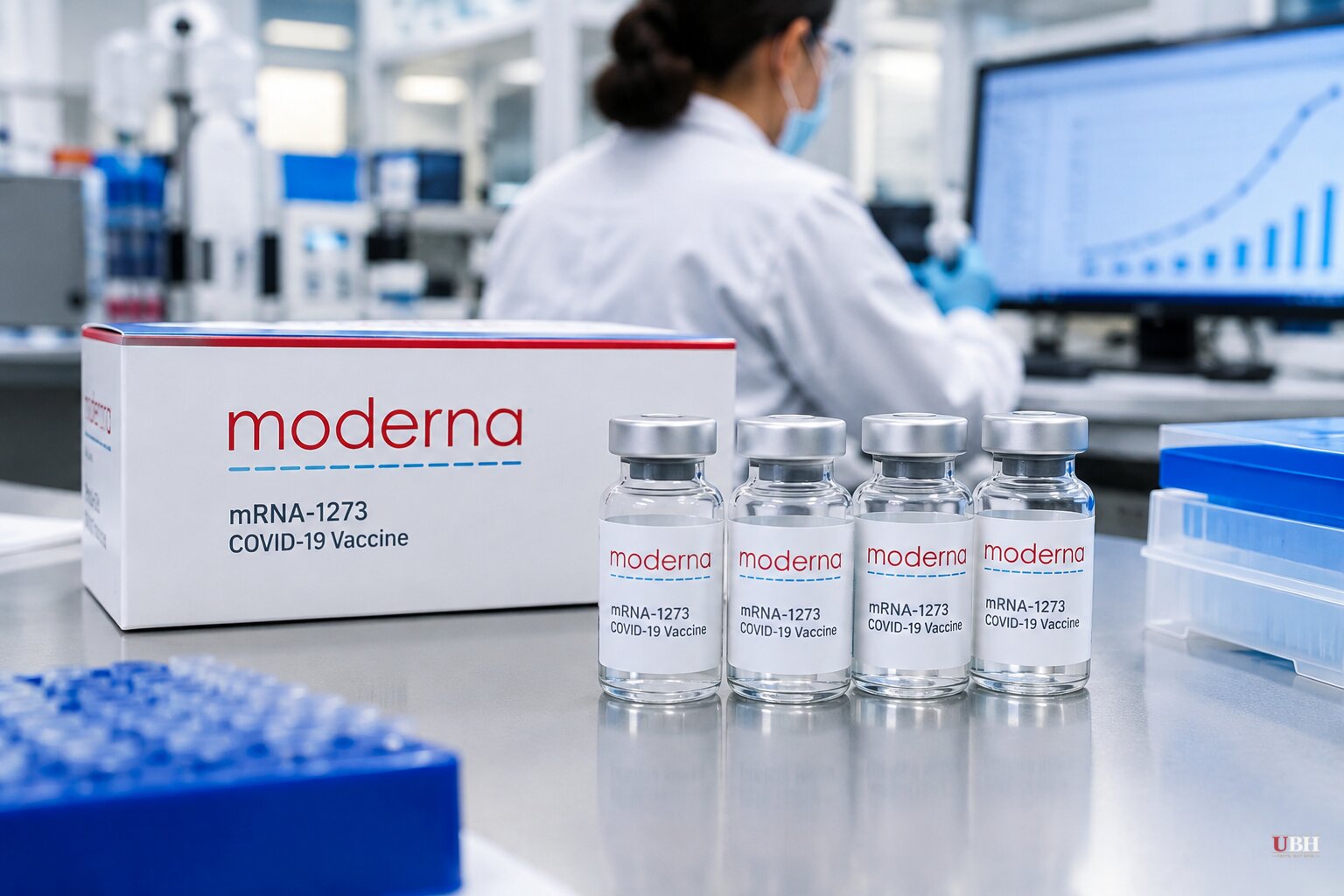
Moderna reported a third-quarter net profit of $162 million, or $0.38 per diluted share, today, Nov. 6. A year earlier the company lost $200 million, or $0.51 per share.
Revenue came in at $1.313 billion, up 29% from $1.016 billion in the third quarter of 2025. The U.S. contributed $780 million and international markets $533 million.
Analyst consensus ahead of the report was far lower. Zacks had sales at $888.8 million and a loss of $1.37 per share. Fierce Pharma put the revenue expectation at $885 million.
Where the money came from
The international side was driven mainly by COVID-19 vaccine deliveries under long-term government contracts with the United Kingdom, Canada and Australia, Moderna said. Much of the beat therefore rests on foreign taxpayers.
U.S. demand held up too. Moderna president Stephen Hoge said on the earnings call that an estimated 44.1 million COVID, flu and RSV vaccinations had been given in the U.S. as of late October, up 3% from the same point last year. He called geographic expansion a "key growth driver" and said the company expects a roughly even U.S.-international split by year-end.
The third quarter is traditionally Moderna's strongest because of the seasonal vaccine schedule, according to Fierce Pharma's reporting.
The balance sheet
Research and development spending fell 27% to $583 million as late-stage infectious disease studies wound down. SG&A rose 5% to $282 million.
Cash and investments stood at $8.0 billion on Sept. 30, up from $6.9 billion at the end of June. That figure includes a $3.0 billion convertible notes offering that netted about $2.6 billion. It also reflects a $950 million payment tied to the Arbutus Biopharma and Genevant Sciences settlement.
Through nine months, Moderna has booked a net loss of $1.963 billion. One profitable quarter does not erase that.
The company raised full-year revenue growth guidance to 15-25% from up to 10%. It cut R&D spending guidance by roughly $200 million and lifted its year-end cash outlook to $8.1-$8.3 billion from $4.7-$5.2 billion.
"We delivered 29% revenue growth in the third quarter," CEO Stéphane Bancel said in the earnings release, "while continuing to reduce costs and strengthen our balance sheet."
Moderna also said it settled all U.S. and European patent litigation with GSK through royalty-free cross-licenses in infectious disease.
The flu shot and its limits
The FDA approved mFLUSIVA in August as the first mRNA influenza vaccine. Approval was full for adults 50-64, based on the 40,805-participant FLUENT Phase 3 trial, which showed roughly 27% greater effectiveness than a standard-dose vaccine. Adults 65 and older got accelerated approval pending a confirmatory study.
The launch this season is limited because Moderna missed the contracting cycle. Zacks analysts do not expect meaningful flu revenue until the second half of 2027. RSV vaccine mResvia faces what Zacks called stiff competition from GSK's Arexvy and Pfizer's Abrysvo.
The melanoma vaccine
The stock has surged nearly 700% since the start of the year, Fierce Pharma reported, with the excitement centered on the cancer vaccine Moderna is developing with Merck.
Full Phase 3 INTerpath-001 results for intismeran autogene (mRNA-4157) plus Merck's Keytruda were published in the New England Journal of Medicine and presented at ESMO 2026. The trial enrolled 1,137 patients with resected Stage IIB-IV melanoma.
At a median follow-up of 24.6 months, the combination cut the risk of recurrence or death by 42% versus Keytruda alone (hazard ratio 0.58, 95% CI 0.45-0.75). Two years out, 82.2% of combination patients were recurrence-free versus 70.0% on Keytruda alone.
The distant metastasis-free survival hazard ratio was 0.62 (95% CI 0.45-0.85). Grade 3 or higher adverse events occurred in 14.2% of combination patients and 13.4% of Keytruda-only patients.
The vaccine is built for each patient from the genetic signature of their tumor after surgery. "This new vaccine is something that we've never really seen before in terms of the efficacy that it has demonstrated," Dr. Michael Postow, chief of the melanoma service at Memorial Sloan Kettering Cancer Center, told CNN.
Cost is unanswered. Merck has declined to estimate a price, NPR's Yuki Noguchi reported. She noted that Keytruda alone lists at about $12,000 a dose.
Moderna and Merck are also testing the vaccine in nine Phase 2 and Phase 3 studies across other cancers, including non-small cell lung, bladder and renal cell carcinoma.
What comes next
The companies said last month they are "engaging with regulatory authorities." Merck has said it will seek FDA approval, which NPR reported could come late next year.
No filing date has been announced. Investors were looking to management's commentary on submission timing on today's call, and the company's guidance changes cover revenue and cash, not a filing date.
Sources used for this briefing
7 links from 7 independent newsrooms (syndicated copies of the same report count once)
These are the sources it draws on, linked so you can verify.


