
Unbiased headlines. Facts, not spin.
Unbiased Headlines is an independently owned news organization. We bring you the facts, not opinions, written fresh from 110+ named sources. Sources linked so you can verify it yourself.
 health
Notable (5/10)
CRISPR Reached Heart and Muscle in Unborn Animals, Researchers Say. Human Trials Are at Least Three Years Away
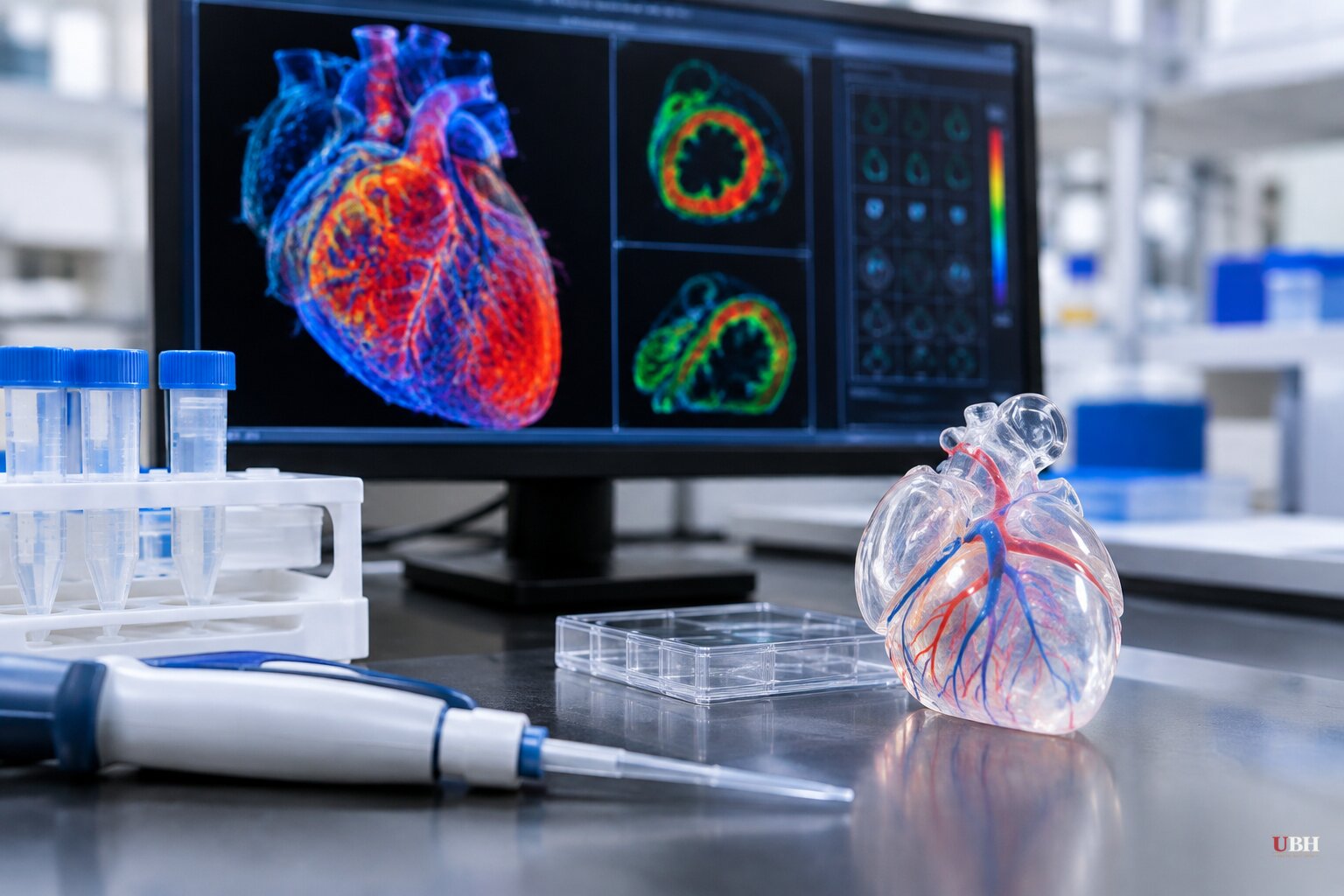
Treating a genetic disease before the patient is born sounds like science fiction. A handful of researchers are now working on it, and one team has a result it did not expect.
Kiran Musunuru, a gene editing expert at the University of Pennsylvania, and William Peranteau, co-director of the Center for Fetal Research at Children's Hospital of Philadelphia, have been studying fetal gene editing for years. Their animal work shows CRISPR's molecular scissors can reach the heart and other hard-to-reach muscles of unborn animals.
Why the womb changes the problem
After birth, the body's blood vessels build barriers that help a newborn breathe on its own. Those barriers have made it hard to deliver gene-editing treatments to organs beyond the liver. That limits which diseases scientists can go after.
Before birth, that barrier problem looks different. Musunuru and Peranteau found the editing machinery gets through to tissue that is out of reach later.
The finding could matter for genetic muscle disorders such as Duchenne muscular dystrophy. The goal would be to fix the underlying defect before the damage is done.
"If you really want to prevent the worst ravages of the disease, you can't wait until they're born," Musunuru said. "You've got to go in utero."
How a fetal treatment would work
Peranteau's team at CHOP already performs fetal surgery for birth defects like spina bifida. In those operations the mother is put under anesthesia, the surgeon opens the uterus and repairs the defect, and the pregnancy continues until the baby is ready to be born.
Fetal gene editing would be less invasive than that, Peranteau said. He compared it to how doctors routinely treat fetal anemia, by giving the unborn baby a blood transfusion through the umbilical vein.
Who else is in the field
Musunuru and Peranteau are not alone. Other scientists pursuing the idea include David Stitelman at the Yale School of Medicine, Tippi MacKenzie at the University of California, San Francisco, and Aijun Wang, a biomedical engineer at UC Davis.
The field is helped by two recent advances: better prenatal diagnostics, which can identify a genetic condition earlier, and improvements in CRISPR itself, the Nobel Prize-winning DNA editing tool.
Musunuru already has a track record in this area. In 2025 he helped develop what was described as the world's first personalized gene editing treatment for an infant with a rare genetic disorder. His fetal work predates that effort.
The timeline and the caution
The early animal results are promising, according to the researchers. But Musunuru and Peranteau say they are at least three years away from trying the approach in humans.
They are also deliberately tempering expectations. Both worry that overselling the work could give families false hope.
That restraint is warranted by what the research has and has not shown. The results are in animals. No human fetus has been treated with this approach, and the researchers have not announced a human trial design.
The prospect of editing a fetus raises obvious questions that animal studies cannot answer. They include how a procedure performed during pregnancy affects both mother and child, and how the edits behave as an organism develops. Parents would be the ones weighing those risks, and they would need plain numbers rather than promises.
What comes next
The next milestone is the move from animal data to a first human protocol, which Musunuru and Peranteau place at least three years out. Until that happens, the practical question is whether the heart and muscle results hold up as the work progresses toward people.
Sources used for this briefing
1 link from 1 independent newsroom (syndicated copies of the same report count once)
These are the sources it draws on, linked so you can verify.


