
Unbiased headlines. Facts, not spin.
Unbiased Headlines is an independently owned news organization. We bring you the facts, not opinions, written fresh from 110+ named sources. Sources linked so you can verify it yourself.
 health
Notable (6/10)
Event date: October 30, 2026 ·
FDA Removes Boxed Warnings From Three More Estrogen Patches as Patients Report Stock-Outs
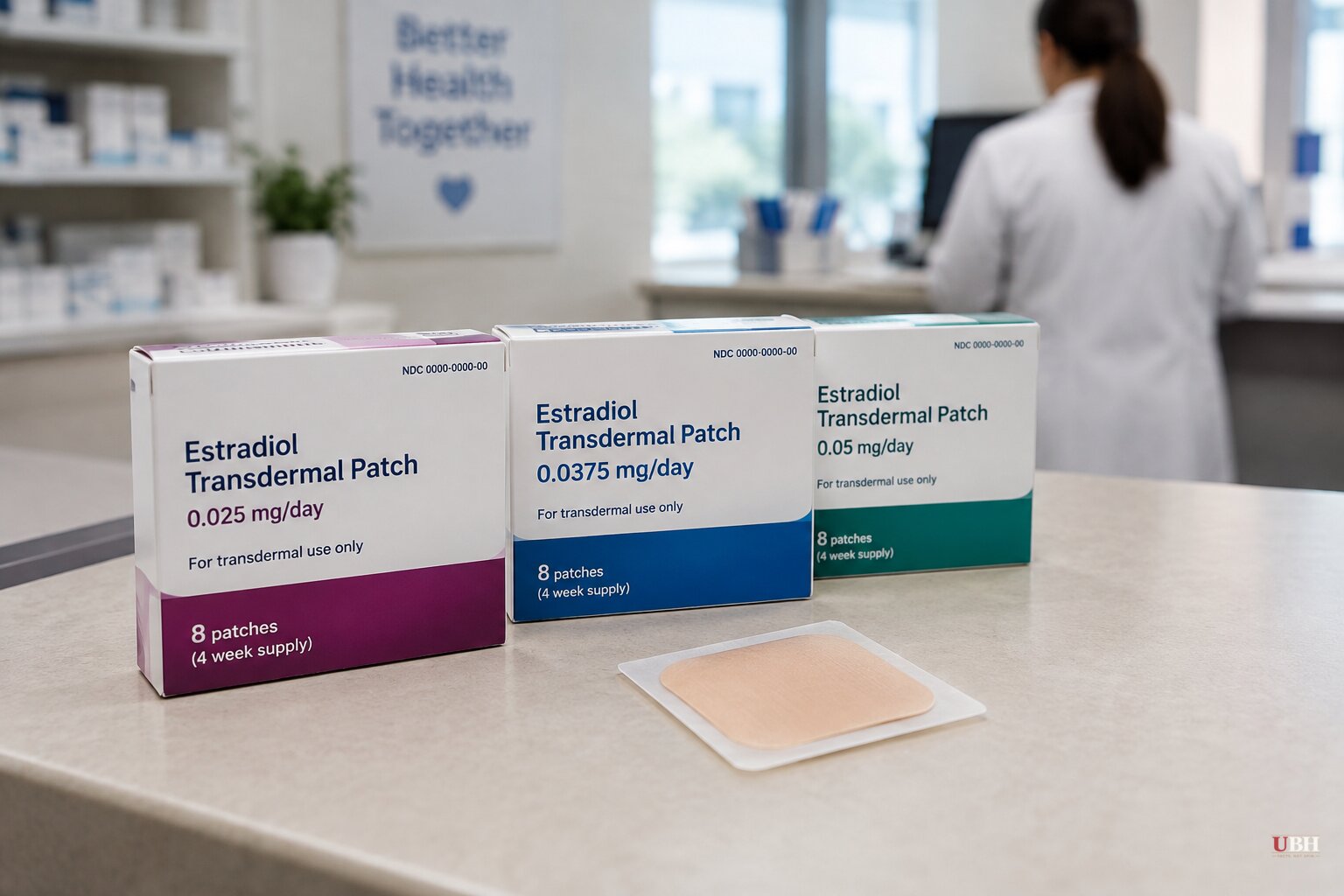
The FDA has approved updated labeling for three more menopausal hormone therapy products, stripping statements on cardiovascular disease, breast cancer and probable dementia from their boxed warnings. All three are estradiol transdermal patches from two applicants, according to an Oct. 30 HHS release. The agency did not name the brands or manufacturers.
The move follows the FDA's Feb. 12, 2026 action on six other hormone therapy products. The agency began working with drug companies on the changes in November 2025. So far, 29 companies have submitted proposed labeling changes.
What the FDA says changed
Sarah Ibrahim, deputy center director for regulatory programs at the FDA's Center for Drug Evaluation and Research, said the old warnings "painted a broad and, in some cases, overstated pictures of risk." She said updated evidence shows the risk-benefit profile "looks meaningfully different" for many healthy women under 60 and within 10 years of menopause onset.
HHS Secretary Robert F. Kennedy Jr. called the removal of "outdated statements" a "major victory for women's health." HHS tied the action to an executive order, "Advancing Women's Health to Improve Outcomes in All Phases of Life," signed Oct. 19. The department said First Lady Melania Trump was the impetus behind the order and an accompanying task force.
The backdrop is the Women's Health Initiative, whose 2002 findings in JAMA led to the original warnings. That trial followed more than 16,000 postmenopausal women aged 50 to 79 and was stopped early, after roughly five years, over higher rates of breast cancer, heart disease and blood clots in the hormone group. Maven Clinic, a women's health company, notes that the widely cited 26% relative increase in breast cancer worked out to about eight extra cases per 10,000 women a year.
Medical groups have already moved
The FDA is not out on a limb on the underlying medicine. In October, the American College of Obstetricians and Gynecologists and the American College of Physicians each upgraded hormone therapy to the most effective treatment for hot flashes, night sweats and sleep disturbances.
ACP president Dr. Jan Carney said these symptoms affect as many as 80 percent of women in menopause. The guidelines call for estrogen plus a progestogen in women with a uterus, since estrogen alone raises uterine cancer risk. Treatment should start before age 60 or within 10 years of menopause and generally last three to five years.
The guidelines do not recommend hormone therapy for women with a history of cardiovascular disease, breast cancer or certain blood clots. For women who cannot or will not take hormones, they point to SSRIs and SNRIs.
The process and the pushback
The FDA did not convene an advisory committee for this decision. At the press briefing, journalists asked for the evidence behind it and officials said it could be provided later. The agency has not said when.
Reshma Ramachandran, an assistant professor and health services researcher at Yale School of Medicine, said she is "concerned by the lack of transparency behind these decisions." She said blanket removal of breast cancer and cardiovascular warnings "without clear justification can be misleading for patients and underplays real potential harms," particularly for people with histories of hormone-sensitive cancers.
Other physicians welcome the change but want guardrails. Susan Reed, professor emeritus of obstetrics and gynecology at UW Medicine, said she was glad to see the warnings lifted on transdermal estrogen. "The pendulum has swung from the far left to the far right," she said. She asked whether the products are safe when started after ages 60 to 65, and whether labels should mention risks when transdermal estrogen is paired with oral progestogens. She said shared decision-making is "even more important than before."
The Guardian reported that menopause experts have said some Trump administration claims about hormone therapy, including improved longevity, are not supported by research. The same reporting notes patches generally carry lower risk than synthetic oral drugs, though risk rises with higher doses.
Supply has not caught up
The label changes have collided with a supply problem. Ibrahim said demand for estradiol patches "increased significantly" after the February changes, and patients in many areas "found it difficult to get their usual patches at their usual pharmacy." "I want you to know that we hear you," she said.
Dorothy Fink, deputy director of the National Institute of Child Health and Human Development, said patch manufacturing has doubled over the past year and that the government is working with manufacturers to strengthen supply. Patients still report stock-outs.
For individual patients, the guidance is a long-awaited document. Michele Vetter, 52, spent years asking two doctors about hormone therapy for her hot flashes. One eventually referred her to a compounding pharmacy that never returned her calls. She told The Epoch Times she now has the new guidelines to hand her doctors.
The FDA says it is working to change the labels on the remaining hormone therapy products. Whether the evidence behind the decisions arrives before the next round of approvals is an open question, since officials gave no date.
Sources used for this briefing
6 links from 6 independent newsrooms (syndicated copies of the same report count once)
These are the sources it draws on, linked so you can verify.


