
Unbiased headlines. Facts, not spin.
Unbiased Headlines is an independently owned news organization. We bring you the facts, not opinions, written fresh from 110+ named sources. Sources linked so you can verify it yourself.
 health
Notable (6/10)
Cambridge's AI-Designed Bird Flu Vaccine Fully Protected Mice and Ferrets. Stockpiled Shot Protected About Half
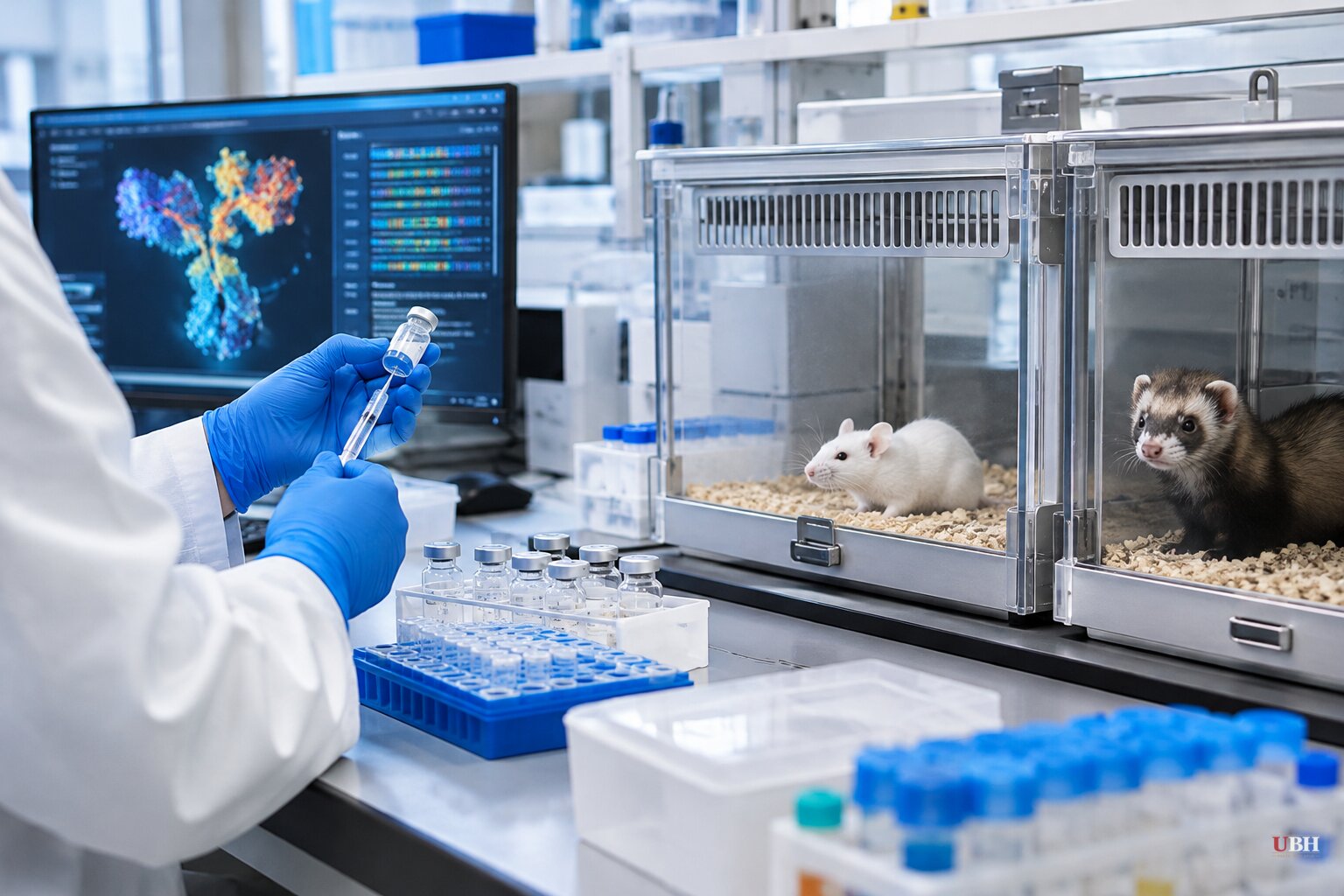
A vaccine designed with artificial intelligence fully protected mice and ferrets against a range of bird flu strains in a study published Nov. 5 in the journal Cell Reports Medicine. The vaccine currently stockpiled by many governments protected only about half of the animals exposed to the same viruses.
The work comes from the University of Cambridge's Laboratory of Viral Zoonotics and DIOSynVax Ltd, a company spun out of the university. Professor Jonathan Heeney of Cambridge's Department of Veterinary Medicine led the research.
This is animal data. Nobody has yet tested the vaccine in people.
What the researchers did
The team gathered bird flu genetic sequences recorded by surveillance programs worldwide. The samples came from wildlife, livestock and infected humans.
Using computational and evolutionary algorithms, they designed five synthetic antigens meant to represent the global diversity of bird flu viruses. An antigen is the active ingredient in a vaccine, the piece that trains the immune system. The idea is to build antigens from features shared across many variants rather than from one strain.
Candidates were screened in cell cultures first. The best ones moved to mice and ferrets, which were then challenged with genetically distinct H5Nx avian flu strains linked to human disease and pandemic risk.
The results
The experimental vaccine protected every treated animal, according to the study. The comparison vaccine, the type built under the World Health Organization's pandemic preparedness program and stockpiled by governments, protected about half.
The authors note that stockpiled vaccines target one specific strain and may work less well against other circulating variants.
"Rather than providing immunity to a single variant of bird flu, our new broad-spectrum vaccine is protective against a huge range of variants," Heeney said. He added that it is designed to anticipate viral evolution rather than react to it.
The team says the result shows its "plug and play" approach can produce safe, highly effective vaccines for many infectious diseases. That is the researchers' own conclusion from their own study, and it rests on animal challenge trials.
Why stockpiles are the problem
Bird flu is an RNA virus, like the coronaviruses behind COVID-19. RNA viruses mutate fast, and some mutations let them jump from animals to humans and slip past existing vaccines.
Current pandemic planning relies on stockpiling shots against variants that have already emerged. The Cambridge team says those stockpiles need constant updating as the virus changes, which raises costs for governments. The cost falls on taxpayers, since public money buys vaccines against a strain that may not be the one that arrives.
The researchers describe the threat as uneven. Some human infections with North American variants have been mild. Variants in southeast Asia have caused severe disease and high mortality in humans, according to the Cambridge account.
"We can be prepared to respond immediately to virus epidemics and pandemics, rather than the current scenario of always being on the back foot and responding with a strain which will have changed," Heeney said.
The platform behind it
This is the team's third announced success with the AI-guided design method. Earlier this year it said its broad-spectrum coronavirus vaccine had proved safe in human trials. It also published results showing its broad-spectrum influenza vaccine protects against both human and swine flu viruses.
The same platform is also being used to develop candidates for Lassa fever, Marburg, Ebola and multi-season flu.
A coronavirus vaccine that cleared safety trials in humans is the closest the platform has come to people. The bird flu candidate has not made that step.
What comes next
The team says the next step is human clinical trials, so the vaccine can be ready to give immediately when needed. The researchers have not announced a start date, a trial size or a funding source for those studies.
Animal protection does not guarantee the same result in humans, and the Cambridge study does not claim it does. Whether a single shot built from shared features can hold up against strains that have not yet emerged will only be settled in human trials and in the field.
Sources used for this briefing
7 links from 7 independent newsrooms (syndicated copies of the same report count once)
These are the sources it draws on, linked so you can verify.


