
Unbiased headlines. Facts, not spin.
Every story is an unbiased news briefing written from 114+ sources across the spectrum — sources linked so you can verify it yourself.
 health
Major Story (8/10)
Event date: August 20, 2026
health
Major Story (8/10)
Event date: August 20, 2026
Moderna and Merck's Personalized Melanoma Vaccine Hits Its Mark in Phase 3 Trial
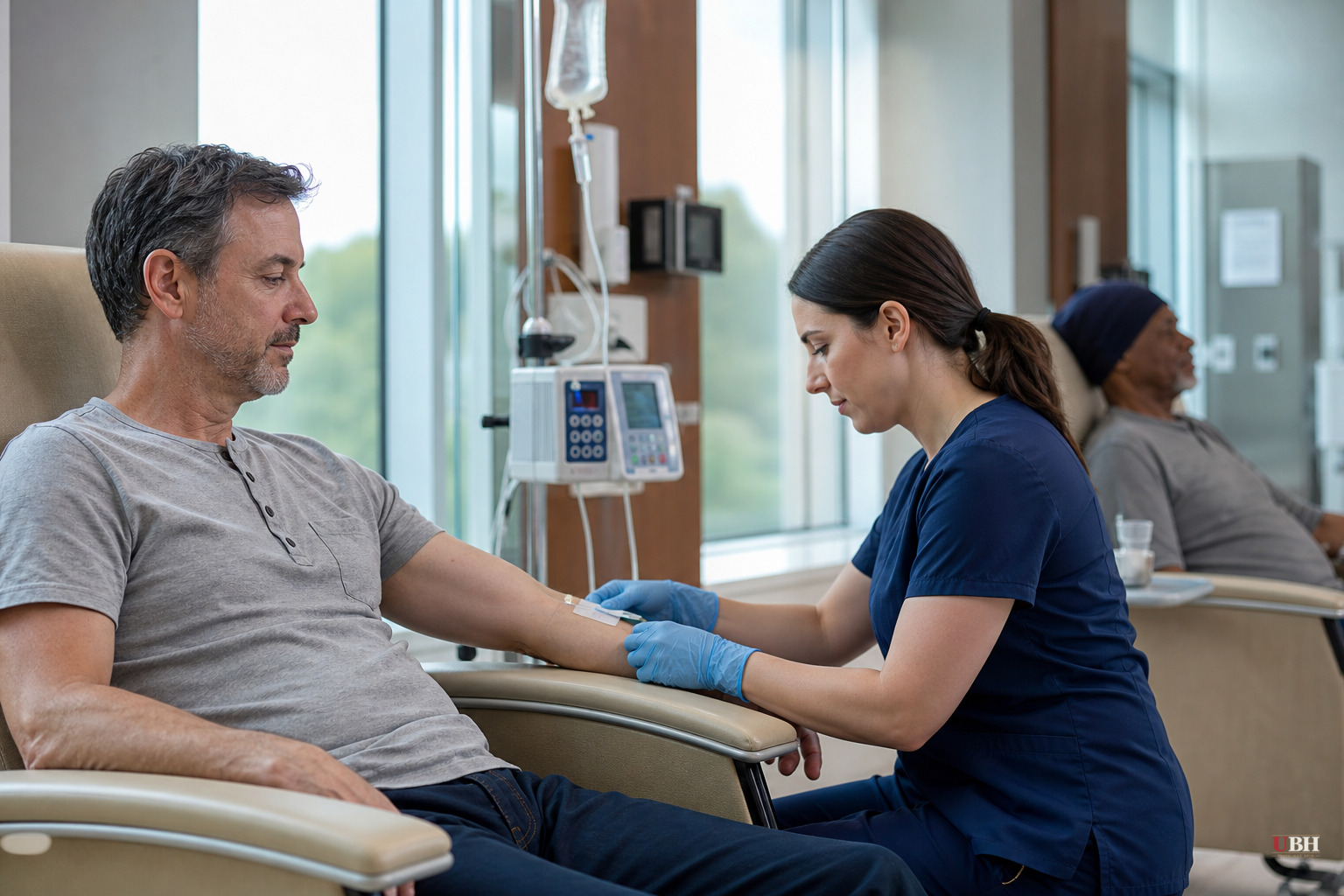
Moderna and Merck announced on August 19 that their personalized melanoma vaccine, intismeran, met the main goal of a Phase 3 trial when combined with the immunotherapy drug Keytruda. That's the last major hurdle before the companies can ask the FDA for approval, according to National Geographic. No mRNA cancer vaccine has gotten this far before.
The trial enrolled 1,137 patients who'd had melanoma tumors surgically removed but faced a real risk of recurrence. Two-thirds got intismeran every three weeks, up to nine doses, plus a year of Keytruda. The rest got Keytruda by itself. The primary measure was whether the cancer came back or the patient died from any cause. The companies say the vaccine group did better on an interim look at the data.
A secondary goal, survival without the cancer spreading to distant parts of the body, was also met, according to Epoch Times. The trial keeps running to check other outcomes, including overall survival.
Here's the catch: Moderna and Merck have not released the actual numbers. No hazard ratios, no percentage improvements, nothing beyond "it worked better." They say they'll present full data at an unspecified upcoming medical meeting and share it with regulators. Until that happens, "success" is a company press release, not a peer-reviewed paper.
Side effects so far sound manageable. Janice Mehnert, a cancer physician at NYU's Perlmutter Cancer Center and the study's lead investigator, told National Geographic that "patients felt crummy for a few days and missed a day or two at work, but nothing life-threatening." Fatigue and fever were the main complaints.
How the shot actually works
This isn't a vaccine you get once to prevent melanoma in the general population. It's built individually for each patient. Doctors sequence a patient's tumor DNA, compare it against healthy tissue from the same person, and identify the specific mutations driving that patient's cancer. Machine learning then predicts which resulting molecules, called neoantigens, are most likely to trigger an immune response, according to National Geographic.
That personalized code gets packaged into mRNA and delivered via lipid nanoparticles, the same delivery mechanism used in COVID-19 vaccines. Once inside cells, the mRNA instructs them to produce the cancer-specific targets, training the immune system to hunt down and destroy those cells if they return.
Dr. Pieter Cullis, a University of British Columbia professor and one of the scientists behind lipid nanoparticle technology, told UBC's Faculty of Medicine that this is "the most compelling results we've seen yet for personalized LNP mRNA cancer vaccines." He said a large Phase 3 trial showing gains in both recurrence-free and metastasis-free survival "is extremely encouraging" and suggested the approach could eventually become part of standard cancer care. That's Cullis's own assessment as a researcher in the field, not an independent verdict, and he works in the same technology space as the companies making the vaccine.
Catherine Wu, a Harvard researcher at Dana-Farber Cancer Institute who helped prove out the concept for mRNA cancer vaccines back in 2017, was more measured, telling National Geographic the trial shows the approach is helping patients and that "the odds are good" it extends to other cancers. Mehnert said if it works elsewhere, "it could be a real game-changer" — noting it's already being tested in bladder and lung cancer.
The bigger mRNA push, and the skepticism around it
This melanoma trial lands amid a broader wave of mRNA developments. The FDA approved Moderna's mFLUSIVA, the first mRNA flu vaccine, for adults 50 to 64 on August 5, 2026, with accelerated approval for those 65 and older, according to Harvard Health. In a trial of roughly 20,000 people ages 50 to 64, 411 who got mFLUSIVA caught the flu within six months compared to 557 in a similar-sized group given a standard flu shot. Side effects were roughly twice as common with the mRNA version, though mostly mild.
Kizzmekia Corbett-Helaire, a Harvard T.H. Chan School immunologist, cautioned that the trial didn't compare mFLUSIVA against the stronger flu vaccines already recommended for people over 65, so "we don't yet know whether it works better than those options."
Separately, Johns Hopkins researchers published findings in Nature suggesting a different chemical modification, called ac4C, could let mRNA drugs produce nearly twice the protein output of the modification used in current shots, according to Euronews. Bin Wu, a Johns Hopkins biophysicist, said that could eventually mean smaller, more effective doses, though the work has so far only been tested in cultured cells and mice.
None of this erases the broader public unease around mRNA technology. Epoch Times, in its own reporting elsewhere, has flagged claims from some experts that COVID-19 mRNA vaccines "may be causing cancer" — a contested claim that has not been established by the sources reviewed here and is separate from this melanoma vaccine trial, which uses mRNA to fight cancer that already exists rather than prevent infection. Critics of rapid mRNA rollout have consistently pushed for full transparency on trial data and longer-term safety tracking before wide deployment, a concern that applies to intismeran until Moderna and Merck publish their complete results.
For now, the next concrete step is regulatory. Moderna and Merck say they'll bring the full dataset to an international medical meeting and to the FDA. Until that data is public, the actual size of the benefit and how it stacks up against existing melanoma treatment remains unverified outside the companies' own claims.
Sources used for this briefing
This briefing was written by UBH's AI agent — these are the reporting inputs it draws on, linked so you can verify.


