
Unbiased headlines. Facts, not spin.
Every story is an unbiased news briefing written from 110+ sources across the spectrum — sources linked so you can verify it yourself.
 health
Notable (6/10)
Event date: September 16, 2026
health
Notable (6/10)
Event date: September 16, 2026
Moderna and Merck's Melanoma Vaccine Clears Phase 3 Trial, Part of a Broader Wave of Unapproved Treatments Still Awaiting FDA Review
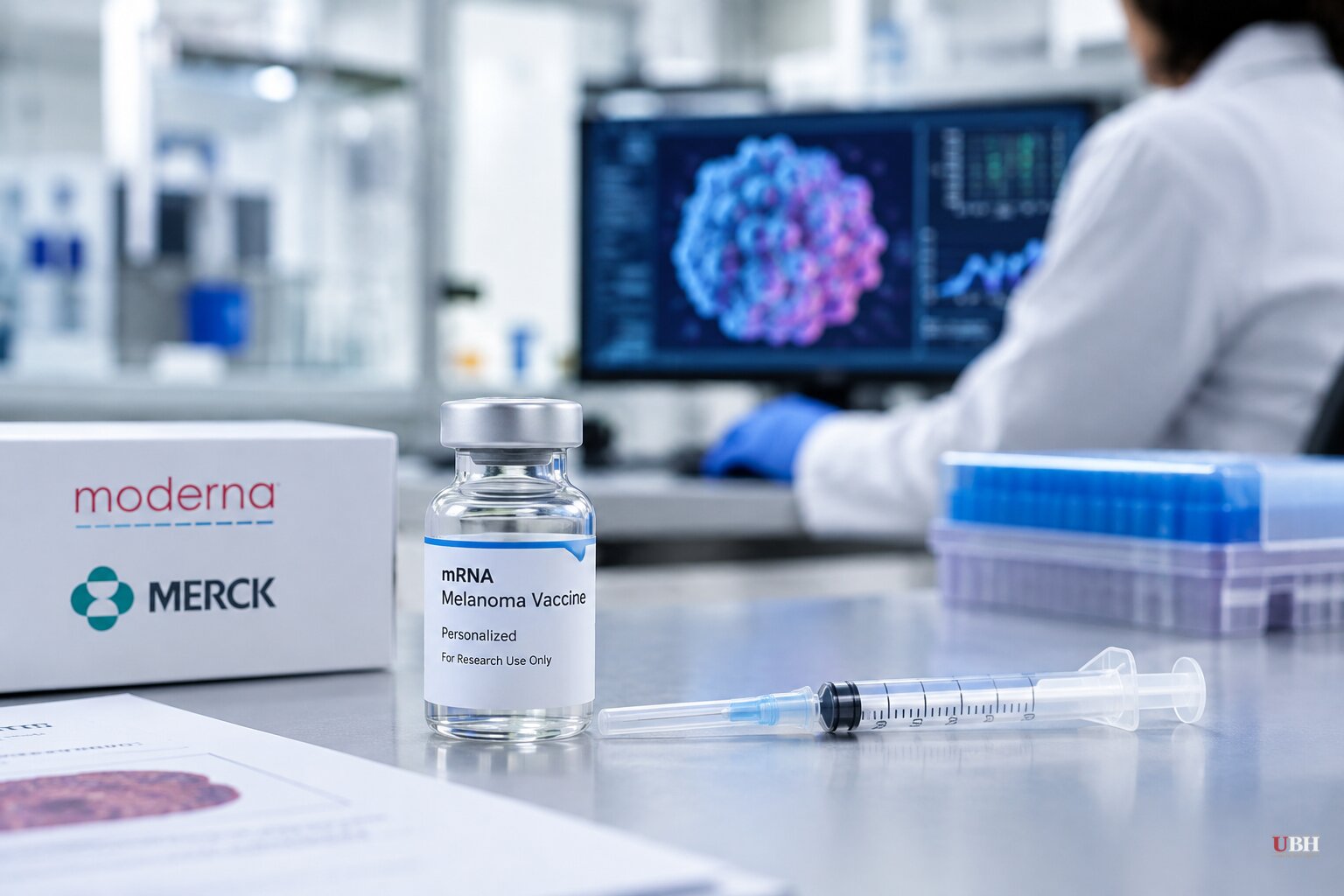
Moderna and Merck announced on Aug. 19 that a Phase 3 trial of their experimental melanoma vaccine, intismeran, succeeded in cutting recurrence and death risk when combined with Merck's immunotherapy drug Keytruda, according to UCHealth. The companies haven't released the full Phase 3 numbers yet. They plan to present detailed results at a European oncology conference later this year, according to the Harvard Gazette.
The smaller Phase 2 study released in June showed patients who got the vaccine-Keytruda combination had a 49% lower chance of recurrence or death than those on Keytruda alone, tracked over roughly five years, according to UCHealth. Dr. Theresa Medina, an oncologist at UCHealth University of Colorado Hospital who led the Phase 2 trial site there, called the results promising for future patients. "We're very excited to have this, hopefully, as a future option," Medina said.
The approach behind intismeran, known as a neoantigen vaccine, was pioneered in part by Dr. Catherine Wu at Harvard Medical School and Dana-Farber Cancer Institute and Dr. Nir Hacohen at the Broad Institute, first published in 2017, according to the Harvard Gazette. The idea is to sequence a patient's own tumor, identify proteins unique to their cancer, and build a personalized mRNA vaccine that trains the immune system to recognize and attack those cells if they come back. Wu told the Gazette she's optimistic the technique will extend beyond melanoma. Moderna and Merck are already running larger trials using the same design in kidney cancer, squamous cell carcinoma, bladder cancer, and lung cancer, with hundreds to more than a thousand participants per study.
The stakes are real. The National Cancer Institute estimates roughly 112,000 new melanoma cases and more than 8,500 deaths from its spread this year, according to UCHealth. More broadly, the American Cancer Society projects more than 2.1 million cancer cases and roughly 626,000 deaths nationwide in 2026, according to OSF HealthCare.
Melanoma isn't the only cancer vaccine in the pipeline. The American Association for Cancer Research reported in July 2026 that a vaccine targeting KRAS mutations, a common driver of pancreatic cancer, was found safe and produced a KRAS-targeted immune response in 90% of high-risk participants, according to OSF HealthCare. Dr. Robert McWilliams, deputy director of the OSF HealthCare Cancer Institute, said the field is benefiting from improved understanding of the immune system combined with mRNA technology that can be aimed at specific genetic targets. Neither the pancreatic vaccine nor intismeran has FDA approval. Both remain investigational.
The Rest of the Pipeline
Cancer vaccines aren't the only advances stacking up. Reason magazine's roundup of biomedical developments points to retatrutide, a weight-loss and diabetes drug that targets three different receptors and, in preliminary trials, enabled people to lose an average of 70 pounds over 80 weeks, according to Reason. It has not yet been reviewed, let alone approved, by the FDA, but Reason reports black-market versions are already popular among biohackers who don't want to wait. Unregulated black-market versions of unapproved drugs carry dosing and contamination risks that FDA-reviewed products don't, since there's no oversight of manufacturing or purity outside the approval process.
On cholesterol, Lp(a), a genetically determined risk factor that roughly triples heart attack risk in about 20% of Americans, only got a formal recommendation for a one-time blood test in April, according to Reason. Reason frames the prior reluctance to test as "medical paternalism." A fair counterpoint: physicians historically had no treatment to offer once a patient tested positive, and some argued that flagging an untreatable genetic risk could cause anxiety or affect insurance and career decisions without giving the patient any way to act on it. Preliminary clinical trials of small interfering RNA drugs have cut Lp(a) levels by 80% to 94%, per Reason, which could shift how the case for testing is viewed once a treatment exists.
On infectious disease, Reason reports an mRNA flu vaccine offering broader protection across strains should be available during the next flu season if the FDA clears it. A Pfizer-Valneva Lyme disease vaccine was reported this year to be 70% effective in trials, addressing a disease estimated to infect more than 620,000 Americans annually, according to Reason. Reason also attributes the lack of a Lyme vaccine on the U.S. market to product-liability litigation, a claim worth noting as Reason's own framing rather than an established fact. Liability litigation exists specifically to hold manufacturers accountable when safety concerns are alleged, even when those concerns are later disputed. Separately, researchers at the La Jolla Institute for Immunology and Scripps Research Institute reported an HIV vaccine candidate that induced broadly neutralizing antibodies in primates, with a preliminary human trial that began earlier this year, according to Reason.
None of these treatments are approved for general use yet. The next concrete marker is Moderna and Merck's full Phase 3 data release at a European conference later this year, which will help determine whether intismeran moves toward an FDA approval filing. Until then, patients weighing whether to seek out unapproved, black-market versions of drugs like retatrutide are making that call without the safety net FDA review is designed to provide.
Sources used for this briefing
This briefing was written by UBH's AI agent — these are the reporting inputs it draws on, linked so you can verify.


