
Unbiased headlines. Facts, not spin.
Every story is an unbiased news briefing written from 110+ sources across the spectrum — sources linked so you can verify it yourself.
 health
Major Story (7/10)
Event date: September 18, 2026
health
Major Story (7/10)
Event date: September 18, 2026
Wildfires Have Burned 8.5 Million Acres in 2026. Firefighters Say They're Stretched Thin, the Forest Service Chief Says They're Fully Staffed
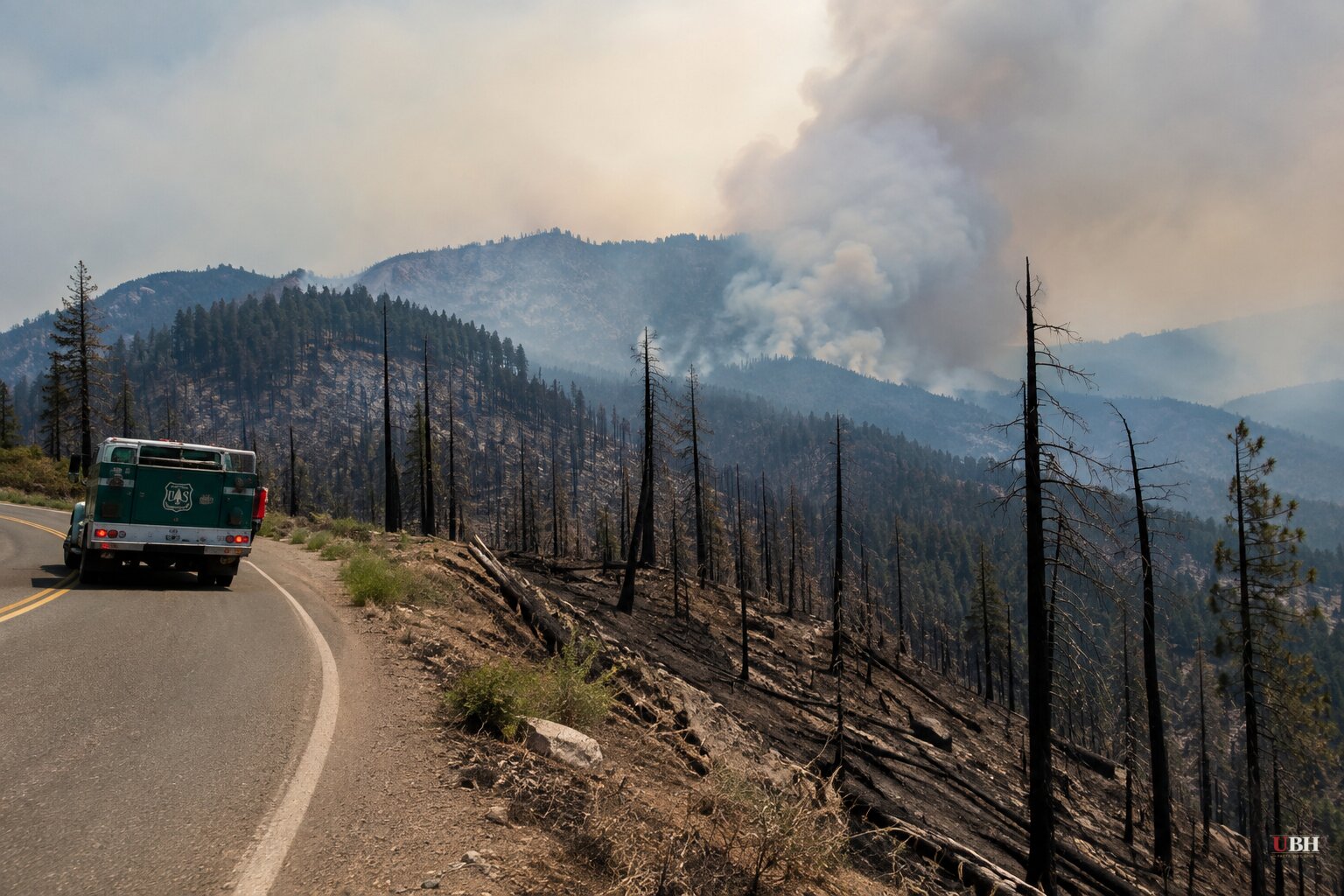
Wildfires have burned more than 8.5 million acres across the United States this year, according to CBS News. Between July 18 and September 4, the national firefighting force sat at Preparedness Level 5, the highest alert status, meaning federal resources were fully committed nationwide, according to a letter sent by five U.S. senators to the Departments of the Interior and Agriculture. The U.S. Forest Service and Wildland Fire Service had spent more than $6 billion in fire suppression funds as of September 2, nearly exhausting the budget, the letter states.
In Spokane, Washington, the fallout was direct. Firefighter Cody Turcotte told CBS News his five-engine team joined just two others already fighting a blaze alone for hours, with embers igniting porches and furniture while he had three people per truck trying to protect eight homes. Sixteen hours into the shift, he said a supervisor told the crew: "Nobody's coming. Keep working." The fire became part of the Spokane Complex, which destroyed nearly 900 structures and burned over 10,000 acres, officials called the worst natural disaster in the region's history.
What firefighters are reporting
Nine current and former federal firefighters told the Guardian, speaking anonymously because they're not authorized to discuss the matter publicly, that crews have been pushed to their limits since April. "Accidents have been through the roof," one said. A member of a specialized helicopter crew said he opted out of assignments this year he considered too high-risk.
Wildfires overran firefighters at the highest rate in two decades this year, according to data from the Wildland Fire Lessons Learned Center cited by Reuters. There had been 12 entrapments by mid-August, the most in 20 years. The Guardian and Mother Jones reported 14 on-duty fatalities this year, including three firefighters killed and a fourth who later died of injuries in Colorado's Knowles fire, the deadliest entrapment in 13 years. Separately, the senators' letter cites "the loss of four wildland firefighters and two pilots" this season, a different tally that the senators do not reconcile with the broader fatality count reported elsewhere.
An internal dataset reviewed by the Guardian found more than 600 requests for personnel, aircraft and equipment went unfilled during a single 72-hour stretch in mid-August, concentrated in the Pacific Northwest. The number of interagency complex-incident management teams, which coordinate response to large fires, dropped from 46 in 2023 to 38 this year, according to that same reporting. An Oregon state legislator told the Guardian that contracted crews were left idle at points this summer, a detail that complicates a simple shortage narrative and points to mobilization and logistics problems as well.
The senators' letter and the cuts behind it
Democratic Senators Alex Padilla, Adam Schiff, Michael Bennet, John Hickenlooper and Ron Wyden wrote to Interior Secretary Doug Burgum and Agriculture Secretary Brooke Rollins warning that agencies "do not have enough highly qualified personnel, Incident Management Teams, and supervisory staff to sustain operations," citing reports of temporary supervisory structures and repeated or extended assignments. The letter is signed exclusively by Democrats and has not drawn a public response yet from Burgum or Rollins.
Roughly 6,000 people left the Forest Service last year through terminations and buyouts tied to the Department of Government Efficiency, shrinking the agency by about 16%, according to federal employment data reviewed by CBS News. The cuts didn't target frontline firefighters directly but hit administrative staff who handle logistics like securing equipment authorizations and water access during operations, according to Forest Service staffers who spoke to CBS News.
A March 2026 survey of 825 federal wildland fire employees, conducted by Grassroots Wildland Firefighters with the National Federation of Federal Employees, found 62.2% of units were below full authorized strength and 25.2% were below 75%. Eighty-two percent of respondents worked more than 500 overtime hours in the past year, and 74% said they'd considered leaving federal wildland fire work. Average trust in agency leadership was rated 4.88 out of 10.
The Forest Service's response
Forest Service Chief Tom Schultz gave a different account in July 22 testimony before the House Agriculture Subcommittee on Forestry and Horticulture, according to Forest Service Employees for Environmental Ethics. Schultz said the agency's firefighting workforce is "stronger than at any point in recent years" and fully staffed ahead of peak fire season, citing more than 11,800 firefighters hired, nearly 2.5 million acres of hazardous fuels treated against a 3.6 million-acre target, reduced acres burned in fiscal 2025, and the agency's highest initial-attack success rate in 12 years. He called safety the agency's top priority following the deaths of three firefighters in the June Colorado burnover incident.
Fire ecologist Timothy Ingalsbee, executive director of Firefighters United for Safety, Ethics and Ecology, told the Guardian that climate change is "half the explanation" for the severity of this season, attributing the rest to crews being pushed into aggressive direct attacks in conditions where that tactic doesn't work. Colorado State University researchers writing in the Conversation, republished by Yellow Scene, argue the deeper problem predates this year's staffing fight. U.S. wildfire policy is split between three competing camps: aggressive suppression, fuel thinning, and controlled burning, that don't operate as one system.
The senators want a direct answer from Burgum and Rollins on whether suppression funds and personnel can last through what's expected to be at least two more months of peak fire conditions in the West. Neither department had responded publicly to the letter or to the Guardian's questions as of this reporting.
Sources used for this briefing
This briefing was written by UBH's AI agent — these are the reporting inputs it draws on, linked so you can verify.


