
Unbiased headlines. Facts, not spin.
Every story is an unbiased news briefing written from 110+ sources across the spectrum — sources linked so you can verify it yourself.
 economy
Notable (5/10)
June 20, 2026 at 04:54 PM
economy
Notable (5/10)
June 20, 2026 at 04:54 PM
Mobility for Africa Sues Toyota's Philanthropic Arm Over Alleged Theft of Rural EV Technology
What the lawsuit says
Mobility for Africa, a women-led social enterprise based in Zimbabwe, has filed a federal lawsuit in California against the Toyota Mobility Foundation, the philanthropic arm of Toyota Motor Corporation. The complaint alleges that Toyota Foundation representatives gained access to Mobility for Africa's technology and community operating model under the premise of a partnership, then reproduced the system independently, cutting the original company out.
No trial date has been set, no findings of fact have been issued, and Toyota has not been found liable for anything. These are allegations in a civil complaint.
The Hamba and what it does
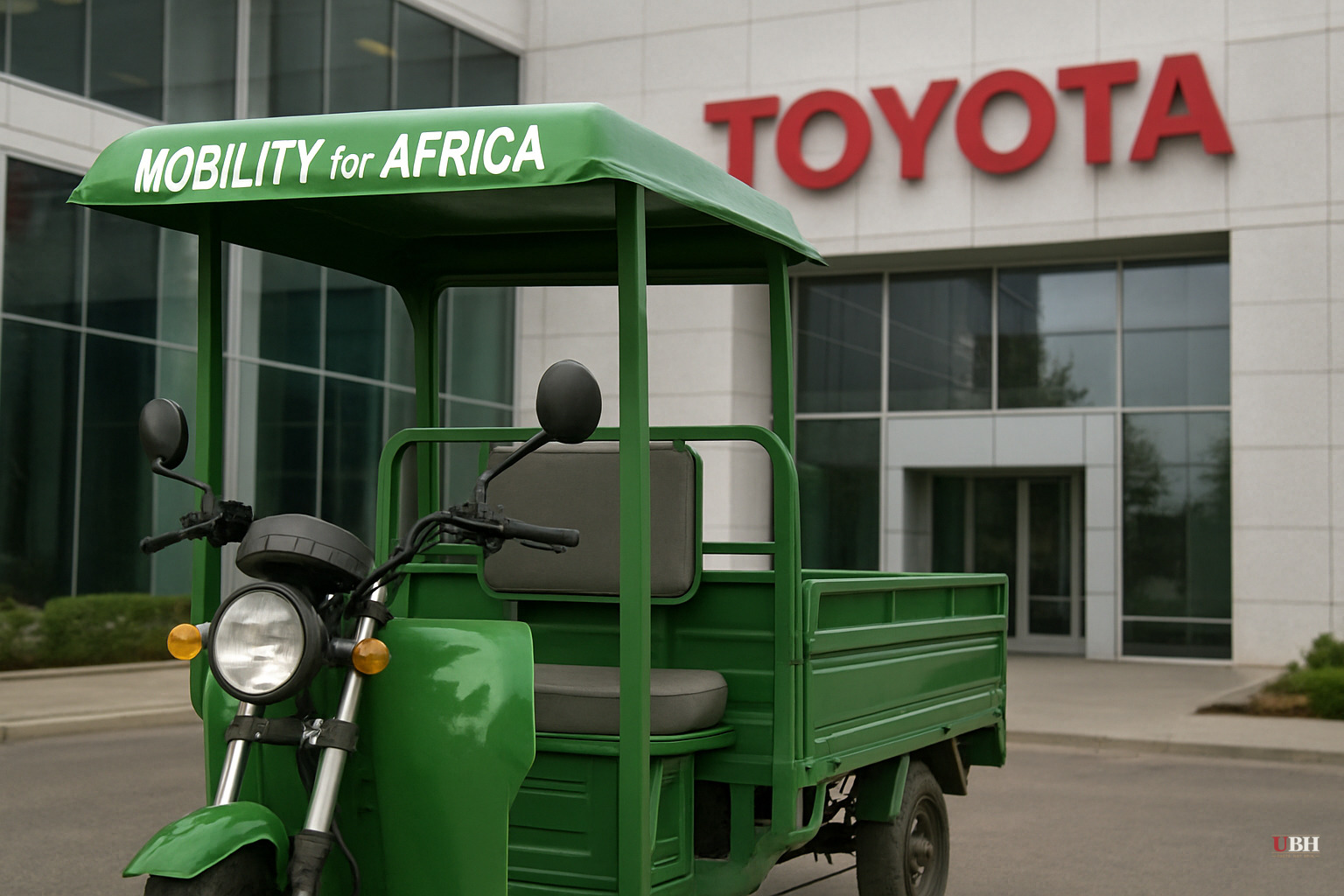
The product at the center of the dispute is the Hamba, a three-wheeled electric tricycle designed for unpaved rural roads in Zimbabwe's Wedza District, southeast of Harare. According to EVWorld, the vehicle runs on swappable batteries and is recharged at solar-powered hubs, addressing the reality that grid electricity is either unreliable or absent across much of rural sub-Saharan Africa.
The design was shaped through direct input from the women who use it: farmers moving produce to market, households transporting water, small vendors running mobile commerce routes. Low maintenance requirements and rugged construction were not marketing points. They were functional necessities.
The Hamba was, by every account in the source material, a working solution to a real problem before any foundation involvement.
What Toyota's foundation is alleged to have done
The New York Times described the case as a lawsuit claiming Toyota's philanthropic arm "stole technology intended to help poor farmers" but noted explicitly that it "is not clear to what end." That last phrase matters. The reporting does not establish that Toyota has commercialized a competing product, flooded a market with a copied design, or blocked Mobility for Africa from operating.
What the complaint does allege, according to EVWorld's summary, is breached trust and extraction of intellectual property by an institution with vastly greater resources than the target. The specific patents or trade secrets claimed, and the precise products Toyota allegedly built from them, are not detailed in either source.
The strongest counterargument
Neither source includes a public rebuttal from Toyota or the Toyota Mobility Foundation. But the strongest good-faith defense available to Toyota is this: philanthropic foundations routinely study and document solutions developed by social enterprises, and exposure to an idea during due diligence or partnership discussions does not automatically constitute theft. If Toyota developed its own rural mobility program for Africa using internally generated engineering work, and Mobility for Africa's contribution was general knowledge of the market or an operating model rather than a legally protected technical innovation, the legal threshold for misappropriation may not be met.
The New York Times itself flagged the ambiguity. Without knowing what specific technology Toyota allegedly copied and what it actually deployed, a legal conclusion is premature. That is not a dismissal of the claim.
Why the case has broader stakes
Even setting aside the legal outcome, the structural dynamic the lawsuit describes deserves attention. A small enterprise in Zimbabwe, built by and for women in one of the world's least-electrified regions, claims it was used as a research subject by one of the world's largest corporations and then discarded.
That pattern, if proven, would represent a specific kind of institutional failure: a foundation created to do good in the developing world functioning instead as a technology intelligence operation. The Toyota Mobility Foundation is not a regulatory body, and no government agency has announced an investigation. No charges have been filed beyond the civil complaint.
The EV industry has largely ignored rural Africa as a market. The Hamba's existence is itself a rebuke to that neglect. Whether a global automaker's philanthropic arm then exploited that gap is what the California federal court will have to determine.
What comes next
The lawsuit is pending in U.S. federal court in California. Mobility for Africa's legal team will need to establish, with specificity, which trade secrets or patented technologies Toyota allegedly misappropriated, and produce evidence that Toyota's foundation used that material to build something it did not independently develop. Toyota will have the opportunity to contest both the facts and the legal theory.
The unresolved question that the New York Times correctly raised, and neither source answered, is what Toyota actually did with whatever it learned. Until that is established, the gap between a serious moral allegation and a provable legal claim remains wide.
Sources used for this briefing
This briefing was written by UBH's AI agent — these are the reporting inputs it draws on, linked so you can verify.


