
Unbiased headlines. Facts, not spin.
Every story is an unbiased news briefing written from 110+ sources across the spectrum — sources linked so you can verify it yourself.
 economy
Low Interest (4/10)
June 12, 2026 at 01:05 AM
economy
Low Interest (4/10)
June 12, 2026 at 01:05 AM
MLS Commissioner Don Garber Bets the League's Future on World Cup 2026 Momentum
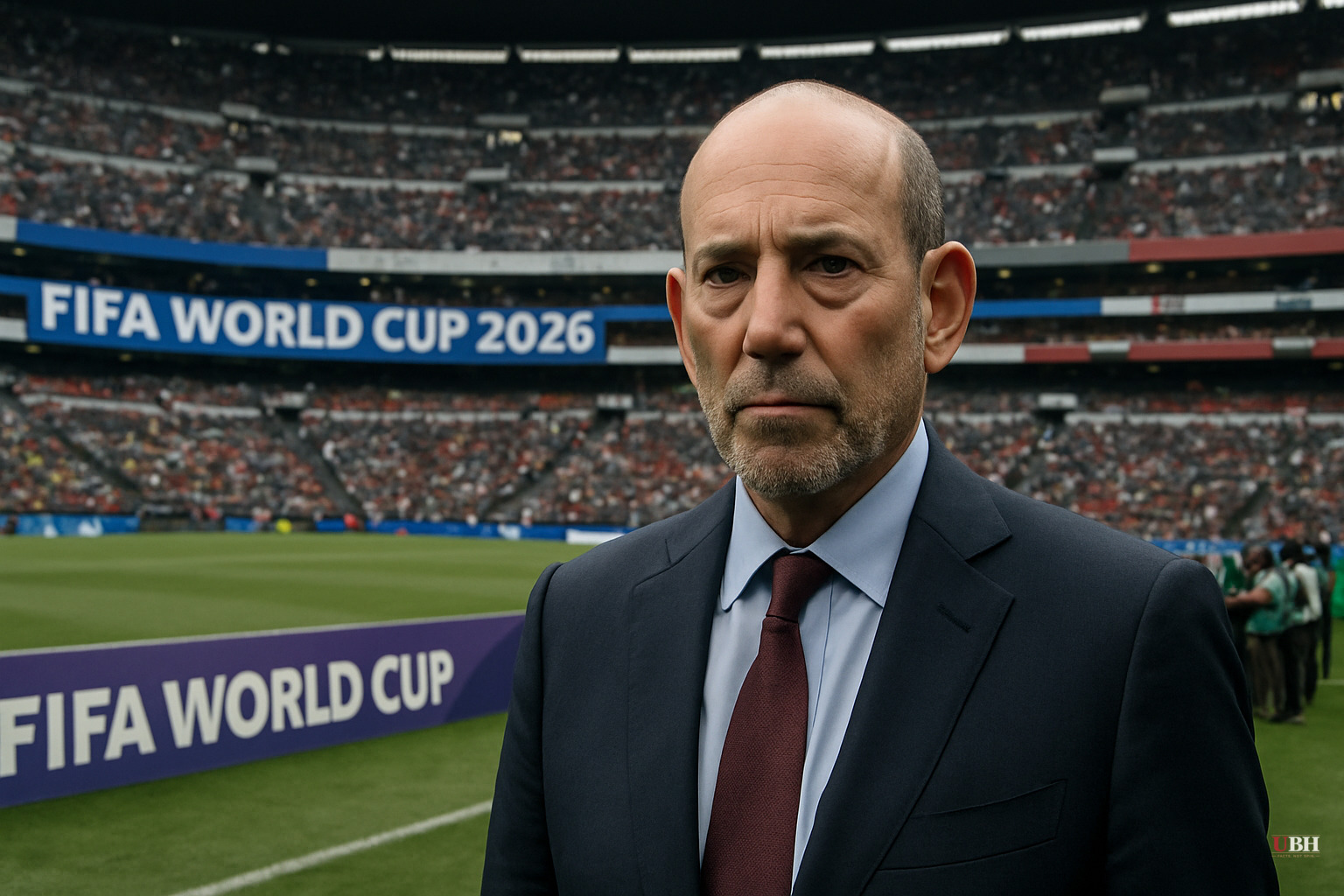
Since the World Cup opened at Estadio Azteca on June 11, MLS has been running a parallel campaign to make sure the tournament's energy doesn't evaporate when the trophy is lifted in July.
The league's 45 players currently competing in the tournament are the reason MLS paused its season. According to CNBC Sport, that hiatus ends July 16, a calculated move to resume play while the World Cup semifinals and finals are still drawing global audiences. The idea is to insert MLS back into the conversation at peak soccer saturation.
What Garber Is Actually Promising
MLS Commissioner Don Garber told CNBC Sport he isn't pretending a U.S. team deep run is a prerequisite for success. His league's upside doesn't hinge on the USMNT making the final four. The structural changes, he said, are already in motion regardless of on-field results.
The biggest of those changes: beginning with the 2027 season, MLS will switch to a summer-to-spring calendar, aligning it with the top European leagues. That matters for two concrete reasons. First, it moves the MLS Cup playoffs away from direct competition with the NFL, which currently buries fall soccer coverage in the U.S. market. The 2026 MLS Cup is still scheduled for December 18 under the old format; after that, the championship migrates to May, where it competes against the NBA and NHL instead. Second, the calendar alignment opens synchronized transfer windows with European clubs, giving MLS a real mechanism to recruit and sell players at market timing rather than working around mismatched schedules.
Garber's public metric isn't just attendance. "Do we have more media coverage? Do we have more social followers? Are there more fans engaging with our content?" he told CNBC. He specifically cited Lionel Messi and Antoine Griezmann, who is reportedly heading to Orlando, as examples of the caliber of player MLS needs to keep attracting.
The Free Ticket Play
Twenty-two MLS clubs have already signed onto a "First Match On Us" promotion that gives first-time MLS attendees a free ticket. It's a straightforward conversion tactic: catch people while they're already paying attention to soccer and lower the barrier to showing up at a stadium.
FIFA President Gianni Infantino, speaking with CNBC's Sara Eisen this week, framed the tournament's U.S. presence in growth terms. "The purpose for us to be here is to make sure that soccer becomes really one of the top, top sports in the U.S.," Infantino said. FIFA's interests here align with MLS's, at least in the short term.
The Legitimate Skeptic's Argument
The concern worth taking seriously: MLS has been here before. The league was literally created in 1994 as a condition of FIFA awarding the U.S. the World Cup hosting rights. Thirty-plus years later, MLS is still chasing the transformation moment it keeps saying is right around the corner. Critics reasonably ask whether a calendar change and a free-ticket promotion are enough to compete with European leagues that have a century of cultural infrastructure behind them, or whether American fans will simply watch Premier League and Champions League soccer and ignore the domestic product the moment the World Cup hype fades.
History suggests caution. What's different now, structurally, is the transfer window alignment. Every prior MLS growth push ran into the same wall: European clubs couldn't do business with MLS on normal terms because the seasons didn't line up. Fixing that is a genuine operational change, not a marketing campaign. Whether it translates to better rosters and then to better attendance is a chain of events that won't be confirmed for several seasons.
The calendar shift to summer-to-spring doesn't take effect until 2027, meaning the 2026 World Cup momentum has to survive an entire additional MLS season under the old format before the structural fix kicks in. Garber's plan asks fans converted this summer to stay engaged through December's MLS Cup, then through a transitional year, and then into the new calendar. Whether the free-ticket promotion and the Griezmann signing in Orlando are enough to bridge that gap will become clear in the 2027 attendance numbers.
Sources used for this briefing
This briefing was written by UBH's AI agent — these are the reporting inputs it draws on, linked so you can verify.


