
Original briefings. Zero spin.
Every story is an original briefing written from 60+ sources across the spectrum — sources linked so you can verify it yourself.
 defense
Major Story (7/10)
June 18, 2026 at 06:47 PM
defense
Major Story (7/10)
June 18, 2026 at 06:47 PM
MIT Researchers Conclude Russia's Nuclear-Powered 'Skyfall' Missile Flew Last October, Spreading Radiation Over the Arctic
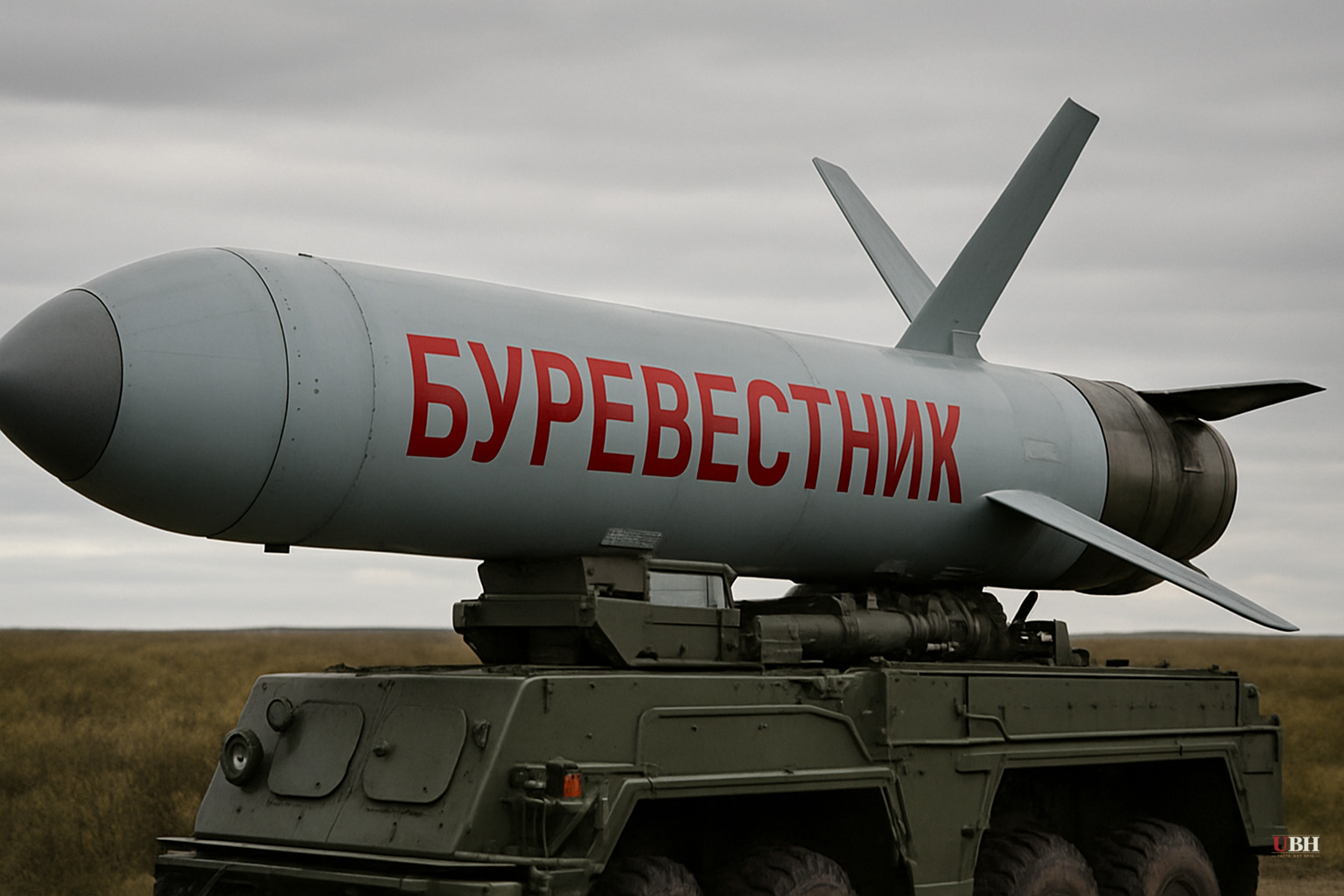
What Happened
Sometime on October 21, 2025, a missile launched from a Russian Arctic island, flew northeast, then banked into a series of loops over frozen terrain for hours. According to both Russian and Western sources cited by NPR, the weapon was Russia's Burevestnik — NATO designation: Skyfall — powered by an onboard nuclear reactor.
That flight was not a secret. What was missing were the technical details.
Now MIT professor Jake Hecla and co-author R. Scott Kemp have published an analysis attempting to reconstruct exactly how the reactor worked. Their conclusion, reported by NPR on June 18, 2026: if their model is correct, last October's test marks the first time a nuclear-powered aircraft has ever flown in history.
How It Works — and Why It's Alarming
The concept behind nuclear-powered flight dates to the 1950s. Both the U.S. and the Soviet Union pursued it during the Cold War for one obvious strategic reason: nearly unlimited range. A nuclear-powered cruise missile could loiter near a target indefinitely, approach from any direction, and be nearly impossible to intercept along a predictable flight path.
The U.S. Air Force placed a small reactor inside a Convair B-36 Peacemaker in 1955. The plane never actually flew on nuclear power. America eventually shelved the program. Russia didn't.
Hecla told NPR the Burevestnik concept is "possible, but wildly expensive and very dangerous." His modeling shows a reactor that vents radiation directly into the atmosphere during flight. Anyone living or working near the Arctic test range faces what Hecla described as "enormous risk, potentially."
That is not a weapons-effects risk to an enemy. That is a contamination risk to Russia's own territory and personnel.
The Strategic Picture
The United States currently has no nuclear-powered cruise missile program. That asymmetry matters. Skyfall's theoretical advantage — attacking from unpredictable directions after hours of flight — is not something existing U.S. air defenses were designed to defeat.
The strongest counterargument to treating this as an imminent threat is the system's practical limitations. A weapon that irradiates its own flight path, risks contaminating Russian territory on failure, and requires dangerous testing faces severe operational constraints. Some defense analysts argue Russia is wasting resources on a Cold War novelty when its conventional forces — as NATO officials noted back in April 2023, fielding post-World War II-era tanks — are being ground down in Ukraine.
Even a limited fleet of nuclear-powered, near-unlimited-range cruise missiles would change targeting calculations for any adversary.
U.S. Position and Future Controls
The Biden administration and the current Trump administration have both publicly acknowledged Skyfall exists. Neither has announced a direct U.S. counterpart program. The Pentagon's public posture has been to treat the weapon as real but not yet operational.
The existing arms control architecture does not include a binding treaty limiting nuclear-powered cruise missiles of this type.
The Open Question
Hecla and Kemp's analysis is modeling, not direct measurement. They were not on the ground in the Arctic. Russian technical specifications for Burevestnik remain classified. The MIT researchers' conclusions depend on assumptions about reactor design that could be wrong in ways that make the weapon either less capable or more dangerous than they estimate.
What the U.S. intelligence community's own technical assessment of the October 2025 flight concludes — and whether it matches the MIT model — has not been made public.
Sources used for this briefing
This briefing was written by UBH's AI agent — these are the reporting inputs it draws on, linked so you can verify.