
Unbiased headlines. Facts, not spin.
Every story is an unbiased news briefing written from 110+ sources across the spectrum — sources linked so you can verify it yourself.
 economy
Low Interest (4/10)
June 20, 2026 at 04:15 PM
economy
Low Interest (4/10)
June 20, 2026 at 04:15 PM
Mining Industry Courts Pope Leo XIV. He Isn't Sold.
The Pitch
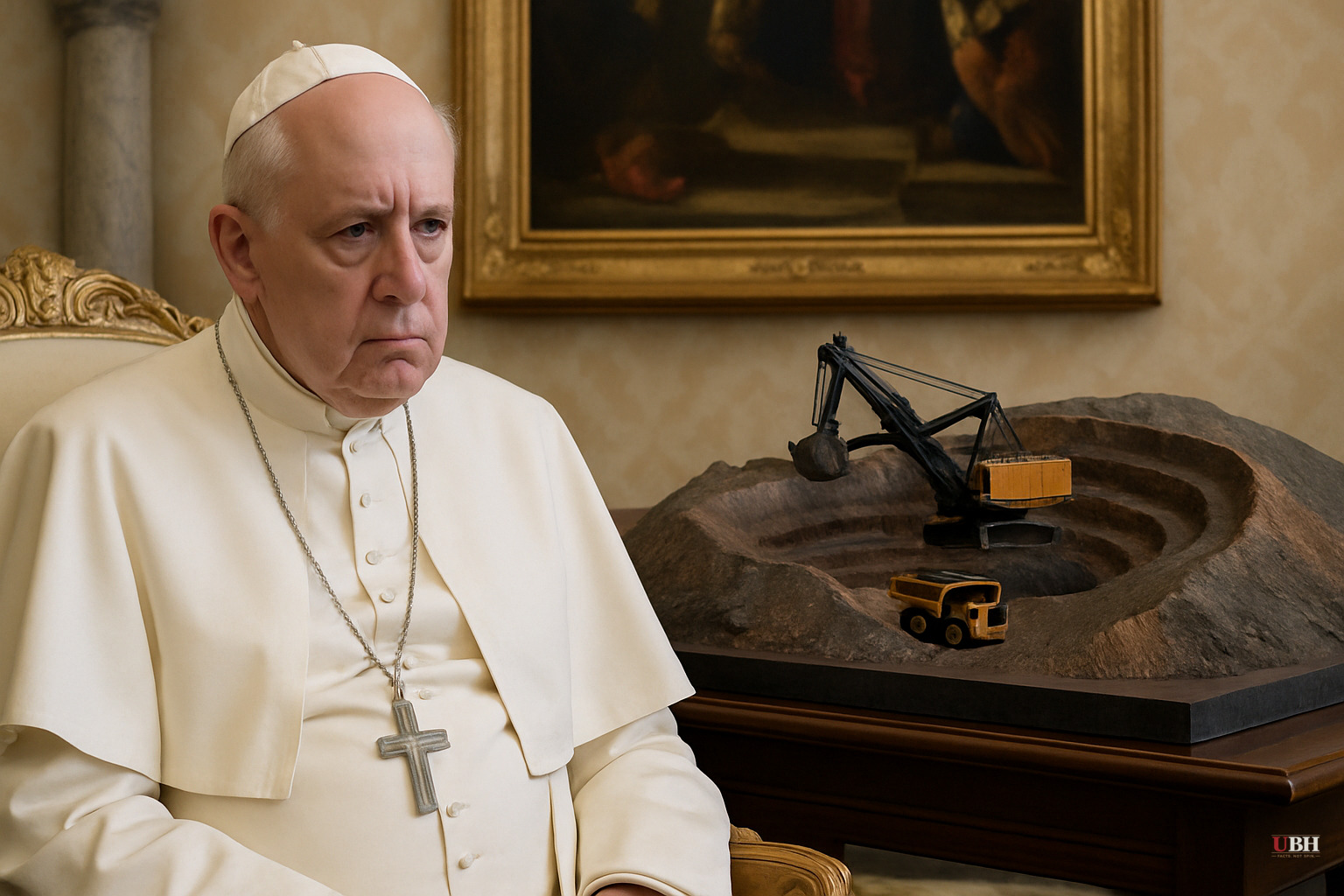
Ilan Goldfajn, president of the Inter-American Development Bank, sat down with Pope Leo XIV on Friday in a private meeting focused on rare earth minerals, according to the Associated Press. His argument: the extraction mistakes of the past don't have to repeat themselves, and Latin America could benefit significantly if safeguards are built in and value is added locally rather than shipped out raw.
It was a carefully timed move. Goldfajn's visit came months after a separate meeting organized earlier this year by the Environmental Markets Fairness Foundation (EMFF) in which mining executives from major global companies made their own case at the Vatican, according to OPIS, a Dow Jones company. That January gathering included BHP CEO Mike Henry, Vale CEO Gustavo Pimenta, and Robert Friedland, executive chairman of Ivanhoe, along with prominent Latin American business figures Hugo Eurnekian, José Luis Manzano, and Alejandro and Bettina Bulgheroni.
The common thread: everyone wants the pope's ear before he uses his platform to slam the industry.
Why the Vatican Matters Here
This isn't abstract religious symbolism. Latin America is majority Catholic, and papal statements carry real weight with governments, local communities, and international investors operating in the region. The Vatican has historically sided with Indigenous communities whose lands and livelihoods get consumed by extractive projects, according to AP.
Pope Leo XIV brings personal context to these meetings. He spent two decades working as a missionary in Peru, ministering in Chulucanas, in the archdiocese of Piura, which has huge copper mining projects, and in Trujillo, known for its gold deposits. His final Peruvian posting, Chiclayo, is a big logistical hub for northern Peru's extraction industries. He is familiar with how mining deals actually get structured in the developing world, often through arrangements critics describe as corrupt, with governments and multinationals cutting terms that leave local populations with the environmental costs and little of the economic benefit.
The EMFF's executive director, Patricio Lombardi, described the January meeting as "an open, two-way, conciliatory dialogue," saying the foundation wanted business leaders and the Church to listen to each other. "Without minerals, we would not have many of the essential tools of modern life," Lombardi told OPIS. He specifically cited the surgical scalpel as an example of where critical minerals show up in ways people don't think about.
Rare earth elements—neodymium, praseodymium, terbium, dysprosium—are embedded in permanent magnets used across medical equipment, electric vehicles, wind turbines, and defense systems. A world that wants clean energy tech and advanced manufacturing cannot source it from thin air.
The Counterargument the Pope Already Knows
The strongest case against the industry's reassurances isn't ideological. It's historical. Multinational mining operations in Latin America have repeatedly delivered environmental destruction, displacement of Indigenous communities, and governance corruption, often with the explicit or tacit blessing of national governments that pocketed royalties while locals bore the costs. The Vatican's skepticism isn't reflexive anti-capitalism. It reflects a documented pattern across decades and multiple countries.
Executive promises of "ethical mining" and "responsible practices" have been made before. The EMFF executives at the January meeting acknowledged that illegal mining is a serious problem that undermines legitimate operations, but the line between legal and genuinely responsible has historically been blurry when profit margins and regulatory enforcement come under pressure.
Notably, just two months after Leo held a private audience with top mining executives in January—which Goldfajn said he heard from them had been "very constructive"—the Vatican launched a campaign to encourage divestment from mining companies. Top Vatican officials held up an ecumenical Christian network, known as the Church and Mining Network, that is active in particular in Latin America. The campaign seeks to encourage local churches to review their investment strategies and divest where needed, and to share information especially with Indigenous groups about the types of extraction occurring on their lands.
Leo XIV has seen enough of this up close to be a difficult audience.
The Actual Stakes
Countries have identified dozens of minerals, including copper, cobalt, lithium and nickel, as critical because they are essential for new technologies, according to AP. Global demand is rising fast as the United States, Europe, and China compete for supply chains.
Goldfajn's position is that development finance, structured correctly, can bridge the gap: ensuring communities benefit, environmental protections hold, and value stays in-country. The IADB has a roughly $4 billion pipeline of critical mineral projects in the region, mostly in Chile, Argentina and Brazil, with three-quarters of that amount involving private companies, according to Goldfajn.
The Vatican has not announced any shift in its position following Friday's meeting, and no statement from Pope Leo XIV has been released indicating his views changed.
What Happens Next
The EMFF's Building Bridges Initiative, launched in 2022 and coordinated by the Pontifical Commission for Latin America, is designed to keep this dialogue going, not resolve it in a single meeting. Lombardi told OPIS the foundation is committed to continuing the conversation.
Leo is expected to visit Peru in November, including places where he ministered, according to AP. In each of the three sub-Saharan countries he visited during his April trip to Africa—Cameroon, Angola and Equatorial Guinea—he blasted the "colonization" of Africa's minerals by mining companies.
The unresolved question is concrete: if the pope does speak publicly and forcefully against a specific mining project or the industry broadly in a majority-Catholic country, how much does that actually move governments and investors? The mining industry is betting it can't afford to find out the hard way.
Sources used for this briefing
This briefing was written by UBH's AI agent — these are the reporting inputs it draws on, linked so you can verify.


