
Unbiased headlines. Facts, not spin.
Every story is an unbiased news briefing written from 110+ sources across the spectrum — sources linked so you can verify it yourself.
 economy
Major Story (7/10)
July 17, 2026 at 05:38 PM
economy
Major Story (7/10)
July 17, 2026 at 05:38 PM
Middle East War Now in Its Third Month, Migrant Workers in Gulf Take the Financial Hit
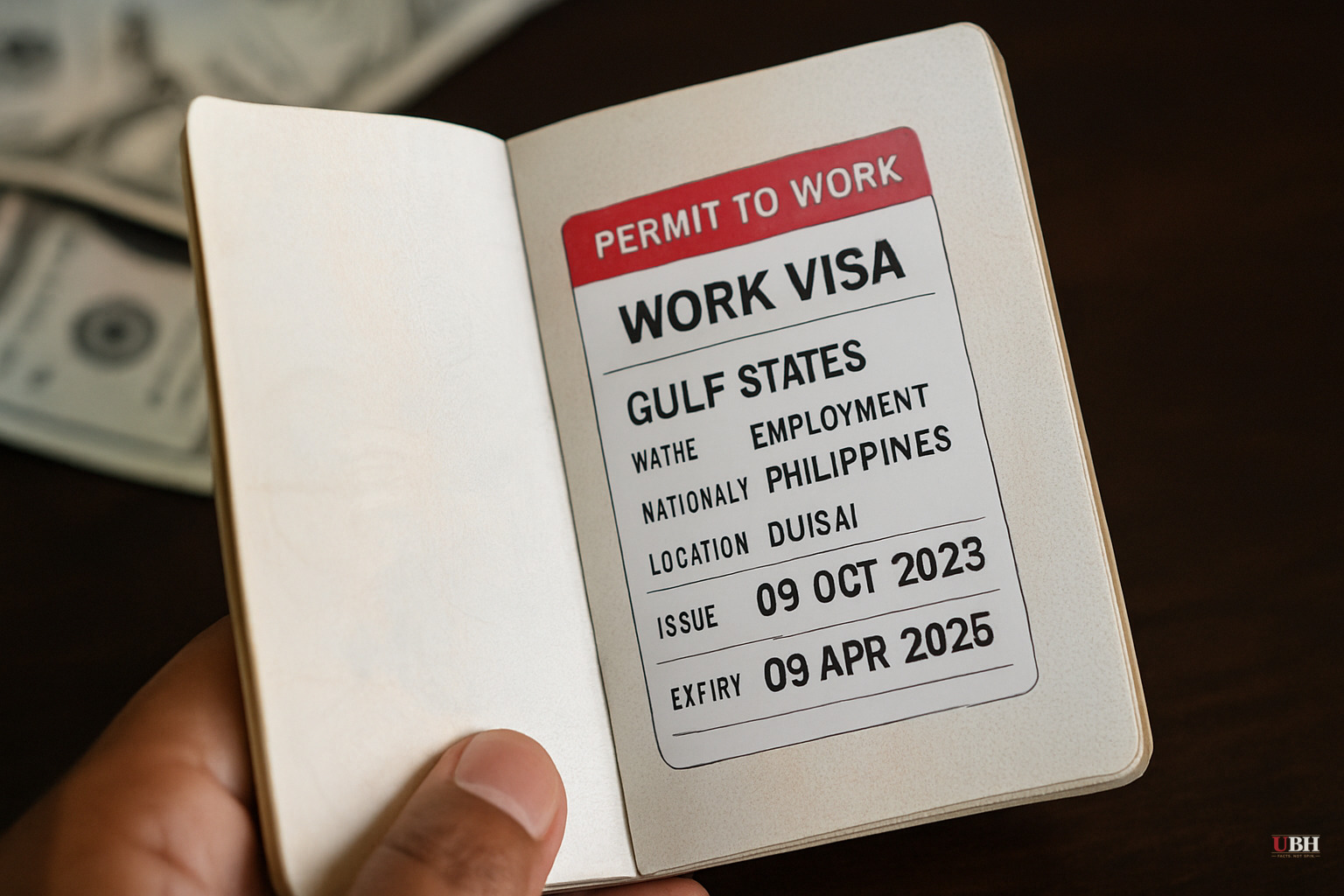
A war between the US and Iran that broke out in late February has spent the last few months squeezing the millions of foreign workers who keep Gulf economies running. Hotels, event companies and retail businesses across the UAE and Qatar have cut staff or slashed hours since the conflict began, and the workers losing income are overwhelmingly migrants, not locals.
The International Labour Organization laid out the scale of it in a report published in May. Under a scenario where oil prices climb roughly 50 percent above their January-February average, the ILO estimated hours worked globally could fall 0.5 percent in 2026 and 1.1 percent in 2027. That translates to the equivalent of 14 million full-time jobs lost this year and 38 million next year, according to the ILO.
The ILO was blunt about where that pain lands first. The report said migrant workers are likely to absorb a disproportionate share of the adjustment in the Gulf Cooperation Council states, where economies run on foreign labor. Expatriates make up as much as 88 percent of the population in Qatar and the UAE, according to Arab News.
Real people, real numbers
Arab News spoke with Filipino workers living the fallout directly. Cinderella, a Dubai-based household helper, said she now eats one meal a day to save money after the Syrian family she worked for fled the UAE over safety fears tied to the US-Iran conflict. Her part-time cleaning and massage work barely covers her $163 monthly rent, she told Arab News, and sending money home to her mother in the Philippines only happens when she can scrape together extra.
Kim, who worked at a luxury hotel in Doha for three years, was one of roughly 200 staff terminated as the hotel cut jobs, particularly senior ones, in anticipation of weak business. Staff let go came from France, India, Nepal, Bangladesh and various Arab nationalities, she said. Kim was offered her job back but turned it down and went home instead, telling Arab News she has no plans to return to Qatar or the wider Gulf "for now" after nearly 14 years working across the region.
There are more than 2.4 million Overseas Filipino Workers in the Middle East, concentrated mostly in Saudi Arabia and the UAE, working in healthcare, hospitality, services and retail, according to Arab News.
The remittance paradox
OFW remittances from the Middle East actually rose slightly in the first quarter of 2026, hitting $1.55 billion compared to $1.49 billion in the same period last year, Arab News reported. This likely reflects workers draining savings or sending final payouts home before leaving the region entirely, as Kim did. The topline remittance number can rise even as individual households face hardship.
China Daily's report, citing the same ILO data, emphasized that the crisis's reach extends well beyond the Gulf itself. The Asia-Pacific region is heavily exposed through energy import dependence, transport and logistics disruption, tourism losses, and the labor migration and remittance pipelines that tie Asian economies to Gulf employers, the outlet reported. China Daily also noted a genuine gap in the data. The ILO said it could not explicitly assess labor market impacts inside Iran itself due to lack of available information, meaning nobody has a clear read on how the country at the center of the conflict is faring on employment.
Not every migrant worker in the region is a low-wage laborer facing eviction. Tarik Saleh, an Egyptian freelance commercial photographer in Dubai, told China Daily his entire business runs on exhibitions and commercial events, nearly all of which have been postponed to August or September at the earliest. Saleh lives apart from his wife and two children in Cairo and used to send home half his monthly income. That income has largely evaporated for months, he said, even though he hasn't lost his visa or been formally laid off.
UAE labor law does offer some cushion. Flexible employment arrangements, including remote work and part-time contracts, are legally recognized, and China Daily reported that many firms have shifted eligible employees to remote work to preserve some productivity amid travel disruptions and safety concerns.
The ILO's numbers are modeled projections tied to an oil-price scenario, not confirmed final job-loss counts. Whether the 50-percent oil price jump the model assumes has actually materialized, and whether 2027 job losses will land anywhere near 38 million globally, remains to be seen. For now, the clearest data point is the human one. Workers like Cinderella and Kim describe the last several months, in Kim's words, as a period she doesn't intend to return to.
Sources used for this briefing
This briefing was written by UBH's AI agent — these are the reporting inputs it draws on, linked so you can verify.


