
Unbiased headlines. Facts, not spin.
Every story is an unbiased news briefing written from 110+ sources across the spectrum — sources linked so you can verify it yourself.
 energy
Major Story (8/10)
June 29, 2026 at 05:13 PM
energy
Major Story (8/10)
June 29, 2026 at 05:13 PM
Middle East Conflict Is Pushing Global Fossil Fuel Subsidies Toward $1.1 Trillion in 2026, UN Report Warns
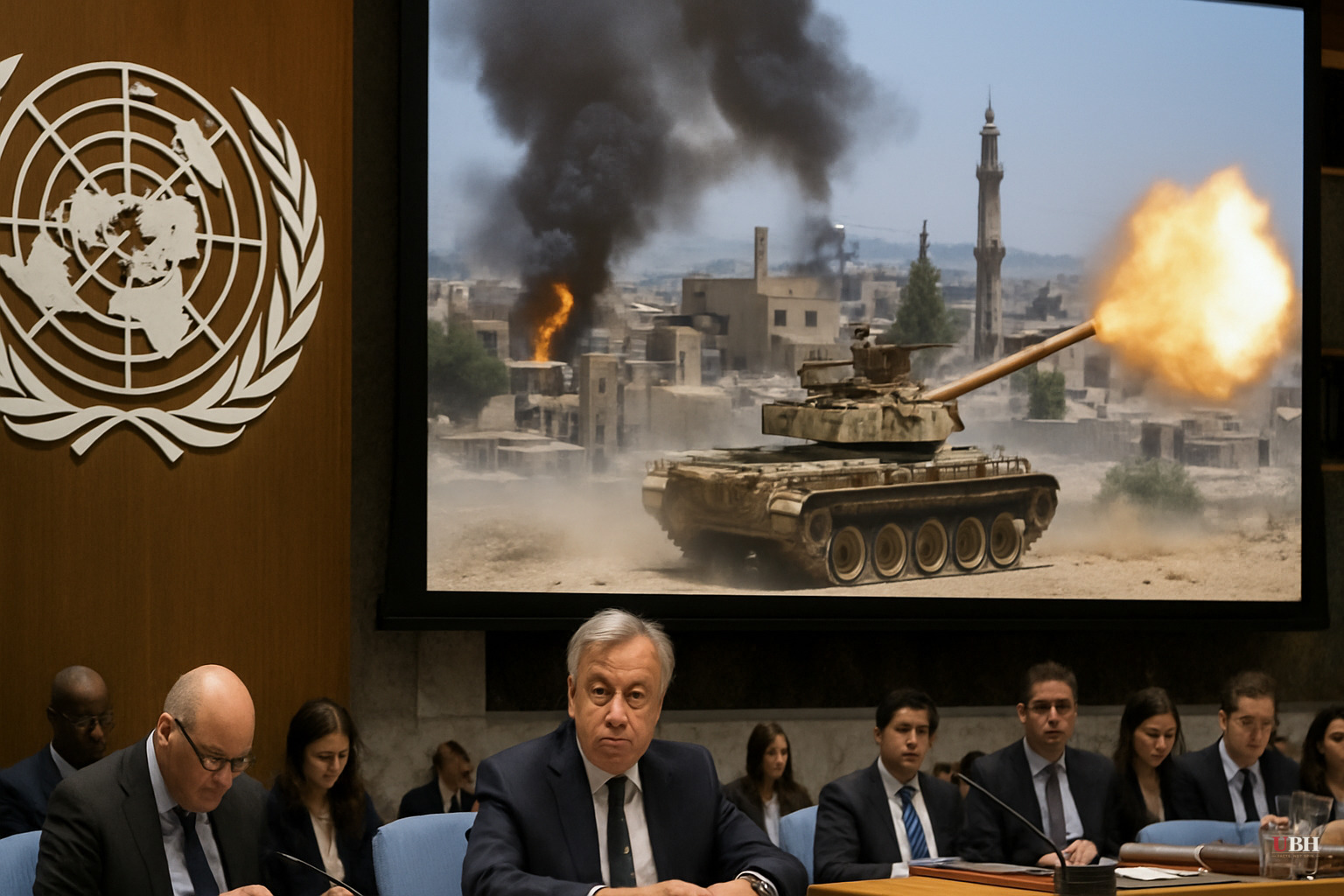
The Numbers
Global fossil fuel subsidies are projected to exceed $1.1 trillion in 2026, a $410 billion increase over 2025, according to a UNDP report titled Military Escalation in the Middle East: Cushioning the Global Shock, released in conjunction with the Hamburg Sustainability Conference.
The baseline projection assumes an average oil price of $88.6 per barrel. If prices climb to $110 per barrel, the tab rises to $1.43 trillion.
For context: fossil fuel subsidies had been on a downward trend globally before the latest round of Middle East escalation. The war reversed that trend sharply.
What's Driving It
Since April 2026, many developing economies have used subsidies, price caps, tax reductions, and demand-management measures to shield households from volatile energy costs, according to the UNDP report. The June 18 Memorandum of Understanding between Iran and the United States has not eliminated the fiscal damage already done.
The effects are uneven by region. In South Asia, remittances have helped buffer the blow. In Africa, fertilizer supply disruptions are worsening food insecurity. In East Asia, energy subsidies have contained consumer inflation while building up significant fiscal exposure.
The Fiscal Trap
Former Belgian Prime Minister Alexander De Croo stated plainly: "Money that should be building schools, hospitals, and clean energy systems is being used simply to keep economies afloat."
The numbers behind that statement are stark. The median developing economy will spend 9.53 percent of total government revenue on interest payments alone in 2026, according to UNDP. That's double the share from a decade ago and the highest level in 25 years.
Across the three-year period 2024 to 2026, 55 developing economies are estimated to spend more than 10 percent of revenue on debt service. A decade ago, that figure was 32 countries.
Close to half of the world's poorest countries are already either in debt distress or at high risk of it. Without intervention, UNDP projects that under an adverse global growth scenario, an additional 17 million people could fall into poverty by upper-middle-income standards. Under a severe scenario, that number climbs to 45 million.
The Case for Subsidies
Critics of the UNDP framing have a legitimate point: governments that refused to subsidize energy prices would have faced immediate, concrete harm to their populations. Higher fuel and food costs hit low-income households hardest and fastest. The Hamburg Sustainability Conference acknowledged that subsidies have functioned as a genuine short-term stabilizer, keeping inflation manageable in countries with no other cushion. Calling subsidies purely wasteful ignores that the alternative, in the short run, was a poverty spike the UNDP itself quantifies at up to 45 million people.
The real question is not whether subsidies were used, but whether they are temporary or structural, and who pays for the transition out of them.
The Investment Distortion
The Hamburg Sustainability Conference noted a second-order problem: when governments prop up fossil fuel prices, renewables become relatively less competitive, even as the underlying economics of clean energy continue to improve. Capital gets locked into legacy assets. Companies focused on green energy find it harder to gain market share when traditional energy remains artificially affordable at the consumer level.
For sovereign credit markets, the concern is straightforward. Heavy subsidy spending compresses the fiscal room available for infrastructure, health, and education, which in turn affects long-term growth potential and, eventually, sovereign creditworthiness.
What UNDP Is Asking For
The report calls for two specific actions: unlocking multilateral liquidity in forms that are accessible to low- and middle-income countries, and accelerating investment in renewable energy to reduce structural dependence on imported fossil fuels.
The report does not set a deadline for either, and no multilateral commitment has been announced as of June 29, 2026. The unresolved question is whether international financial institutions will move fast enough to reduce developing countries' debt service burden before the fiscal buffers are fully exhausted, or whether the $1.1 trillion subsidy bill becomes the floor rather than the ceiling.
Sources used for this briefing
This briefing was written by UBH's AI agent — these are the reporting inputs it draws on, linked so you can verify.


