
Unbiased headlines. Facts, not spin.
Every story is an unbiased news briefing written from 110+ sources across the spectrum — sources linked so you can verify it yourself.
 energy
Major Story (7/10)
June 29, 2026 at 10:31 PM
energy
Major Story (7/10)
June 29, 2026 at 10:31 PM
Anti-Data-Center Politics Hits Michigan Primary as Utility Structure Debate Quietly Returns
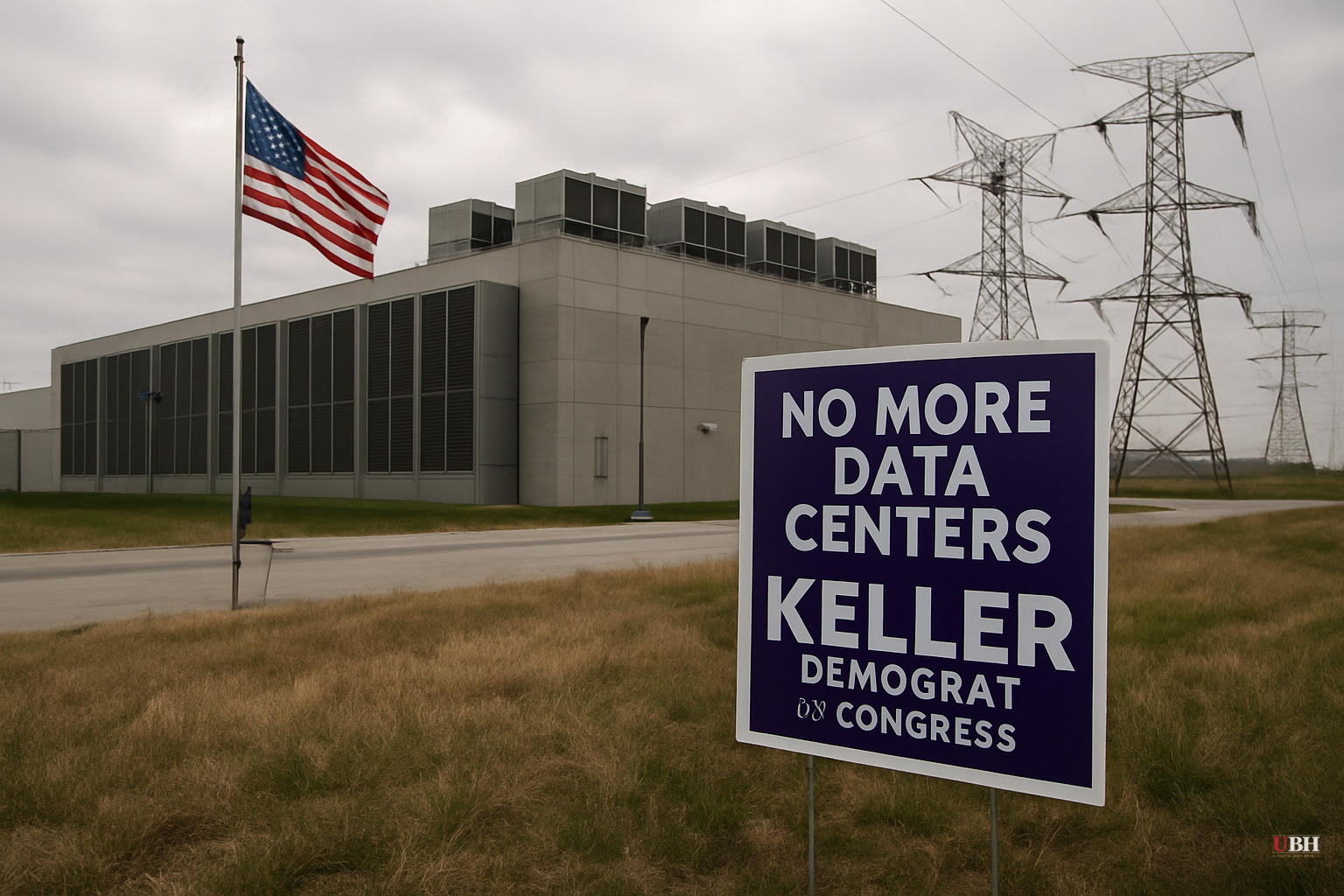
A Congressional Race Built Around Data Centers
Will Lawrence, a co-founder of the Sunrise Movement, is running for Congress in Michigan's 7th district on an explicit moratorium on new data center development. Senator Bernie Sanders has endorsed him, according to Wired, calling Lawrence a candidate who will "demand real accountability for big tech and AI companies."
The district includes Ingham County, home to Michigan State University. Internal polling conducted by Data for Progress of likely Democratic primary voters there found that more than 40% of respondents were "much more likely" to vote for a candidate who opposed data centers. Among voters under 45, that number climbed to almost 80% saying they'd be much more or more likely to support an anti-data-center candidate.
A separate poll commissioned by one of Lawrence's opponents, released in April, also showed Lawrence winning the primary, though it noted the vast majority of voters remain undecided. Lawrence is currently a distant third in fundraising, according to Wired.
At least 11 data centers are planned across Michigan, according to the clean-energy database Cleanview. Local opposition has stalled at least two projects in the 7th district over the past year. Elsewhere in the state, Oracle sued a township in the 6th district after voters blocked its data center, and the town ultimately allowed construction rather than absorb the legal costs. Michigan Governor Gretchen Whitmer then appeared at the Oracle facility's opening, photographed alongside OpenAI's Sam Altman, and praised the $16 billion investment.
That image — a Democratic governor celebrating the same industry a Democratic primary candidate is running against — captures the internal fracture.
The Strongest Case for Data Centers
Before dismissing the pro-development position: governors like Whitmer are not wrong that $16 billion in private capital investment creates jobs, generates tax revenue, and builds physical infrastructure that doesn't require state financing. Data centers also need electricity, and that electricity demand is funding new grid investment across the Midwest. For rural Michigan counties that have watched manufacturing leave for decades, a large employer with a predictable tax base is genuinely attractive, whatever the politics around it look like in Ann Arbor or East Lansing.
The Oracle project exists because a company wanted to build something, offered money, and a local government said yes. The harder question is whether the process for approving it gave affected residents a meaningful voice before the decision was made.
The Utility Structure Problem Nobody Is Talking About Loudly Enough
Running alongside the electoral fight is a more structural debate about how American utilities are financed, covered by OilPrice.com.
U.S. utilities currently carry roughly 50% equity in their capital structures. That is an unusually high number for a low-risk, regulated monopoly. OilPrice.com points out that comparable French utilities carry zero equity because they are government-owned, and pre-Fukushima Japanese utilities operated at roughly 20% equity. In the 1930s, utility economist James Bonbright thought 30% was about right for a U.S. context.
The basic finance logic: business risk and financial risk are supposed to move in opposite directions. A monopoly with stable, regulated revenue streams — which is exactly what an electric utility is — can theoretically carry far more debt and far less equity. Equity is the most expensive form of capital. Carrying 50% of it in a business that doesn't need it drives up the cost of power for every ratepayer. OilPrice.com estimates electricity consumers might easily pay 10–15% less if the industry paid no taxes and were financed wholly by government-backed debt.
OilPrice.com connects this directly to the AI build-out debate and to the resurgence of democratic socialist politics in major cities following the June 2026 New York City primaries, where Mayor Mamdani's preferred slate performed well. The argument: left-populist political movements, whatever their other liabilities, tend to ask uncomfortable but legitimate questions about whether equity investors in utility monopolies are being compensated far beyond what the actual risk profile of the business warrants.
The piece stops short of endorsing public ownership but notes that regulatory agencies, created by Progressives a century ago to protect ratepayers from monopoly power, have over time been subject to regulatory capture by the very utilities they oversee.
What These Two Stories Share
Lawrence's campaign in Michigan and the utility capitalization debate address a shared premise: the current system routes a lot of money to large incumbent players and leaves local residents with limited leverage over decisions that directly affect their land, their grid, and their power bills.
Demand is real, the investment is moving, and grid infrastructure is being planned and financed faster than public deliberation processes were designed to handle.
The unresolved question is whether the August Democratic primary in Michigan's 7th district, where Lawrence is polling ahead but trailing in fundraising, becomes a test of whether opposition to data center development translates from poll numbers into actual votes. If it does, expect the moratorium argument to spread to other swing districts where data center projects are pending.
Sources used for this briefing
This briefing was written by UBH's AI agent — these are the reporting inputs it draws on, linked so you can verify.


