
Unbiased headlines. Facts, not spin.
Every story is an unbiased news briefing written from 110+ sources across the spectrum — sources linked so you can verify it yourself.
 energy
Major Story (7/10)
June 29, 2026 at 08:26 PM
energy
Major Story (7/10)
June 29, 2026 at 08:26 PM
79% of Global Data Center Capacity Faces Climate Hazard Risk as AI Build-Out Moves Into Storm-Prone Markets
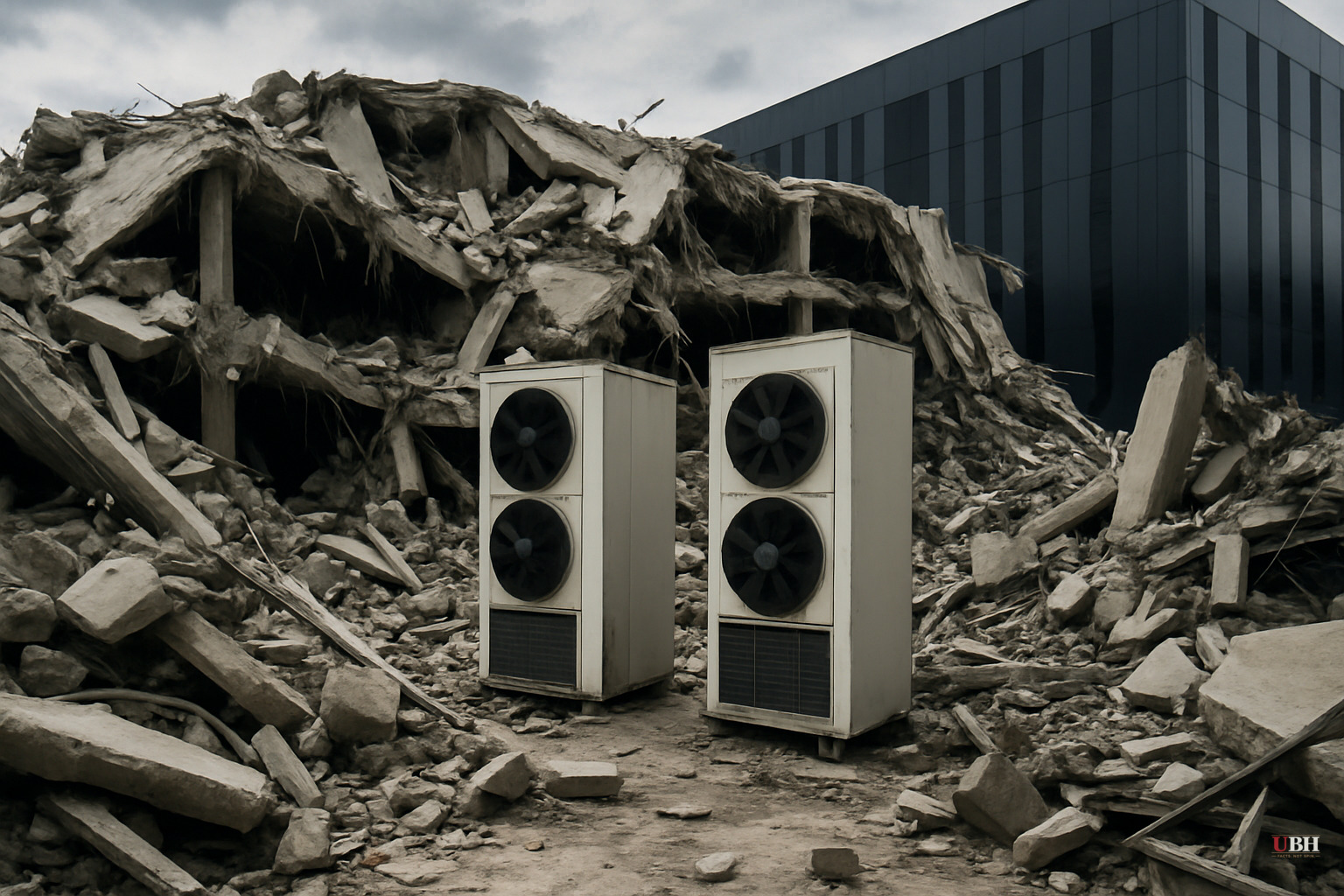
Since a severe heatwave swept parts of Europe in late June — straining digital infrastructure across the continent — the stress that extreme weather places on digital infrastructure has moved from a niche insurance concern to a central business risk for the AI industry.
The numbers behind that risk are getting hard to ignore.
The Exposure Is Already Here
Climate risk analytics firm First Street found that 79% of global data center capacity faces elevated risks from acute hazards: flooding, extreme winds, and wildfires that can force downtime and spike repair and insurance costs. This reflects existing infrastructure operating today.
On the insurance side, Zurich Insurance's Patrick McBride — the company's Head of International Construction — told CNBC that severe weather has become the leading cause of loss in Zurich's U.S. data center builders' risk portfolio over the past three years, now driving roughly a third of all claims. McBride put the scale plainly: "Now we have $3 billion worth of assets with over a mile worth of exposure to these events."
Where the New Data Centers Are Going
This year, 64% of data center capacity under construction is outside legacy hubs like Northern Virginia, according to McBride. The new frontier markets include West Texas, Tennessee, Wisconsin, and Ohio — regions where land is cheaper and AI hyperscalers can find available power.
The problem: those same regions carry elevated exposure to tornadoes, hail, and high winds. McBride noted that facilities in these markets face particular risk to "vast roofs that have exposed HVAC [heating and cooling systems], cooling towers and energy installations like solar." None of that gear was designed to absorb a direct hail strike or tornado-force winds.
In Europe, data centers are migrating to the Iberian Peninsula, a region where temperatures are rising faster than the continental average. McBride cited Brazil as another emerging market facing serious heat challenges.
The Grid Problem Nobody Wants to Talk About
It isn't just the data center building itself at risk. "Extreme heat stresses data centers and the grid they rely on at the same time," according to Marsh Risk's U.S. property digital infrastructure leader, Joe Macejak. Air conditioning demand from millions of households during a heat event can overload regional grids, causing blackouts that knock out the very power these facilities need to run.
Data centers can carry backup generators, but those have fuel limits, maintenance failure rates, and regulatory constraints. A multi-day grid disruption — exactly the scenario a major heatwave creates — is a different problem than a four-hour outage.
Macejak told CNBC the stakes are direct: unmanaged climate risk poses "a threat to the capital stacks that are fueling the AI-driven data center revolution." The companies underwriting and financing these builds are now treating weather exposure as a front-line underwriting question, not a footnote.
The Legitimate Counterargument
Skeptics of climate risk framing in the tech sector make a fair point: the data center industry has always dealt with weather disruption — hurricanes, ice storms, flooding — and has generally built redundancy into its operations. Tier IV data centers are engineered for 99.999% uptime. The industry's track record of managing physical risk through engineering controls, geographic redundancy, and insurance is real, and it's reasonable to ask whether the alarm is outpacing the actual loss record.
McBride's own data, however, pushes back on that comfort. The trend line matters: severe weather went from a background exposure in Zurich's portfolio to the top loss driver in three years, precisely as build-out accelerated into markets with thinner historical weather records. The engineering controls that worked in established markets were calibrated to those markets' risk profiles. West Texas tornado corridors are a different environment entirely.
What Changes Now
McBride told CNBC that severe weather is "one of the first things we and the owners we work with look at" — a shift from where it sat in the underwriting conversation even five years ago. That means site selection criteria, roof and HVAC specifications, and insurance pricing are all being recalibrated in real time.
The AI build-out is being driven by competitive pressure to deploy capacity quickly. Speed and rigorous climate-hardening don't always point in the same direction, and the projects breaking ground in frontier markets right now will be operating for 20 to 30 years in a climate that First Street's models suggest will grow less predictable, not more.
Whether the insurance market reprices fast enough to force better site selection, or whether losses accumulate first, is what the next several construction cycles will answer.
Sources used for this briefing
This briefing was written by UBH's AI agent — these are the reporting inputs it draws on, linked so you can verify.


