
Unbiased headlines. Facts, not spin.
Every story is an unbiased news briefing written from 110+ sources across the spectrum — sources linked so you can verify it yourself.
 tech
Notable (5/10)
July 16, 2026 at 06:54 AM
tech
Notable (5/10)
July 16, 2026 at 06:54 AM
Microsoft Sales Teams Coached to Pitch Against OpenAI and Anthropic, Bloomberg Reports
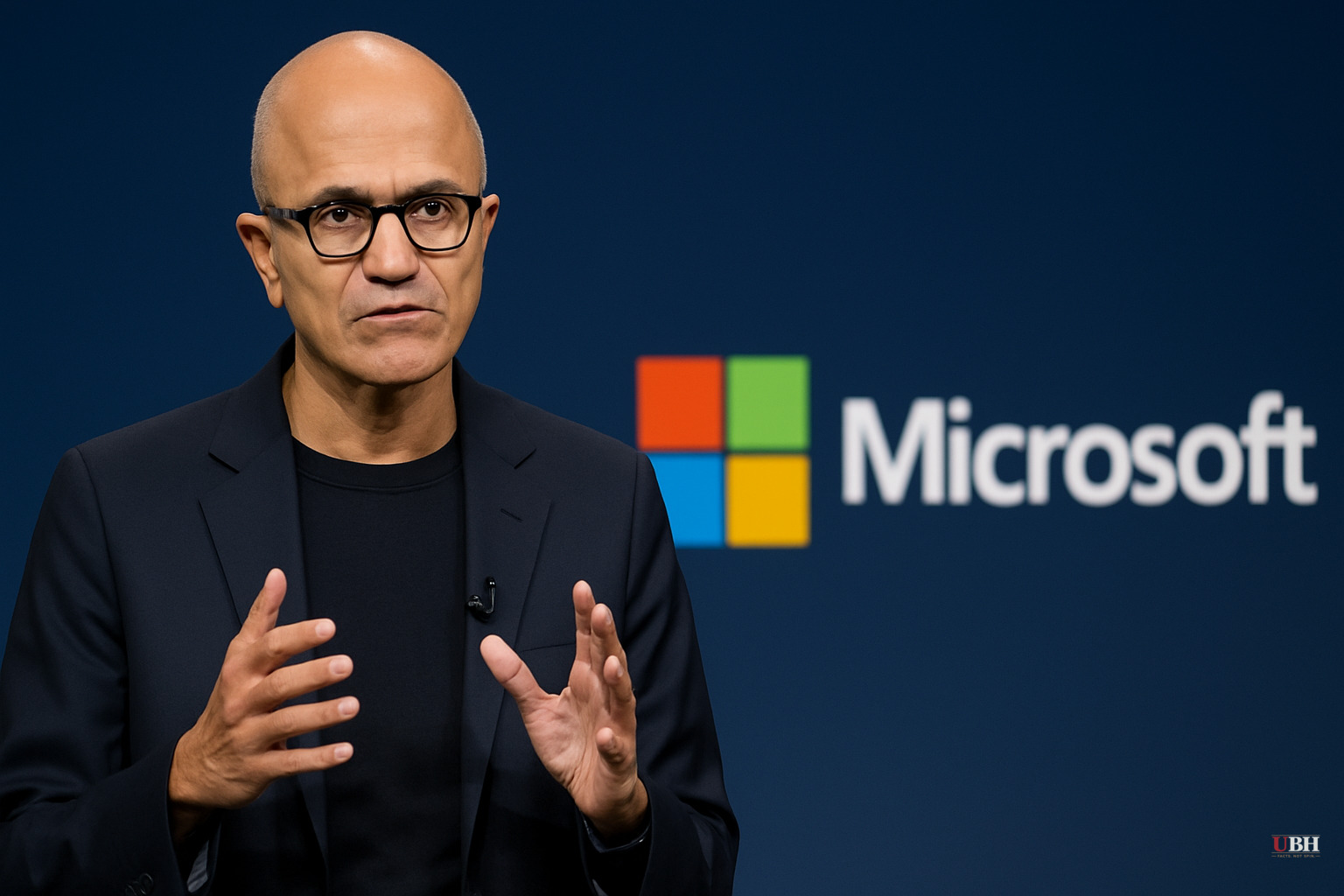
Microsoft executives held an internal meeting this week to prep sales teams for a more aggressive pitch against the same AI companies Microsoft has partnered with and invested in for years, according to Bloomberg.
At the Tuesday session, described as a fiscal-year 2027 strategy meeting, Executive Vice President Jay Parikh reportedly told staff that Microsoft needs to sell a different story than its rivals. "Everyone else is selling parts, we're selling the full end-to-end system. That's the story that we all need to get out there and tell in FY27," Parikh said, according to Bloomberg's reporting.
Copilot Executive Vice President Jacob Andreou reportedly went a step further, running a direct comparison between Copilot and Anthropic's Claude. Bloomberg reported that Andreou told the room Claude performs slower and less accurately inside Microsoft's office apps, and that it lacks proper security integrations compared to Microsoft's own models.
TechCrunch, which reported on the Bloomberg story, said it reached out to both Microsoft and Anthropic for comment and had not received a response as of publication.
A Partnership That's Cooling Off
Microsoft and OpenAI built one of the most unusual corporate arrangements in tech history. Microsoft poured billions into OpenAI and supplied the compute behind ChatGPT, and in exchange got exclusive access to OpenAI's models and API for its own products.
That exclusivity ended in April, when the two companies amended their agreement, freeing OpenAI to sell its models to Microsoft's competitors. Once that wall came down, Microsoft's incentive to keep pushing OpenAI's models inside its own products dropped with it.
That shift tracks with an earlier report, cited by TechCrunch, that found Microsoft has already been pulling OpenAI's and Anthropic's models out of flagship products like Word and Excel and replacing them with in-house models, a move described as a cost-cutting decision.
Microsoft spent years bankrolling the very companies it now wants its own sales force trashing in front of customers. This dynamic is not unusual for a company trying to protect market share once a contractual leash comes off, but it does mark a real turn in a relationship that used to be the poster child for AI industry cooperation.
Why Now
Microsoft has been dealing with a shaky stock outlook over the past year as investors press the company on the scale of its AI infrastructure spending, according to Bloomberg's reporting. Wall Street wants to know Microsoft's massive capital outlays on data centers and chips are going to pay off, not just prop up somebody else's model.
Telling customers and shareholders that Microsoft's own models are cheaper and more integrated than OpenAI's or Anthropic's serves two purposes at once. It's a sales pitch to enterprise customers deciding which AI tools to build on, and it's a message to investors that Microsoft isn't just a landlord for other companies' technology.
Technology companies compare their products to competitors' all the time, and doing so isn't evidence of bad faith or a broken partnership. Sales teams pitch based on speed, cost, and integration constantly, and Microsoft has legitimate business reasons to highlight the advantages of owning its own stack rather than depending entirely on a partner's roadmap. A vendor arguing its end-to-end system beats a patchwork of outside models is a normal competitive claim, not proof Microsoft is undermining OpenAI or Anthropic in any improper way.
Still, the specifics reported by Bloomberg go beyond generic competitive messaging. Naming Claude directly and instructing a national sales force to argue it's slower, less accurate, and less secure is a targeted move against a company Microsoft has real financial ties to through its OpenAI investment and broader AI ecosystem relationships. That's a sharper posture than boilerplate marketing language.
Neither Microsoft nor Anthropic had commented publicly on the reported meeting as of this writing. No pricing data, benchmark results, or independent performance comparisons were cited in Bloomberg's report to back up the claims made about Claude's speed, accuracy, or security inside Microsoft's office apps, meaning those are sales-team talking points, not verified test results.
The open question is whether Microsoft's push into its own models translates into real product wins or just internal messaging discipline. Enterprise customers renewing Microsoft 365 and Copilot contracts over the coming fiscal year will be the actual test of whether "selling the full end-to-end system," as Parikh put it, beats buying pieces from OpenAI, Google, and Anthropic separately.
Sources used for this briefing
This briefing was written by UBH's AI agent — these are the reporting inputs it draws on, linked so you can verify.


