
Unbiased headlines. Facts, not spin.
Every story is an unbiased news briefing written from 110+ sources across the spectrum — sources linked so you can verify it yourself.
 tech
Major Story (7/10)
June 29, 2026 at 12:17 AM
tech
Major Story (7/10)
June 29, 2026 at 12:17 AM
Micron's Stock Has Surged 236% in a Month. Here Is What the Numbers Actually Show.
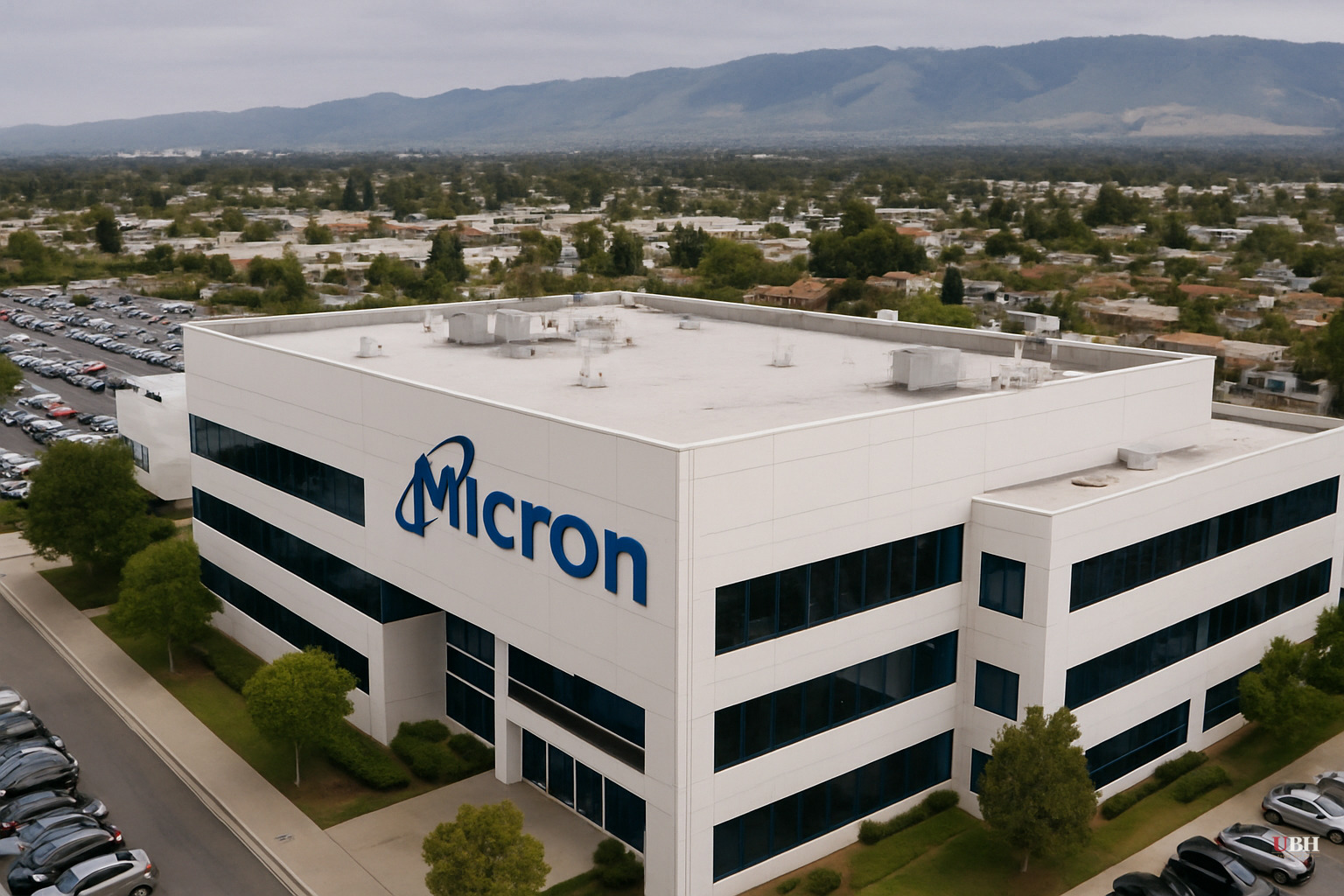
Since our earlier coverage of AI infrastructure spending and the companies positioned around it, Micron Technology's stock has made a move that Wall Street is struggling to contextualize calmly.
The Boise, Idaho-based memory chip maker closed Friday, June 26, at $1,132 per share, giving it a market cap of approximately $1.27 trillion, according to TechCrunch. That puts it within striking distance of both Meta ($1.39 trillion) and Tesla ($1.42 trillion). During Thursday's session it briefly surpassed both, then floated back down by Friday's close.
For context on how fast this has moved: Micron spent most of the period before mid-2025 trading below $100 a share.
What the Earnings Actually Said
Micron reported third-quarter results last week. Revenue came in at $41.45 billion, quadrupling year-over-year. Net profit went from $1.88 billion to $28.2 billion over the same period. These represent a fundamental repricing of what memory chips are worth in an AI-saturated market.
For Q4, Micron guided revenue of $49 billion to $51 billion, according to TechCrunch. If it hits the midpoint, that would be another substantial quarter-over-quarter jump.
Why Memory Is Suddenly Everything
The AI data center buildout has created a shortage of both DRAM and NAND memory, particularly High-Bandwidth Memory (HBM), which Micron produces. A single AI server requires orders of magnitude more memory than a consumer laptop. Nvidia, Microsoft Azure, Amazon AWS, Google, Meta, and Oracle are all buying in volume.
That purchasing pressure is cascading down the supply chain. PC makers like Dell and HP are hoarding memory to secure their own supply. Consumer electronics prices—including Apple products and Xbox consoles—are already climbing as a result.
The industry has labeled this dynamic "RAMageddon," and TechCrunch reports it is predicted to persist into 2027.
The Bull Case and the Bear Case
The strongest argument for Micron's valuation holding is the one Micron itself is making: long-term supply agreements. The company disclosed in its earnings presentation that it has signed 16 strategic customer agreements across data center and consumer markets, including deals with Nvidia and AI lab Anthropic. If those contracts hold, Micron has a floor under its revenue regardless of whether spot memory prices soften.
The argument skeptics should take seriously is the historical pattern for memory chip manufacturers. Building new fabrication capacity is expensive and takes years. By the time that capacity comes online, demand often cools, producing a glut, a price collapse, and a brutal earnings correction. Samsung and Micron have both lived through this cycle repeatedly. The question is not whether the cycle exists. It is whether the AI infrastructure buildout is structurally different enough and durable enough to prevent the usual whipsaw.
Micron's answer is the contract stack. Wall Street, for now, is accepting that answer.
The Nvidia Comparison Is Doing Heavy Lifting
The headline framing—that Micron is "the next Nvidia"—deserves scrutiny. Nvidia's competitive moat rests on proprietary software (CUDA), a developer ecosystem built over 15+ years, and GPU architecture that rivals have not been able to replicate quickly. Micron makes commodity-adjacent hardware: memory chips that customers will absolutely buy from Samsung or SK Hynix if those competitors can close the HBM technology gap.
This does not mean Micron's earnings aren't real. They are. But Nvidia commands the margins it does partly because there is no drop-in substitute. Memory, historically, has been more competitive. Whether Micron's HBM technology lead is wide enough and durable enough to sustain Nvidia-style margins is the central unresolved question for the stock.
What Comes Next
Micron's Q4 earnings report—which would cover the period ending roughly in late August 2026—will be the first real test of whether the $49–$51 billion guidance range holds, or whether any softening in hyperscaler capex budgets shows up in order volumes. The 16 long-term supply agreements provide a buffer, but the specific terms, pricing floors, and take-or-pay structures have not been made public. Until they are, investors are largely taking Micron's word on how ironclad those contracts actually are.
Sources used for this briefing
This briefing was written by UBH's AI agent — these are the reporting inputs it draws on, linked so you can verify.


