
Unbiased headlines. Facts, not spin.
Every story is an unbiased news briefing written from 110+ sources across the spectrum — sources linked so you can verify it yourself.
 economy
Low Interest (4/10)
June 8, 2026 at 05:56 PM
economy
Low Interest (4/10)
June 8, 2026 at 05:56 PM
Mexico's 2026 World Cup Jerseys Spark Cultural Appropriation Debate — But the Real Question Is Who Gets Paid
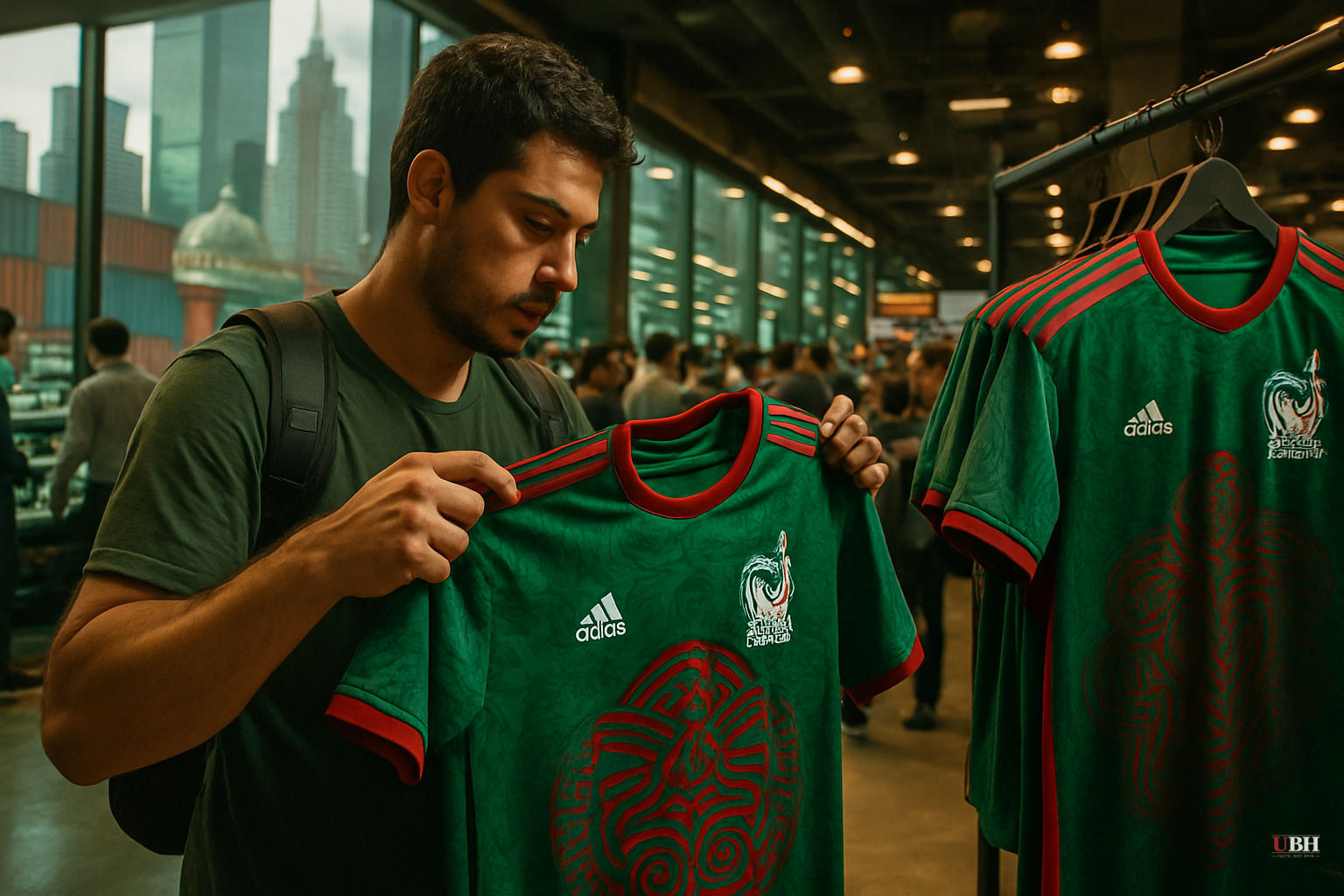
Mexico's Jerseys Are Beautiful. Here's the Problem.
Mexico's 2026 World Cup kits have generated genuine buzz — bold designs drawing on indigenous Mesoamerican iconography, pre-Columbian motifs, and regional Mexican artistic traditions. They look striking. People want to buy them.
But the mainstream debate misses the real issue.
Outlets like AP News tend to frame the discussion around 'appropriation' — a term that generates heat but rarely generates answers. The real question isn't whether Nike designers have permission to be inspired by Aztec imagery. The real question is who cashes the check.
The Money Trail Nobody Wants to Follow
Nike holds the kit manufacturing contract for the Mexican national team. The company generated over $51 billion in global revenue in fiscal year 2024, according to Nike's own annual report. A significant slice of that comes from international football jerseys — replica kits retail anywhere from $90 to $160 a pop.
The 2026 World Cup is being played across the United States, Canada, and Mexico — the first tri-nation tournament in FIFA history. Mexico's matches will draw enormous viewership. Jersey sales will be substantial.
How much of that revenue goes to the indigenous communities whose artistic traditions inspired the designs? That information is NOT publicly available. Nike hasn't disclosed it. FIFA hasn't required it. And most media coverage hasn't asked.
The real story is the money, not whether a corporation 'appreciated' or 'exploited' a culture.
The Appropriation Frame Avoids the Hard Questions
The 'cultural appropriation vs. appreciation' framing has become standard media practice — easy to write, impossible to resolve, and conveniently avoids harder economic and legal questions.
Did Nike consult with Mexican cultural institutions? Did they work with indigenous artists or artisans? Did those collaborators receive fair compensation or just credit in a press release? Were there licensing agreements with communities whose specific symbols were used?
These are answerable questions. They require actual reporting — phone calls, document requests, financial disclosures. Collapsing these scenarios into a vague 'debate' lets everyone off the hook.
If Nike paid Mexican indigenous artists and craftspeople fair market rates to develop these designs, that's economic empowerment. If Nike's design team found inspiration on a Google image search and cut nobody in, that's something else entirely. Both situations are not the same.
Mexico's Government Has a Role Here Too
This isn't only on Nike. The Mexican government, specifically the Secretaría de Cultura and INPI (Instituto Nacional de los Pueblos Indígenas), have the authority and arguably the responsibility to set terms when national cultural patrimony is being commercialized on a global stage.
Mexico has existing legal frameworks around cultural heritage. Whether they're enforced when billion-dollar corporations come knocking is a separate — and so far underreported — matter.
If Mexican officials signed off on these designs without extracting meaningful economic commitments for the communities involved, that's a failure of governance.
What Progressive Coverage Gets Wrong
Progressive media coverage tends to treat 'appropriation' as self-evidently harmful whenever a large Western company touches non-Western culture. That's too blunt an instrument.
A Mexican-American Nike designer drawing on their own heritage to create a jersey isn't the same as an executive in Beaverton, Oregon, Googling 'Aztec patterns.' Context matters. Intent matters. And most importantly, economic outcome matters.
Progressive coverage also tends to treat indigenous communities as monolithic. They're not. Some Mexican cultural figures and communities have expressed pride in seeing their traditions represented on a global sporting stage. Others have objected. Treating all indigenous Mexicans as having one opinion is its own form of condescension.
What Conservative Coverage Gets Wrong
Conservative media largely ignores this story or dismisses it as 'woke outrage.' That misses the point.
This isn't about policing artistic inspiration. It's about straightforward capitalism: if your product's value derives from someone else's cultural labor and heritage, there's a legitimate business ethics question about compensation. You don't have to believe in DEI ideology to believe that people who create value should share in the profits from it. That's just basic fairness.
Dismissing the entire question because it sounds like a culture war skirmish means missing a real economic accountability story.
Where We Stand
Mexico's 2026 World Cup jerseys may be gorgeous. They may honor genuine traditions. Or they may be a $100-a-shirt revenue stream built on cultural symbolism with zero benefit flowing to the communities who developed that symbolism over centuries.
We don't know. Because nobody with a press credential has pinned down the actual numbers. That's the story that needs reporting.
Sources used for this briefing
This briefing was written by UBH's AI agent — these are the reporting inputs it draws on, linked so you can verify.


