
Unbiased headlines. Facts, not spin.
Every story is an unbiased news briefing written from 110+ sources across the spectrum — sources linked so you can verify it yourself.
 defense
Major Story (7/10)
June 30, 2026 at 04:03 PM
defense
Major Story (7/10)
June 30, 2026 at 04:03 PM
Mexican National Pleads Guilty to Smuggling Up to 3,000 Migrants into U.S., Including Nationals from Pakistan, Afghanistan, and Yemen
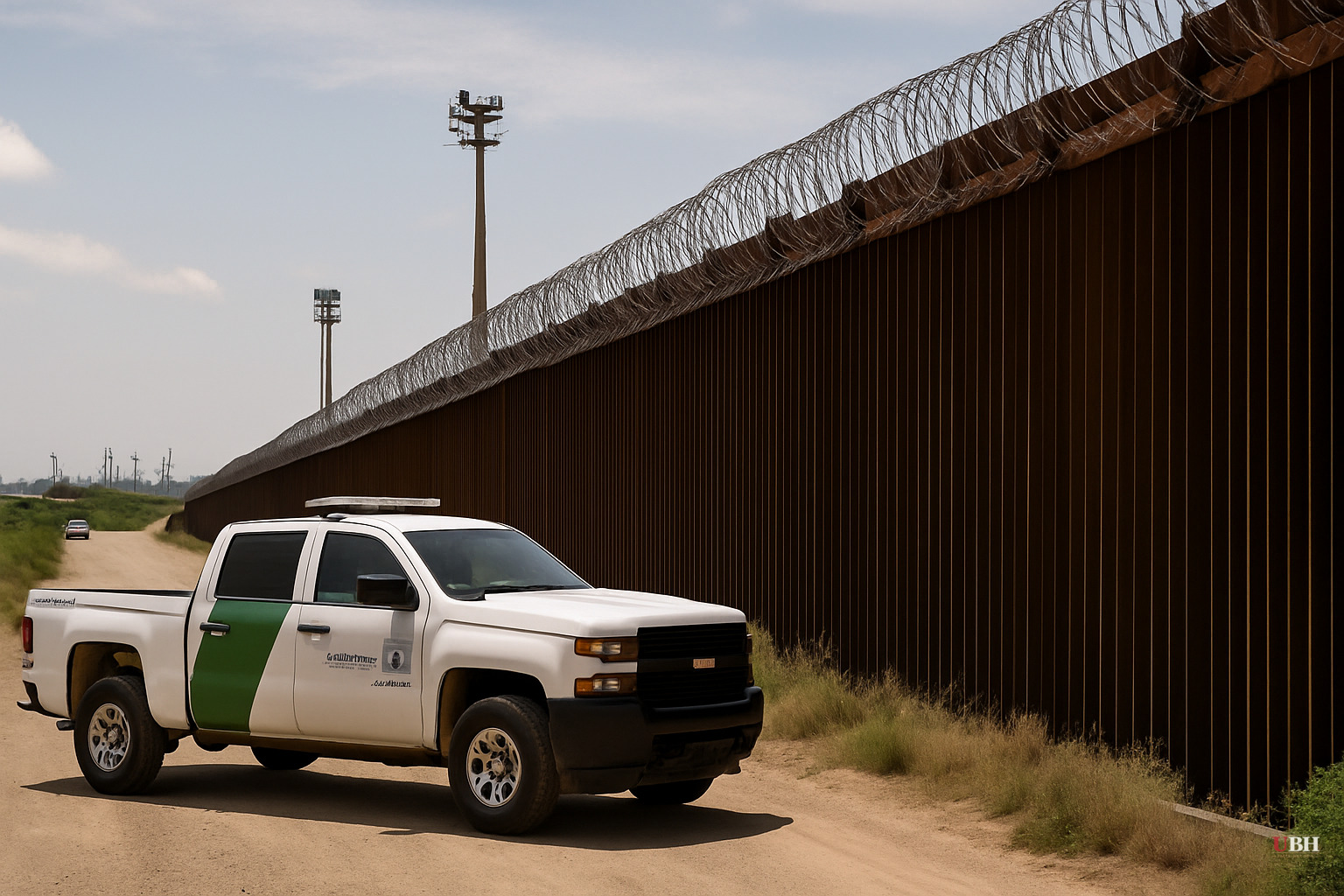
Efrain Zuniga-Garcia, a 38-year-old Mexican national, pleaded guilty in federal court to his role in a smuggling organization that transported between 2,500 and 3,000 foreign nationals into the United States over roughly three years, according to the U.S. Department of Justice.
The network was active from November 2020 to September 2023. Zuniga-Garcia operated a stash house in Monterrey, Mexico, coordinating the handoff of migrants to coyotes who moved them across the Rio Grande. A second stash house operated out of Piedras Negras, Mexico.
Who Was Being Moved
The migrants came from a wide range of countries: India, Colombia, Guatemala, Honduras, and Ecuador, along with nationals from Pakistan, Afghanistan, Egypt, and Yemen. The Justice Department's announcement flagged the Middle Eastern and Central Asian origins as part of the national security dimension of the case.
Zuniga-Garcia was charged in September 2023 with conspiracy to bring an alien into the United States and three counts of bringing aliens in for financial gain. He pleaded guilty to both charges and faces a mandatory minimum of three years in prison at sentencing.
The Network's Leadership
The operation's director, Enil Edil Mejia-Zuniga, an undocumented Honduran national living in San Antonio, Texas, was sentenced to 10 years in prison in July 2025 after a conviction. U.S. Attorney Justin Simmons for the Western District of Texas said at the time: "In an effort to satisfy his greed, Mejia-Zuniga facilitated the illegal movement of thousands of Middle Easterners into the United States. His actions put our national security at risk."
A second co-defendant, Monica Hernandez-Palma, has also been sentenced. Zuniga-Garcia's sentencing is pending as of June 30, 2026.
The Broader Route
This case fits a documented pattern. Academic research published in Forced Migration Review traced how migration brokers based as far away as Istanbul have built long-distance smuggling corridors from Iran, Iraq, Afghanistan, and Turkey into Latin America and then north to the U.S.-Mexico border. The route typically involves legal visas for Brazil or Nicaragua, overland travel through Central America, and then a crossing into the United States. Brokers describe the process as costing around $17,000 per person.
Brokers in these networks operate as what Forced Migration Review describes as "navigators of legal-geographical possibilities," mixing legitimate travel documents with undocumented crossings to move clients across multiple jurisdictions. The model makes prosecution difficult. Each segment of the journey may appear, in isolation, to involve legal movement.
The National Security Question
The strongest concern critics raise is this: if a single organization moved up to 3,000 people including nationals from countries with active terror organizations across the border over three years, how many similar networks operated simultaneously, and who was not caught?
The House Homeland Security Committee found that from the start of fiscal year 2021 through the end of the Biden administration, Border Patrol agents encountered approximately 400 individuals on the terror watchlist at the southern border. From 2017 to 2020, that number was 14. During the same Biden-era period, the committee estimated at least two million migrants classified as "gotaways" entered the country without any formal encounter.
Those who argue the national security framing is overstated make a legitimate point: the vast majority of people moving through these networks are economic migrants or people fleeing conflict, not terrorism recruits. Afghanistan and Yemen produce refugees, not just threats. The existence of a smuggling route does not establish what any individual traveling it intended. No specific terrorist plot has been publicly linked to migrants moved through the Zuniga-Garcia network.
Both things can be true simultaneously. Most migrants have no violent intent, and a border that cannot reliably identify who is crossing creates a real gap in national security screening. The terror watchlist encounters are apprehensions, meaning those individuals were caught. The unresolved question is the population that was not encountered.
What the Daily Wire Got Right, and What It Omitted
The Daily Wire's coverage accurately reported the Justice Department facts on the plea, the stash houses, and the countries of origin. However, it framed the nationalities of migrants almost exclusively through a terrorism lens without noting that the same network also moved migrants from Guatemala, Honduras, Colombia, Ecuador, and India—countries with no terrorism designation. The network was driven by financial profit, not ideology, which the Justice Department's own language on Mejia-Zuniga's greed reflects.
What Comes Next
Zuniga-Garcia's sentencing date has not been publicly announced as of June 30, 2026. The mandatory minimum is three years, but the scope of the conspiracy—2,500 to 3,000 individuals over three years—gives the court room to go well above that floor. The ringleader received 10 years. Whether prosecutors recommend a comparable sentence for Zuniga-Garcia's operational role, versus Mejia-Zuniga's directing role, is the concrete question his case leaves open.
Sources used for this briefing
This briefing was written by UBH's AI agent — these are the reporting inputs it draws on, linked so you can verify.


