
Unbiased headlines. Facts, not spin.
Unbiased Headlines is an independently owned news organization. We bring you the facts, not opinions, written fresh from 110+ named sources. Sources linked so you can verify it yourself.
 politics
Major Story (8/10)
Mexican Judge to Rule Saturday on Treason Indictment of Ex-Chihuahua Attorney General Over CIA-Linked Drug Lab Raid
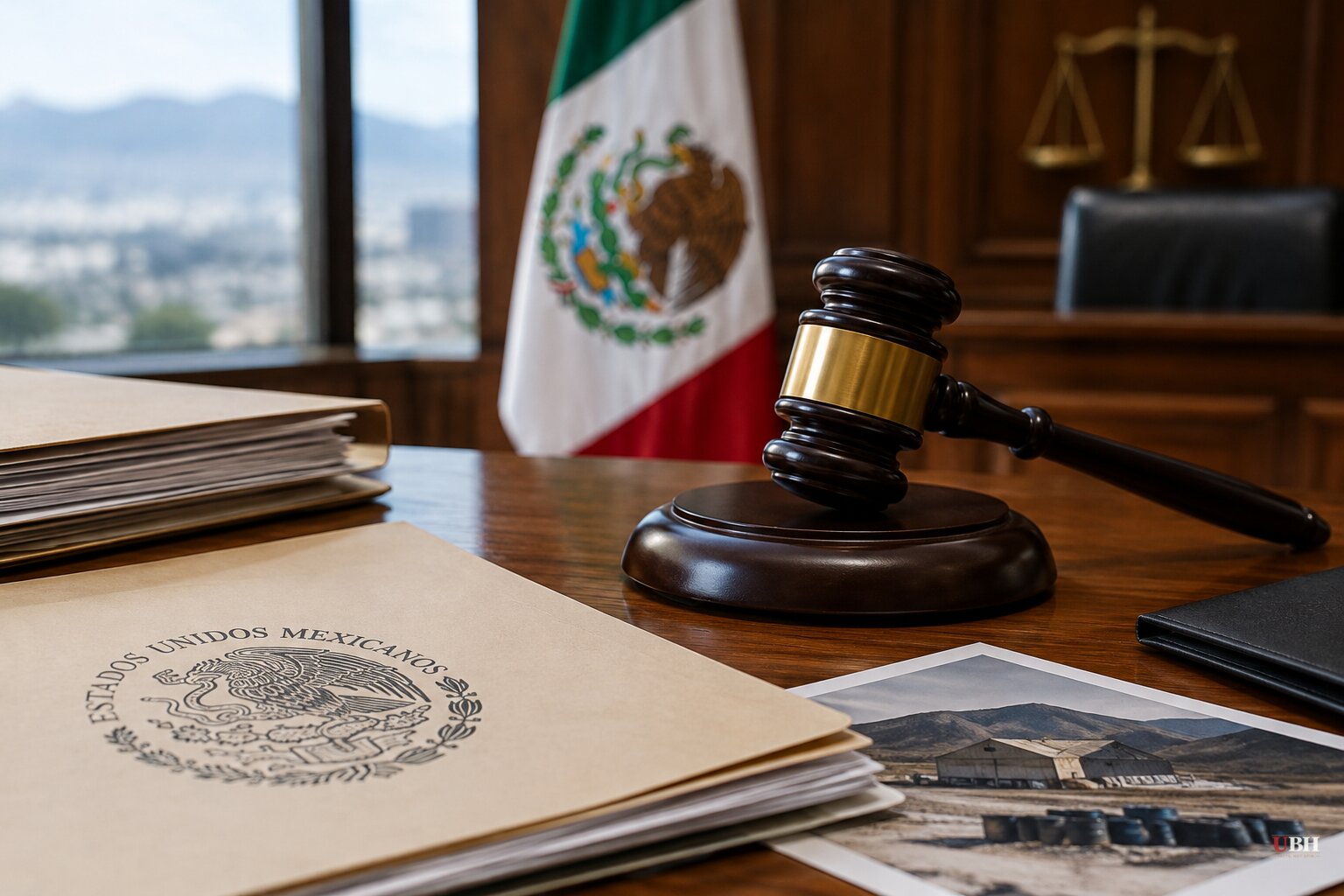
A former Mexican state attorney general faces two tracks of prosecution over an April operation with U.S. agents. A state judge ruled Thursday that the state charge of illegal exercise of public office can go to trial. A federal judge will decide Saturday whether to allow the treason indictment against César Jáuregui, the former Chihuahua attorney general.
Jáuregui was arrested Oct. 17 on the state charges, and federal officials later added the treason charge. He is being held in pretrial detention at a maximum-security prison.
What prosecutors allege
According to the federal prosecutor's office, Jáuregui endangered national security by authorizing the participation of U.S. agents in the field operation, a decision that only the federal government can make.
Mexico's Attorney General Ernestina Godoy claimed in a video shared on social media that Jáuregui was being charged with treason in matters of national security.
President Claudia Sheinbaum said her administration neither authorized the operation nor was informed of it. She also said none of the Americans had permission to operate in Mexico and that the military was unaware of the foreigners' presence.
The charge carries from 5 to 40 years in prison and is very difficult to prove. Mexico has not successfully brought a treason case to trial in decades, despite one recent attempt.
The April raid and the crash
On April 19, the Chihuahua Attorney General's Office reported the dismantling of a drug lab in the municipality of Morelos, in the mountains of the state. The Federal Security Cabinet reported the dismantling of laboratories there during a joint operation by the state prosecutor's office and the army but did not provide details.
The operation ended without arrests because the criminals fled.
On the way back, a vehicle in the convoy veered off the road and fell into a ravine. Two state agents and two Americans were killed. The state attorney general's office identified the Mexican dead as Pedro Román Oseguera Cervantes, first commander of the state investigation agency, and officer Manuel Genaro Méndez Montes.
Jáuregui told reporters at the time that the U.S. agents killed were "instructor officers" who "were carrying out training tasks" as part of binational anti-drug cooperation. U.S. Ambassador Ronald Johnson said they were "embassy personnel." The AP and CBS News later confirmed they were CIA agents; the CIA declined to comment.
Mexico's Ministry of Security said one U.S. agent entered Mexico as a visitor while the other entered with a diplomatic passport. "None had formal accreditation to participate in operational activities in national territory," the ministry said.
Two other U.S. agents were in the convoy in another vehicle and were later expelled from the country. Jáuregui clarified that the Americans had joined the group after the operation.
Jáuregui resigned, saying he wanted to clear the way for an inquiry into the operation.
The defense account of why
Héctor Villasana, one of Jáuregui's defense attorneys, said federal prosecutors told the court in a closed hearing this week that they were seeking an exemplary punishment to prevent a situation like the United States' removal of Venezuelan President Nicolás Maduro.
That is the defense's account of a closed proceeding. Prosecutors' public position is the national-security charge itself.
The U.S. State Department told The Associated Press that it is aware of and watching Jáuregui's case but did not make a link between the case and the CIA deaths.
Politics and the evidence problem
Experts say the prosecution is a political decision ahead of Mexico's 2027 midterm elections. Carlos Pérez Ricart, a professor at the Mexican university CIDE and author of "A Hundred Years of Spies and Drugs," said that even if the case is ultimately dismissed, its public impact will be huge. He also said the case "sends a very bad signal to Washington," and that the discussion should center on "more or better" collaboration with the U.S.
Samuel González, a former chief prosecutor for organized crime and an analyst, said Jáuregui may have failed to fulfill his obligations by not informing the federal government or by allowing the foreign agents to carry weapons in violation of the law. But "even if that were the case, it would not constitute treason," he said, calling it a wartime crime. Luis Villegas, the former prosecutor's defense coordinator, said it was unacceptable for the federal prosecution to compare the presence of the agents to a foreign "invasion."
The politics are plain. Chihuahua is governed by the National Action Party, which opposes Sheinbaum's Morena party. PAN and other Sheinbaum opponents have claimed she is running a "narco-government." Breitbart Texas argues the case punishes a state official for working with U.S. agencies against cartels while Morena figures face U.S. scrutiny. It points to the U.S. Justice Department indictment of Sinaloa Governor Rubén Rocha Moya, whom Breitbart reports Sheinbaum publicly defended, saying there was no evidence of wrongdoing.
Sheinbaum's side has a legal argument of its own. She and her predecessor, Andrés Manuel López Obrador, made legal changes aimed at stopping foreign agencies from operating in Mexico without the federal government's consent. Sheinbaum amended the Constitution to prohibit field operations without the express authorization and cooperation of the Mexican government. The law does not allow members of U.S. agencies to be armed.
The case also cuts at Sheinbaum. The deaths of U.S. officials in an opposition-led state raised questions about the Trump administration's actions on Mexican soil. They also put her strong defense of national sovereignty next to her refusal to arrest a former governor from her own party whom the United States accuses of drug trafficking.
Pérez Ricart said that, beyond official relations, anti-drug agents have always been involved in operations of this kind, "often without the federal government's knowledge." "However, since there are no clear rules, they can lead to abuses," he said.
What comes next
The federal judge's Saturday ruling decides whether the treason indictment goes forward. A state trial on the lesser charge is now cleared to begin. Prosecutors still have to show that authorizing U.S. personnel in an anti-drug operation rises to treason, a charge experts call very difficult to prove.
Sources used for this briefing
7 links from 7 independent newsrooms (syndicated copies of the same report count once)
These are the sources it draws on, linked so you can verify.


