
Unbiased headlines. Facts, not spin.
Unbiased Headlines is an independently owned news organization. We bring you the facts, not opinions, written fresh from 110+ named sources. Sources linked so you can verify it yourself.
 politics
Major Story (7/10)
Event date: October 13, 2026 ·
Musk Has Given About $366 Million This Cycle, Roughly $276 Million of It Since July, Making Him the Top Midterm Donor
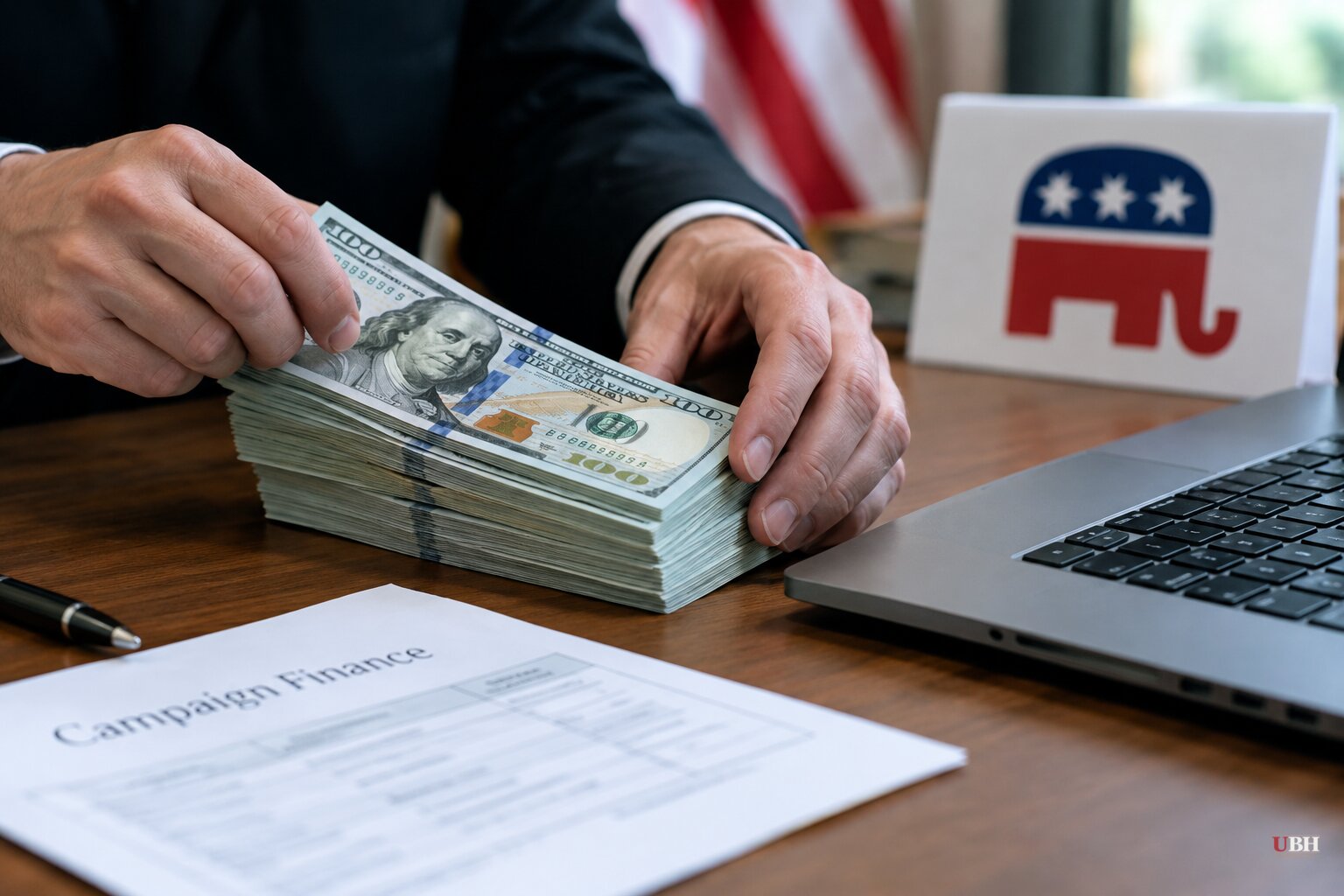
Since Musk's representatives gave the New York Times his July-to-October giving figures on Monday, Oct. 19, the numbers have been rounded out by federal filings and outside tallies. They show the world's richest man is the largest donor of the 2026 midterm cycle, and by a wide margin.
The Musk numbers
Musk's representatives said he put more than $276 million into political groups since July. The Guardian, tallying the Times' figures and Reuters reporting, puts his cycle total at about $366 million.
An AFP analysis of Federal Election Commission data through Oct. 21 lands in the same place: more than $365 million total, including $278 million since July 1. The gap between $276 million and $278 million likely reflects the filing deadline that fell on Thursday, Oct. 22, not a dispute over the underlying giving.
OpenSecrets, the campaign finance tracker, says that makes Musk the largest individual contributor in a federal election cycle since unlimited election spending was allowed in 2010.
The Guardian reports that the total tops the nearly $300 million Musk put behind Donald Trump's 2024 re-election.
Where the money went, according to the Guardian and AFP:
- $158 million to the Senate Leadership Fund, the Republican Senate super PAC. AFP reports the fund used the September money to back Ken Paxton, the Republican Senate nominee in Texas.
- $76 million to America PAC, the super PAC Musk founded in 2024. The group has spent that much on a canvassing operation aimed at hard-to-reach Republican voters, active in seven Senate battlegrounds and nearly three dozen House races.
- $20 million to the Congressional Leadership Fund.
- $10 million to the Republican Governors Association.
- $10 million to a PAC supporting Paxton, who faces Democrat James Talarico.
No source alleges any of this is illegal. These are disclosed contributions to registered committees, made under rules that have allowed unlimited super PAC giving for 16 years.
The wider money race
Musk is not the only big check. AFP found the 15 largest contributors of the cycle have given more than $1.5 billion combined. Five are in tech, mostly AI and crypto.
Marc Andreessen and Ben Horowitz have spent over $113 million, including $50 million to the pro-AI super PAC Leading the Future and $46.8 million to the crypto-focused Fairshake. Ripple Labs and co-founder Chris Larsen gave more than $68 million, and Coinbase and CEO Brian Armstrong nearly $57 million.
Four nonprofit groups that do not have to disclose donors also made the top 15. One of them, the Republican-aligned One Nation, gave almost $138 million to the Senate Leadership Fund.
"Dark money spending has been increasing year over year, and it is a troubling trend because voters should be able to know who is financing the ads that they see," Shanna Ports, senior legal counsel at the Campaign Legal Center, told AFP.
Michael Beckel of the advocacy group Issue One told AFP, "We're on track to have the most expensive midterm elections in US history."
NPR, citing FEC data, reports more than $15 billion has been raised since the start of 2025, with half spent. AdImpact data show House and Senate ad spending has topped $4 billion.
Candidates versus outside groups
The split is sharp. Per NPR's read of FEC filings, from July to September the Democratic or independent candidate out-raised the Republican in 27 of 35 Senate races. In the 13 most competitive, the edge was nearly 5-to-1.
Talarico's main committee reported about $60 million in the third quarter, which his campaign says is a record for a Senate campaign in that period. In Kansas, Democrat Adam Hamilton raised nearly $10 million to Republican Sen. Roger Marshall's $800,000.
Republican outside money fills the gap. AdImpact figures show Republican campaigns, committees and aligned groups have outspent their Democratic counterparts by $400 million this cycle. NPR notes a trio of super PACs tied to MAGA Inc. have out-advertised Democrats on the airwaves.
Democrats say the imbalance is forcing choices. "We are being outspent by the Republicans. That's just a fact," Lauren French, communications director for Senate Majority PAC, told Fox News Digital. She added that Republicans "have monopoly money to play with, whereas we are working with real resources."
Senate Majority PAC says it is competing in nine battleground states. Rep. Chris Pappas, the Democratic Senate nominee in New Hampshire, sent supporters a fundraising pitch saying a pro-Trump PAC had reserved $10 million in ads there and Democrats were "outspent 3-to-1."
The Fox News Power Rankings moved South Carolina from Solid to Likely Republican. Kansas is rated Lean Republican. Alaska, Iowa, Ohio and Texas are toss-ups.
The messaging
The Guardian reports some Musk-funded advertising focuses on transgender issues and on casting Democratic candidates as radical socialists. Over the weekend, Musk reposted an America PAC video of Talarico's earlier statements on gender, calling it "madness."
Musk's giving also reverses his stated plan from mid-2025 to step back from large-scale political donations, according to the Guardian, which ties that retreat to his falling out with Trump and public backlash over his role in the Department of Government Efficiency.
Trump, for his part, has returned to rallies. He wrote on Truth Social that they "have made a tremendous difference with the enthusiasm of the Republican Party," and announced stops in Youngstown, Ohio, for Sen. Jon Husted and Vivek Ramaswamy, then Alaska for Sen. Dan Sullivan and Rep. Nick Begich.
What comes next
The Federal Election Commission's pre-election reports, due Oct. 22, cover activity through early October. Money moved in the final days will not appear until after Election Day, so the last-stretch totals for Musk and other donors remain unknown.
Whether a $400 million Republican spending advantage can overcome Democratic candidates' fundraising edge in states like Texas, Ohio, Iowa and Kansas gets answered Nov. 3.
Sources used for this briefing
6 links from 6 independent newsrooms (syndicated copies of the same report count once)
These are the sources it draws on, linked so you can verify.


