
Unbiased headlines. Facts, not spin.
Unbiased Headlines is an independently owned news organization. We bring you the facts, not opinions, written fresh from 110+ named sources. Sources linked so you can verify it yourself.
 politics
Major Story (7/10)
Event date: October 21, 2026 ·
Trump administration asks Supreme Court to lift injunction halting Big Bend border wall construction
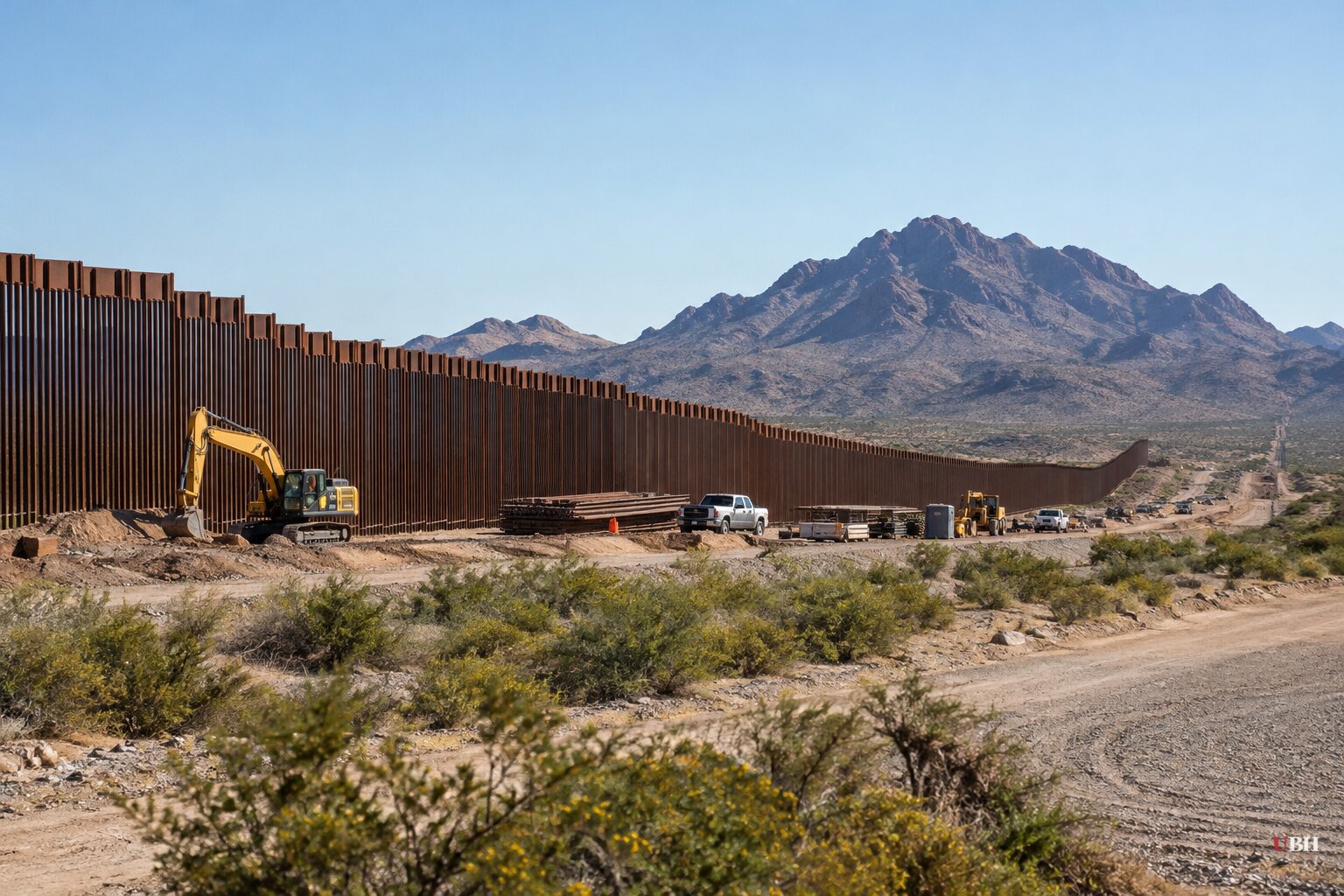
Since U.S. District Judge Kathleen Cardone halted border barrier construction across Texas' Big Bend region on Oct. 2, the fight has moved from a West Texas courtroom to the Supreme Court. On Wednesday, Oct. 21, Solicitor General D. John Sauer filed an emergency application asking the justices to lift her injunction.
The government wants two things. It asks for a stay so construction can resume now, and it asks the Court to "summarily" take up the case and reverse the injunction outright.
How the case got here
Cardone's order covers the Big Bend Sector, which spans more than 500 miles of the U.S.-Mexico border and 77 Texas counties, roughly a quarter of the entire border. It bars the Department of Homeland Security from building barrier or related infrastructure, or doing ground-disturbing work, there "until and unless Defendants comply with all applicable laws."
The injunction reaches Big Bend National Park and also private and state land upriver and downriver from it.
The government's route to the high court was short. The Justice Department told Cardone on Oct. 16 that if she issued no ruling on its motion to pause her order by Oct. 21, it would treat the silence as a constructive denial and go to the Supreme Court. On Tuesday, Oct. 20, she denied the motion in a six-page ruling. Because of how the 1996 statute at the center of the case is written, a challenge to her order bypasses the usual appeals court.
The legal fight
The dispute turns on waivers signed by the Homeland Security secretary. They let Customs and Border Protection skip environmental and other laws that would slow construction. The government says a 1996 law gives the secretary that power wherever barriers are needed in areas of high illegal entry.
The plaintiffs are the Center for Biological Diversity, a church preservation group and a local river guide. They argue Congress limited the waiver power to areas of high illegal entry, and that remote, rugged Big Bend is not one.
Cardone agreed for now. "The Court finds that Plaintiffs are likely to succeed on the merits of their major questions doctrine claim that the Big Bend Waivers were issued in excess of the Secretary's authority," she wrote. She also found the plaintiffs' "irreversible environmental, aesthetic, economic, and recreational harms" outweigh the government's inability to build new wall.
What the government says
Sauer called the injunction "baseless" and said Cardone "illogically concluded" that the plaintiffs' aesthetic and recreational interests outweigh the government's. He wrote that "leaving a 300-plus-mile gap in border defenses would act as a dangerous magnet for cartels and other bad actors to exploit as other routes close off."
The filing cites CBP figures: more than 89,000 apprehensions in the Big Bend sector between fiscal years 2021 and 2025, "and those are just the aliens who were detected." It also says the Sinaloa and Juarez cartels operate south of the area.
The same CBP data in the filing shows apprehensions fell from 11,823 in 2023 to 3,096 in 2025.
The government says the pause costs more than $460,000 a day. Before the injunction, workers had built about three-quarters of a mile of barrier. They had also installed temporary field offices, supply yards, a water delivery system and a temporary concrete batch plant.
CBP has said construction of a 47-mile stretch of wall in the region began last month. The Justice Department says contracts have been awarded for five barrier projects there.
What the opponents say
The plaintiffs' lawyers dispute the funnel theory. Attorneys with the Texas Civil Rights Project and the Center for Biological Diversity told Marfa Public Radio that the region's natural barriers have prevented, and will keep preventing, illegal crossings.
"We're deeply disappointed that the Trump administration is asking the Supreme Court for a green light to bulldoze one of America's wildest, most extraordinary landscapes," said Zeynep Graves, a senior attorney at the Center for Biological Diversity. "We're confident the law is on our side and that only Congress can authorize something as consequential as walling off the entire U.S.-Mexico border."
The opposition is not limited to environmental groups. Ranchers, residents, business owners and local law enforcement officials in Texas have objected, along with lawmakers from both parties, who pushed back after photos and videos of bulldozers at Big Bend National Park surfaced in August.
CBP Commissioner Rodney Scott paused construction inside the park until the end of September. The agency says the wall itself will not cut through the park. It says other infrastructure would, including patrol roads, detection technology and roughly 17 miles of vehicle barriers.
The money and the stakes
Congress allocated Homeland Security $46 billion last summer to finish the wall, a mix of 30-foot steel bollard walls, vehicle barriers and surveillance technology. The Big Bend plan sits inside that spending.
That makes the question concrete. Does an area where crossings have historically been among the lowest on the southwest border count as "high illegal entry" under the statute? Or is a continuous barrier justified because an open segment would draw traffic once the rest of the border is sealed? The government says the latter. The plaintiffs say the law does not allow it.
The Supreme Court has not acted on the application, and Cardone's injunction remains in effect. The justices could grant the stay and consider the merits later, or they could deny it. If they grant the government's request for summary reversal, the waivers would be reinstated without further proceedings.
Sources used for this briefing
6 links from 6 independent newsrooms (syndicated copies of the same report count once)
These are the sources it draws on, linked so you can verify.


